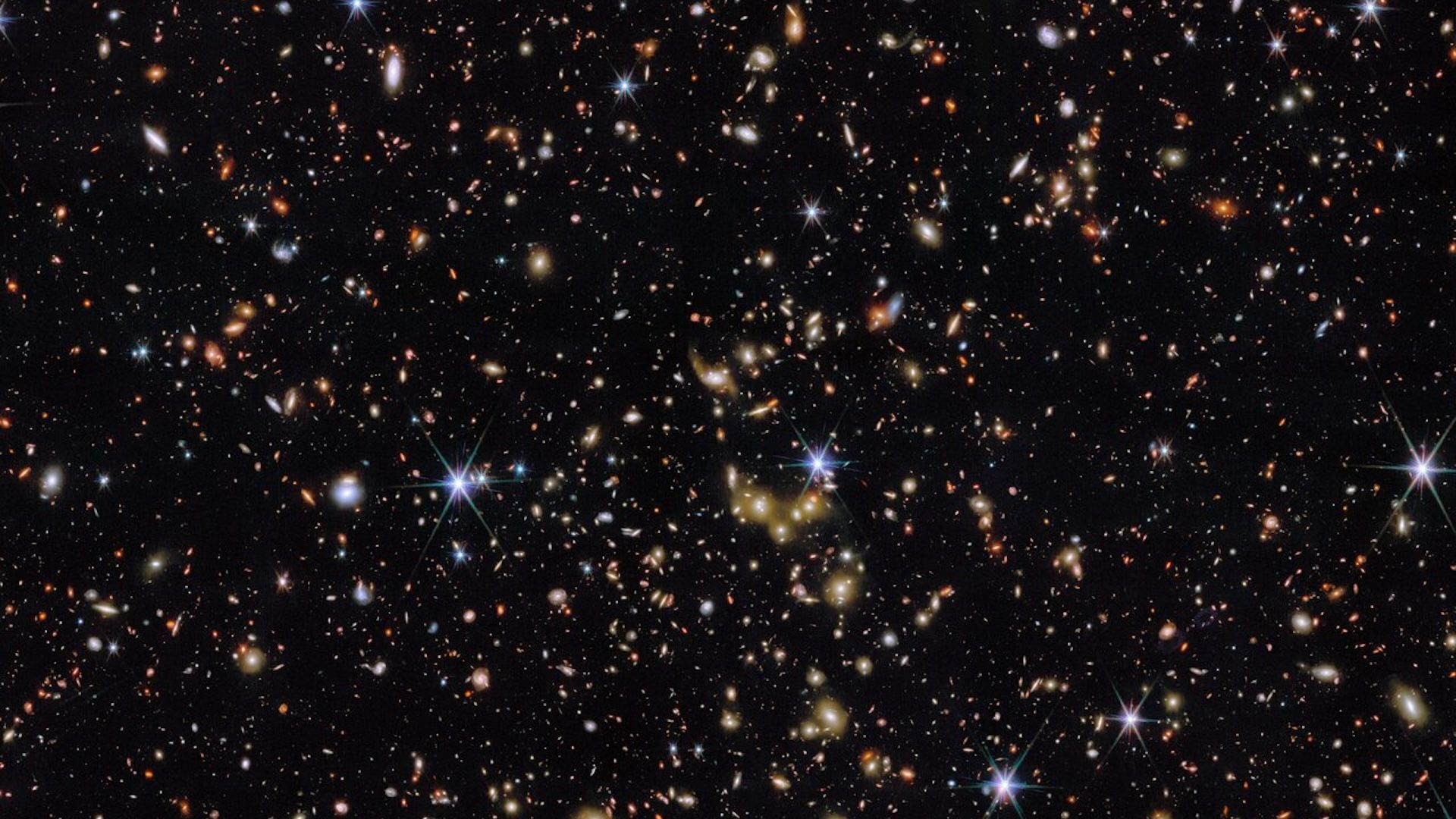
Astronomers may have misidentified what cleared cosmic fog in the early universe, according to research published Oct. 15 in Nature Astronomy. The study challenges the prevailing theory that supernovas drove the Epoch of Reionization, the period when radiation ionized neutral hydrogen and made the universe transparent to light.
Around 400,000 years after the Big Bang, the universe cooled enough to form hydrogen atoms, which created an opaque fog blocking ultraviolet light. Astrophysicists thought supernovas from massive stars scattered this fog by releasing ionizing radiation. Cody Carr, an astronomer at the University of Michigan and first author of the study, and his colleagues found the opposite.
The researchers used the Hubble Space Telescope to observe six star-forming galaxies about 3.5 billion light-years away. These compact starburst galaxies form stars at rates several times higher than the Milky Way. The team analyzed the galaxies' light signatures to track stellar winds and how they evolved over time.
The data revealed a two-phase process. During the first 3 million years of star formation, massive young stars generated stellar winds moving nearly 2,000 miles per second, carving through gas and dust and allowing ionizing radiation to escape. After about 3 million years, as the most massive stars died in supernovas, their expelled material added to the galactic gas and dust, trapping the ionizing radiation instead of releasing it.
"The most interesting thing about our paper is the observation that the strongest LyC emitters do not have fast galactic winds," Carr said. "This challenges the notion that galaxies require fast supernova-driven winds to enable LyC escape."
The oldest galaxies in the sample, which had the fastest supernova-driven winds, allowed the least ionizing radiation to escape. Carr noted the results disagree with most cosmological simulations, which predict ionizing radiation escape peaks after supernovas launch galactic winds. The intense light from newborn stars now appears to be the primary driver of reionization.