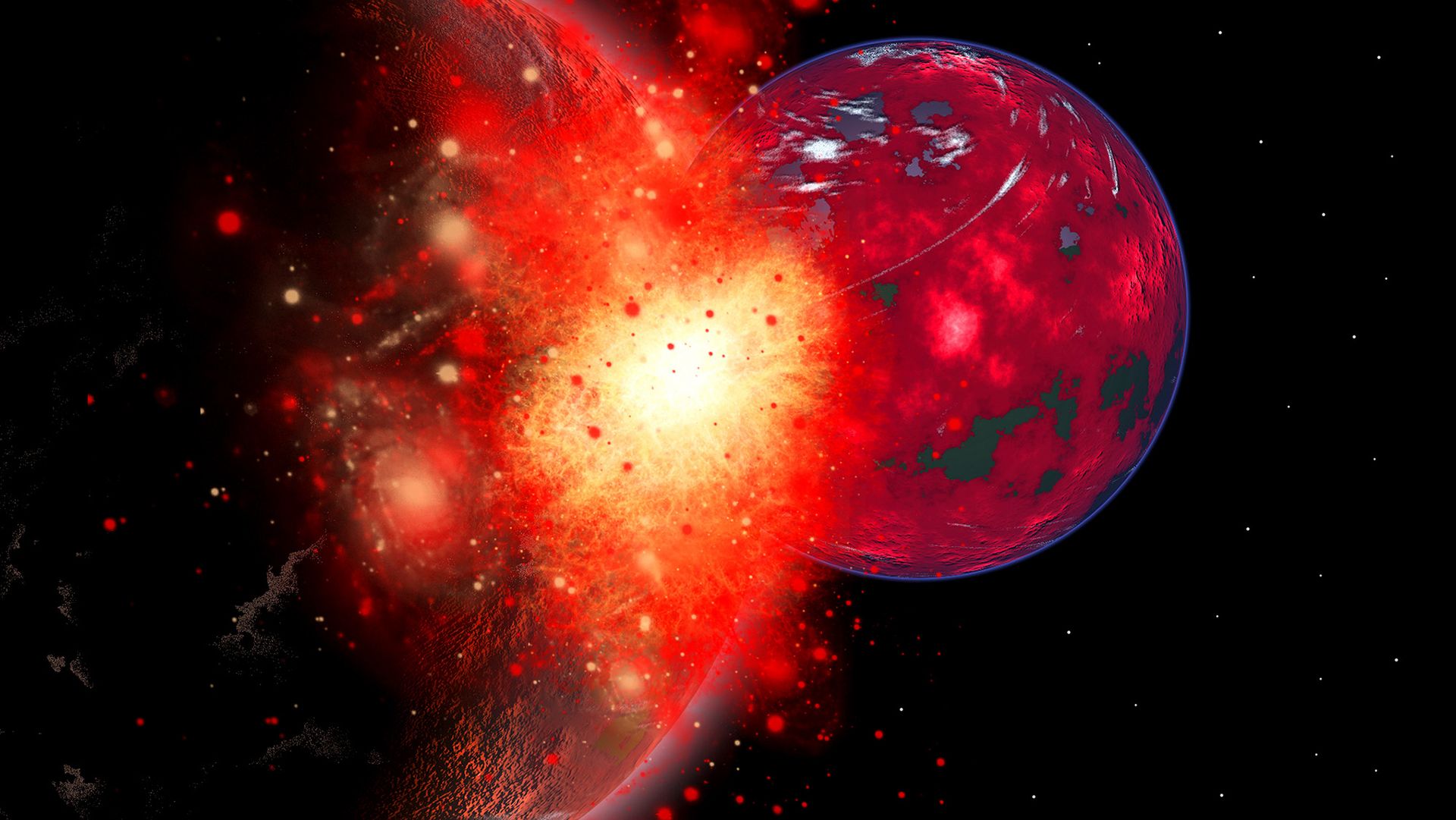
A new simulation study suggests the outer planets of our solar system may face collision and destruction much sooner than previously thought once the sun dies.
Konstantin Batygin, a professor of planetary science at Caltech and first author of the study published Sept. 21 in The Astrophysical Journal Letters, created computer simulations of how the sun's mass loss would affect Jupiter, Saturn, Uranus and Neptune. The research built on observations that stars do not shed their outer layers smoothly but instead eject mass in distinct blobs, similar to coronal mass ejections but much larger.
Jim Fuller, a professor of theoretical astrophysics at Caltech and co-author, explained that each blob pushes the star backward, like recoil from a fired bullet. Though each individual push moves the sun only a few feet per second, the cumulative effect can alter the sun's speed by several hundred feet per second.
Using 672 simulations, the researchers tested three scenarios. When the sun lost mass smoothly, results matched previous studies, with the outer planets remaining largely stable for billions of years. However, when the simulations included blob-like mass ejections either throughout or during the final stages of the red giant phase, the results changed dramatically.
In 96% of simulations with the heaviest ejected mass packets, the giant planets collided and were destroyed. The planets also switched places, developed oval-shaped orbits, and were sometimes ejected from the solar system entirely. These catastrophic changes occurred within a few hundred million years after the sun became a white dwarf, or even during the red giant phase itself in extreme scenarios.
Nathan Kaib, a planetary scientist at the University of Oklahoma not involved in the research, noted that the findings suggest planets with oval-shaped orbits should dominate around white dwarfs rather than analogues of today's outer solar system. The study's results indicate that habitable planets potentially orbiting white dwarfs may be more unstable than previously understood.