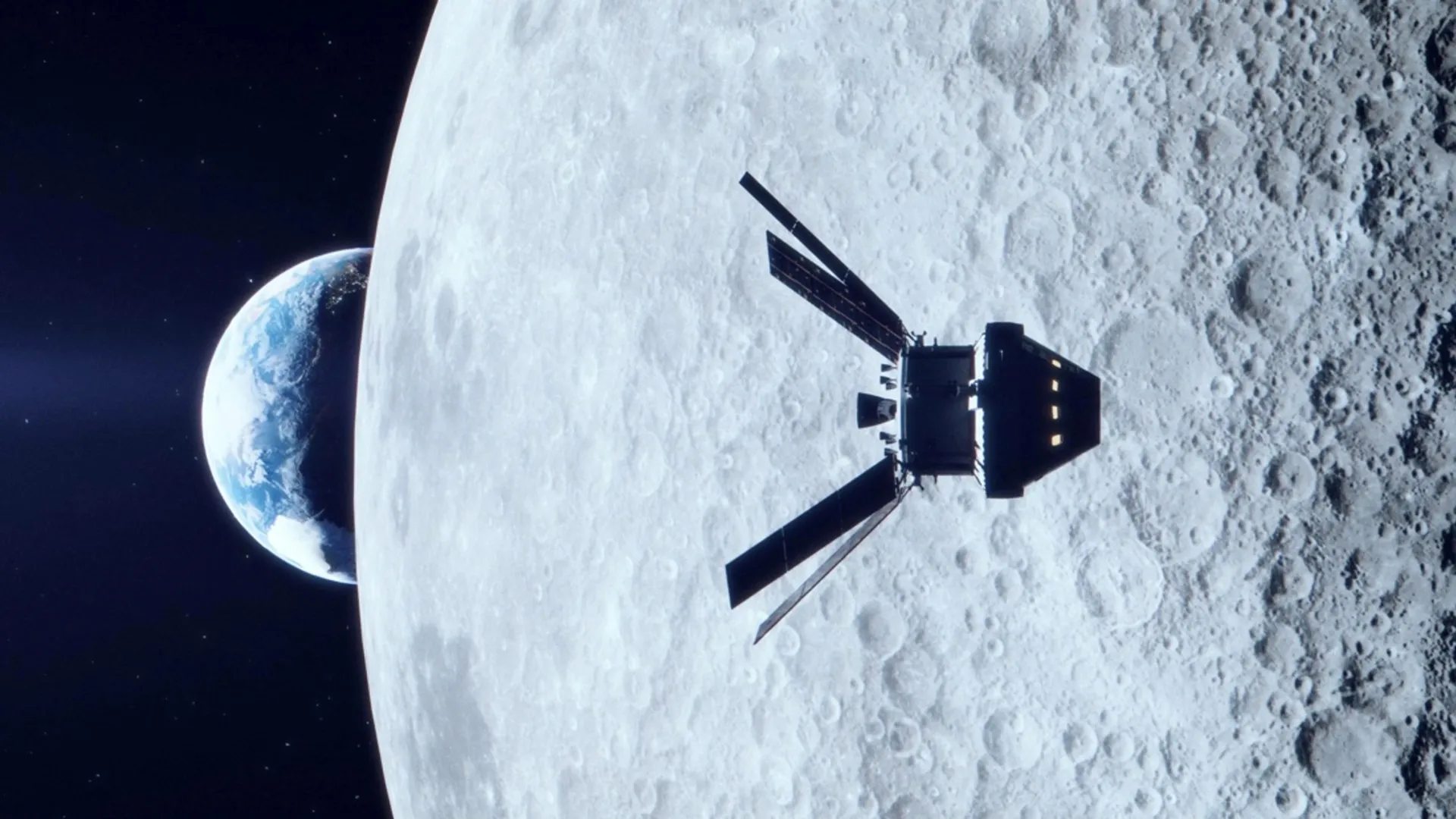
NASA's Artemis I mission used experimental radiation detectors made from lithium fluoride crystals to measure cosmic radiation exposure near the Moon. The detectors, developed by scientists at the Institute of Nuclear Physics of the Polish Academy of Sciences in Cracow, were embedded in two human-shaped mannequins aboard the Orion spacecraft during the uncrewed mission in late November and early December 2022.
The lithium fluoride crystals work by recording microscopic damage when radiation particles pass through them. When illuminated with blue light, the altered regions glow red, allowing researchers to observe individual particle tracks under a microscope. This eliminates the need for chemical etching required by traditional plastic detectors.
Prof. Pawel Bilski and his team developed new analysis techniques to interpret the crystal data. After applying corrections and background-removal software, their measurements agreed within 15 percent with results from conventional detectors. The method also detected radiation events that older technologies could not capture.
The measurements revealed a counterintuitive pattern. Although astronauts near the Moon receive higher total radiation doses than those in low Earth orbit, the difference is smaller than expected. Low-energy protons trapped in Earth's Van Allen radiation belts account for most radiation exposure in low Earth orbit. These belts do not extend to the Moon, where high-energy galactic particles dominate. Galactic particles pass through the body depositing energy uniformly, whereas the low-energy Van Allen protons concentrated their dose in specific regions.
The fluorescent detectors' small size, measured in millimeters rather than centimeters, makes them practical for astronauts to wear during missions. The findings were published in Radiation Measurements.