On May 10 and 11, 2024, a powerful solar storm struck Earth's magnetosphere, pushing the SYM-H index (a measure of geomagnetic disturbance) to minus 518 nanotesla. This represented the second-largest recorded disturbance since 1981.
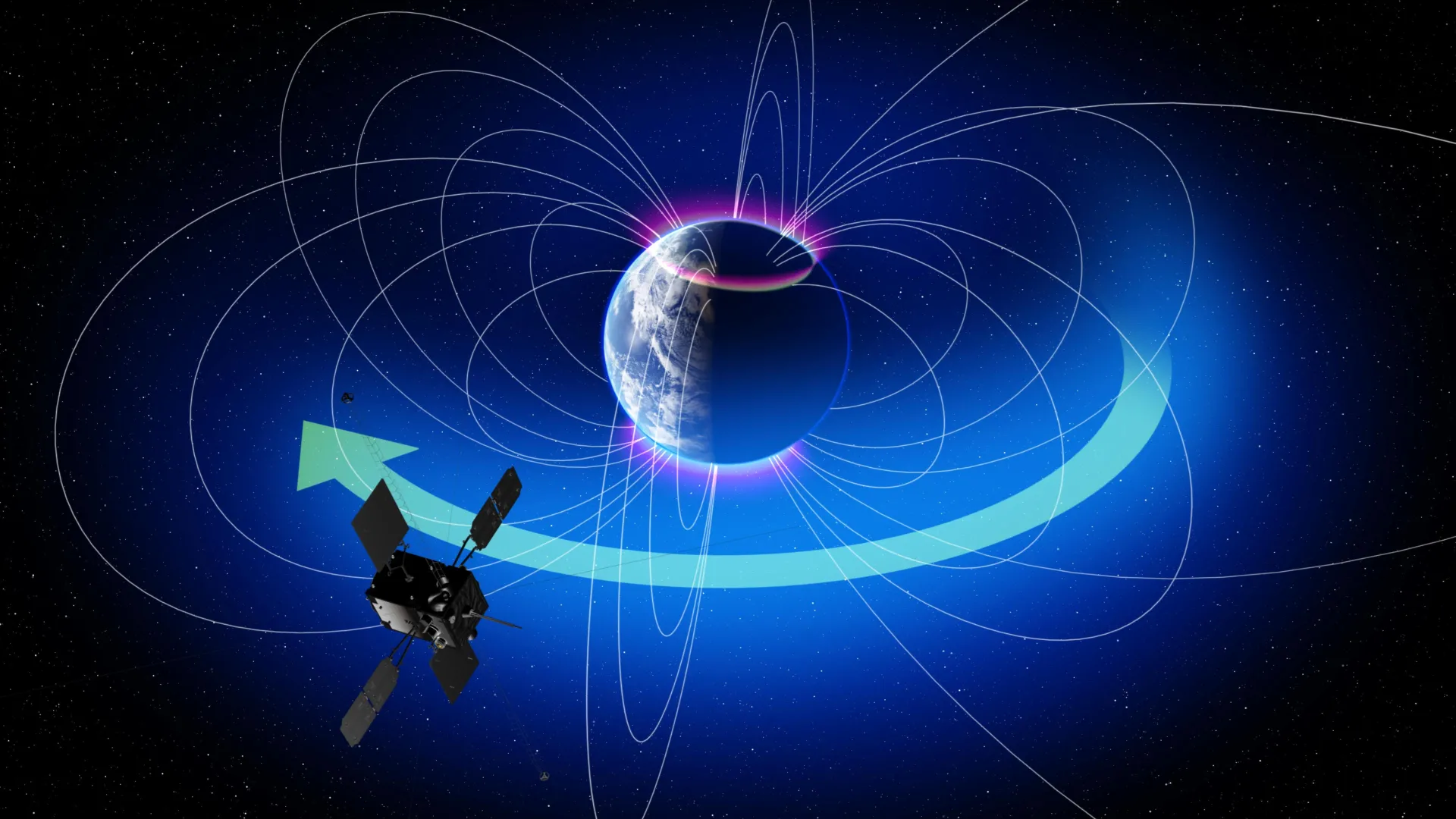
Japan's Arase satellite, operated by the Japan Aerospace Exploration Agency (JAXA), passed through Earth's ring current shortly after the storm began and again near its peak. The ring current is a vast belt of charged particles that circles the planet thousands of kilometers above the equator.
Analysis of Arase data revealed an unexpected composition. "Approximately 85% of ions were oxygen from Earth's own ionosphere," according to Naritoshi Kitamura, lead author and designated assistant professor from the Institute for Space-Earth Environmental Research at Nagoya University. This discovery contradicted long-held assumptions that solar wind particles would dominate the ring current during an extreme storm involving dense solar material.
The findings, published in Science Advances, show that Earth's atmosphere played a much greater role than expected in determining the storm's severity. The heavy oxygen ions from Earth's upper atmosphere may have strengthened the magnetic disturbance and caused it to reach peak intensity unusually close to the planet. Arase detected a 40 percent decrease in magnetic field intensity at roughly 16,000 kilometers above Earth during the storm's peak.
The observations support the proposed FACTORS mission, involving two satellites being prepared for an upcoming JAXA proposal opportunity. The mission would investigate how ions from Earth's atmosphere enter the magnetosphere and influence geomagnetic storms. Understanding these processes could improve forecasts of dangerous space weather events that disrupt satellites, GPS signals, and power systems.