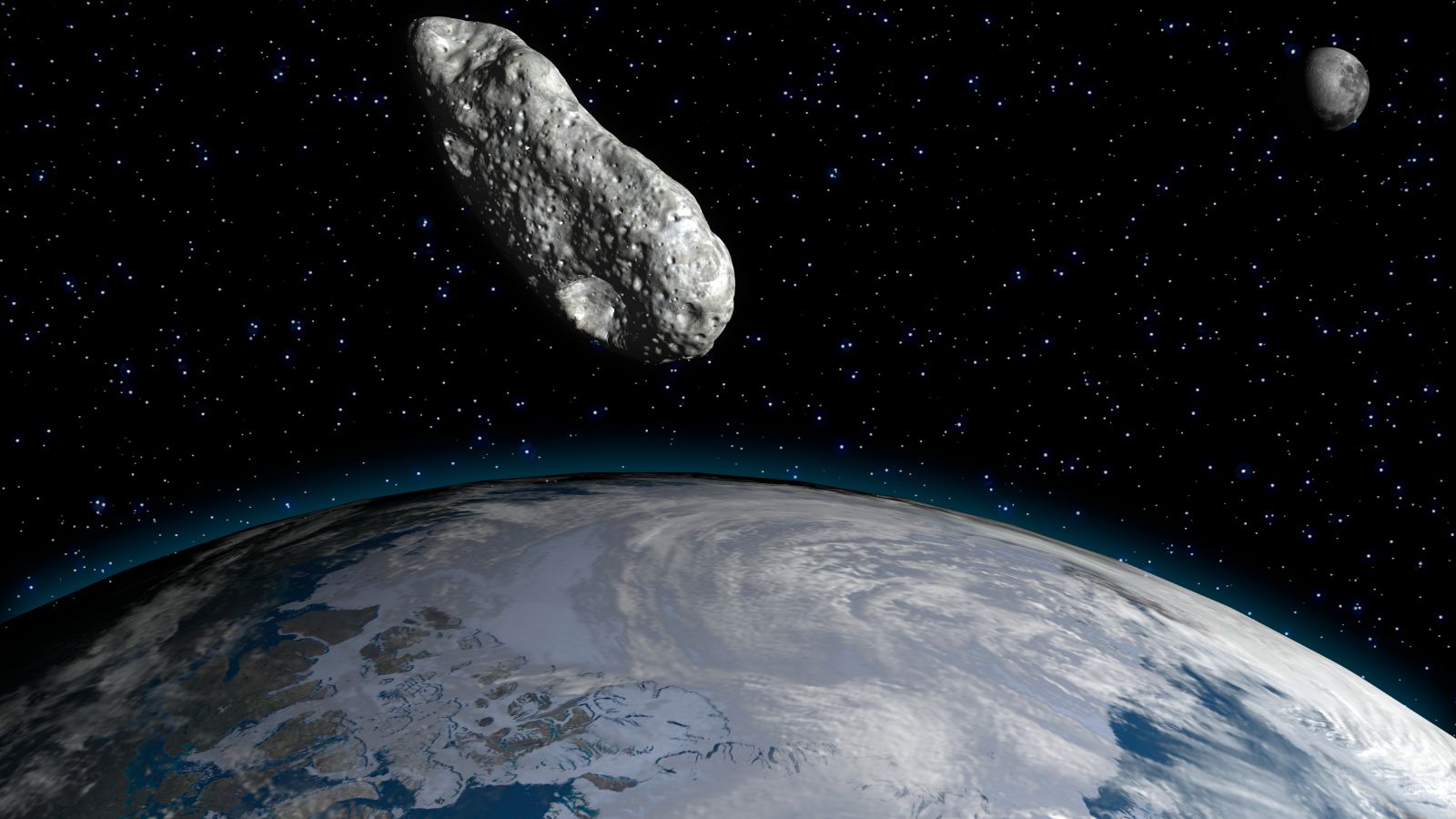
Hungarian researcher Krisztián Sárneczky observed a tiny asteroid called 2026 QQ8 in August. The International Astronomical Union's Minor Planet Center officially confirmed it on Oct. 29 as Earth's newest temporary moon. The space rock measures about 2 meters across and entered Earth's orbit in April. It will remain in orbit until January 2027.
The object currently orbits at roughly 1.5 times the distance of Earth's moon. Researchers do not expect it to pose a collision threat, as it would burn up in the atmosphere if it descended too close to Earth. 2026 QQ8 belongs to the Aten asteroid class, which occasionally crosses Earth's orbit but orbits closer to the sun than our planet typically does.
The minimoon takes 359 days to complete one solar orbit and approaches Earth roughly every 10 years. Earth likely captures at least one minimoon at any given time, according to astronomers. The first confirmed minimoon, 1991 VG, was about 10 meters in diameter when detected in November 1991. Most captured space rocks remain for less than a year, though some stay for decades.
New telescopes including the Vera C. Rubin Observatory in Chile, which began operating earlier this year, should help researchers detect more minimoons. The observatory scans the entire Southern Hemisphere sky every few days and is expected to identify millions of previously unknown moving objects over its planned 10-year mission.