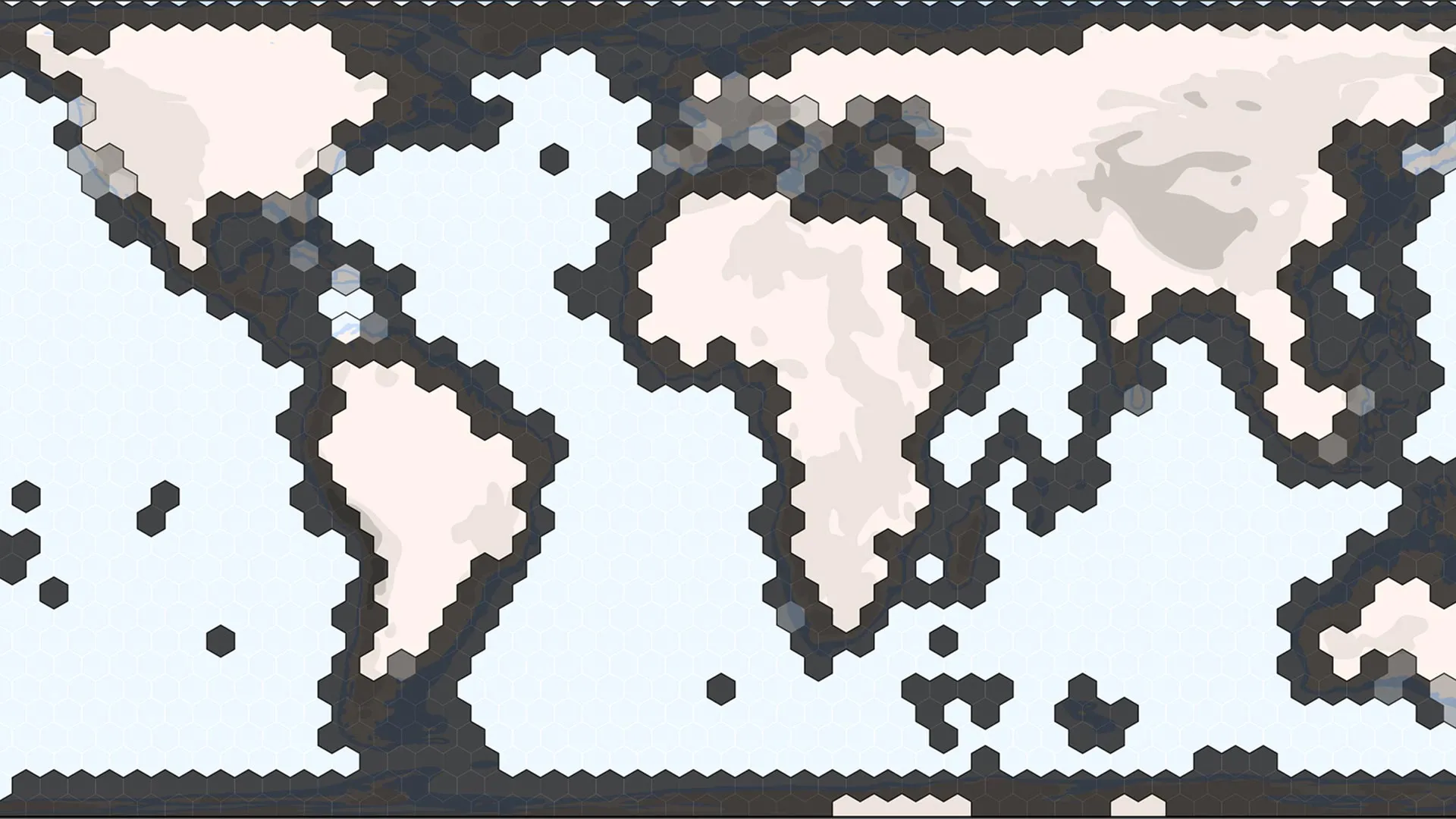
Thomas A. Neubauer of the Bavarian State Collections of Natural History and Mathias Harzhauser of the Natural History Museum in Vienna created a map to identify where undiscovered fossils from ancient shallow marine environments are most likely to exist. The researchers analyzed records from the Paleobiology Database, which contains fossil data from the past 540 million years, and compared this information with geological data from the Macrostat database to pinpoint regions where suitable rock formations remain unexplored.
The analysis found that the Early Mesozoic and Paleozoic periods have been extensively studied, making major new discoveries there unlikely in the near term. The Cenozoic Era, which began 66 million years ago, presents the greatest opportunity for finding unknown fossil species, according to the researchers. They identified specific global locations where previously undocumented fossils could be discovered and where geological layers are accessible for excavation.
Neubauer stated that "precisely because expanding the fossil record is quite challenging and progresses only slowly, our work can help researchers worldwide to focus their research specifically on these still largely unexplored areas." The approach aims to help paleontologists plan more productive expeditions and allocate limited research resources more effectively by directing attention to high-potential regions rather than areas already thoroughly investigated.