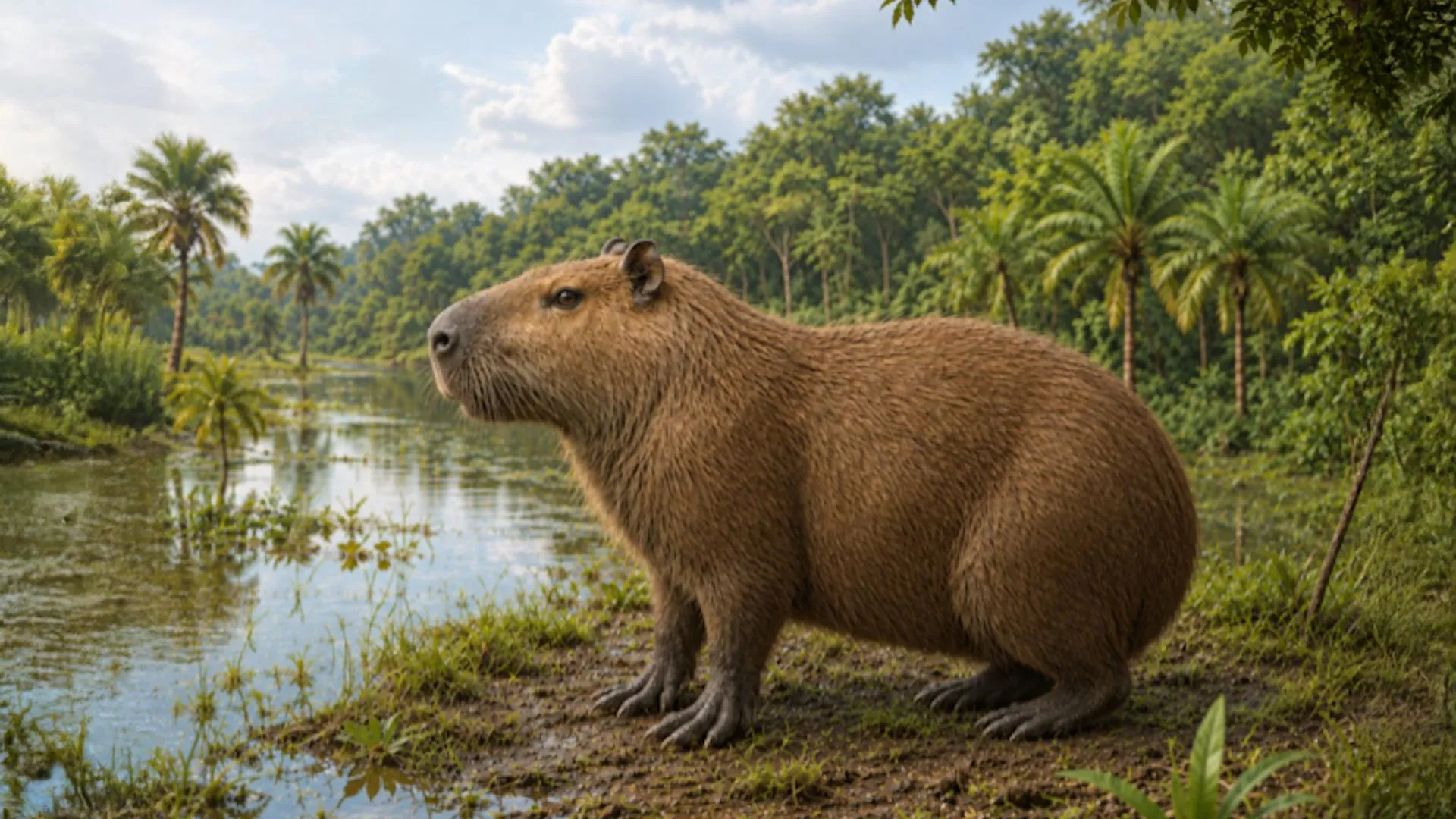
Paleontologists from McGill University and international collaborators have identified a giant rodent species from fossils discovered in southern Thailand. The animal, named Yakamys sirindhornae, lived approximately 34 million years ago during the middle Paleogene period.
Researchers found two fossilized teeth from the species at the Bang Mark Pit in the Krabi lignite mine in Thailand's Krabi Province. Using seven established methods that measure tooth dimensions to estimate body mass, the team calculated that Yakamys sirindhornae weighed approximately 30 kilograms, roughly twice as heavy as other known rodents from the same period.
"This is only a ballpark figure, as there is substantial uncertainty associated with fossil body-mass estimation," said Virginie Millien, a biology professor at McGill University and co-author of the study.
The discovery expands understanding of where rodent gigantism emerged. Previous evidence suggested that giant rodents evolved primarily in South America during later periods, but this finding indicates Southeast Asia played a more significant role in the early evolutionary history of large-bodied rodents.
The species name sirindhornae honors Princess Maha Chakri Sirindhorn for her support of paleontological research in Thailand. Yakamys combines "yak," the Thai word for giant, with "mys," the Greek word for mouse or rat.
The limited fossil evidence makes it difficult to reconstruct the animal's physical characteristics, ecological role, and evolutionary relationships. Millien noted that additional discoveries are needed to better understand how Yakamys evolved and what its life was like.
The research involved collaboration among scientists from McGill University, Thailand's Department of Mineral Resources, CNRS, and Université de Poitiers.