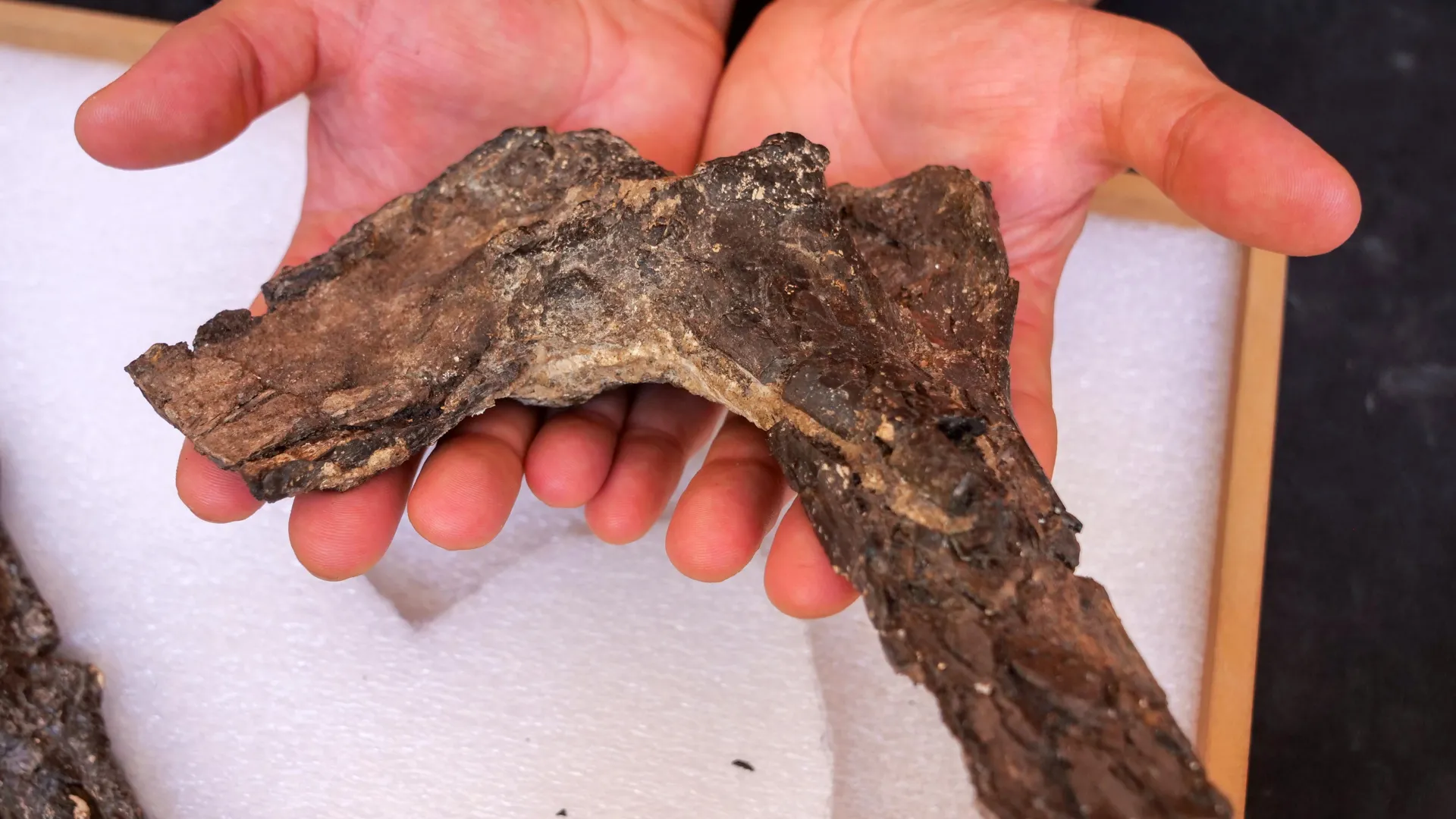
An international team led by Curtin University discovered fossilized red blood cells and chemical evidence of blood molecules in 115-million-year-old bones from Aratasaurus museunacionali, a theropod dinosaur found in northeastern Brazil. The findings appear in the Proceedings of the National Academy of Sciences.
Researchers identified mineralized red blood cells inside vascular canals within the dinosaur's limb bones. Chemical analysis revealed preserved heme molecules, components of hemoglobin that transport oxygen in red blood cells. The discovery provides the first definitive chemical confirmation of hemoglobin-derived molecules inside fossilized dinosaur red blood cells.
John Curtin Distinguished Professor Kliti Grice, founding director of Curtin University's WA-Organic and Isotope Geochemistry Centre, led the study. "To detect intact heme-derived molecules in 115-million-year-old red blood cells is astonishing: this really is a landmark discovery," Grice said.
The fossils also contained amino acids associated with collagen, a structural protein in bones and connective tissues.
A mineral called hausmannite appears to have stabilized the fossilized blood cells and preserved their molecular components over geological time. Researchers suspect the dinosaur was quickly buried in sediment in an oxygen-poor environment with abundant microbial activity, conditions that may have protected biological material from breakdown.
The discovery challenges the assumption that hemoglobin molecules cannot survive for such vast periods. Professor Martin Van Kranendonk, head of Curtin University's School of Earth and Planetary Sciences, noted that the results could help scientists identify possible traces of ancient life in extreme environments beyond Earth. If biological molecules can persist for more than 100 million years under the right conditions, researchers may need to reconsider how and where they search for evidence of ancient organisms.
The research team included scientists from Curtin University, the Japan Agency for Marine-Earth Science and Technology, the Brazilian National Museum, the Regional University of Cariri, and Johns Hopkins University.