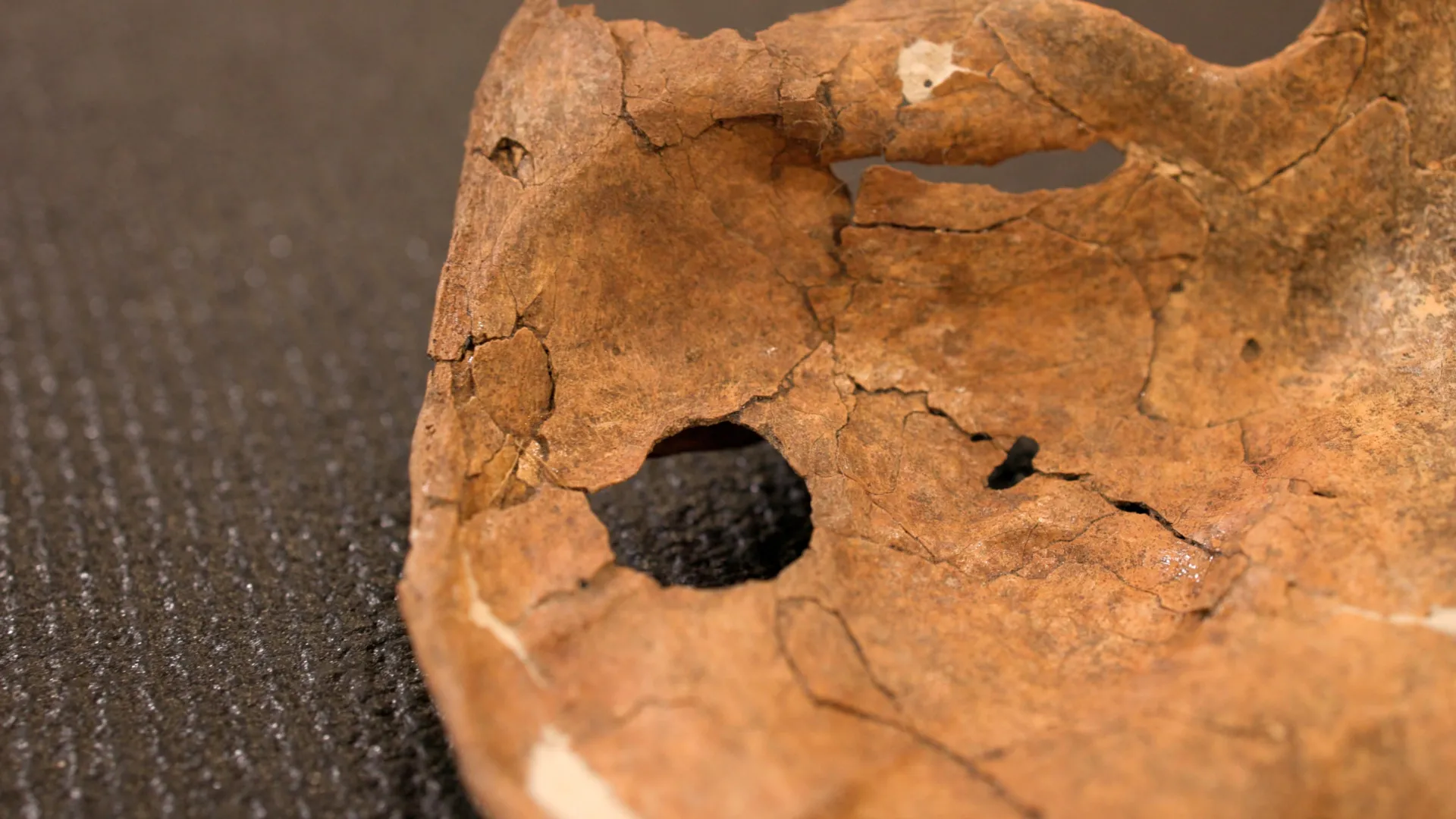
A 75,000-year-old Neanderthal shoulder blade from a cave in Iraqi Kurdistan bears a circular hole that researchers believe was caused by a wooden spear aimed at the heart. The specimen, named Shanidar A, shows a 15-millimeter opening with beveled edges consistent with an exit wound, according to archaeologists from the University of Cambridge who led the excavation.
The researchers reconstructed the injury path: the spear entered the front of the left chest, passed through a lung and likely major blood vessels, then pierced through the shoulder blade from behind. Small bone fragments and muscle attachment ridges allowed scientists to determine the weapon traveled downward through the body. Such an injury would have caused rapid death.
The rounded shape of the hole points to a wooden weapon rather than one tipped with flint or stone, which typically leave flatter or more angular openings. "Holes left by recreations of spears from this time are an excellent fit for the one we found in the Neanderthal scapula," said Dr. Emma Pomeroy, the study's lead author from Cambridge's Department of Archaeology. The findings appear in Scientific Reports.
Whether the wound resulted from deliberate violence or a hunting accident remains unclear. Pomeroy acknowledges that accidents involving wooden spears were possible during close-range hunts of large animals. However, the wound's position and the force required to penetrate the body suggest an intentional kill shot. The researchers consider violence between Neanderthals the simplest explanation, though they cannot rule out other scenarios.
Additional remains recovered from the site include a nearly complete right hand, ribs, and seven teeth belonging to an adult approximately 45 years old. One tooth shows evidence of a powerful facial blow that split an incisor vertically. Substantial tartar accumulated on the exposed root canal indicates the individual survived this trauma and lived for at least a year afterward. Pomeroy notes that such survival "would have required care and support from other Neanderthals," possibly through provision of softened foods.