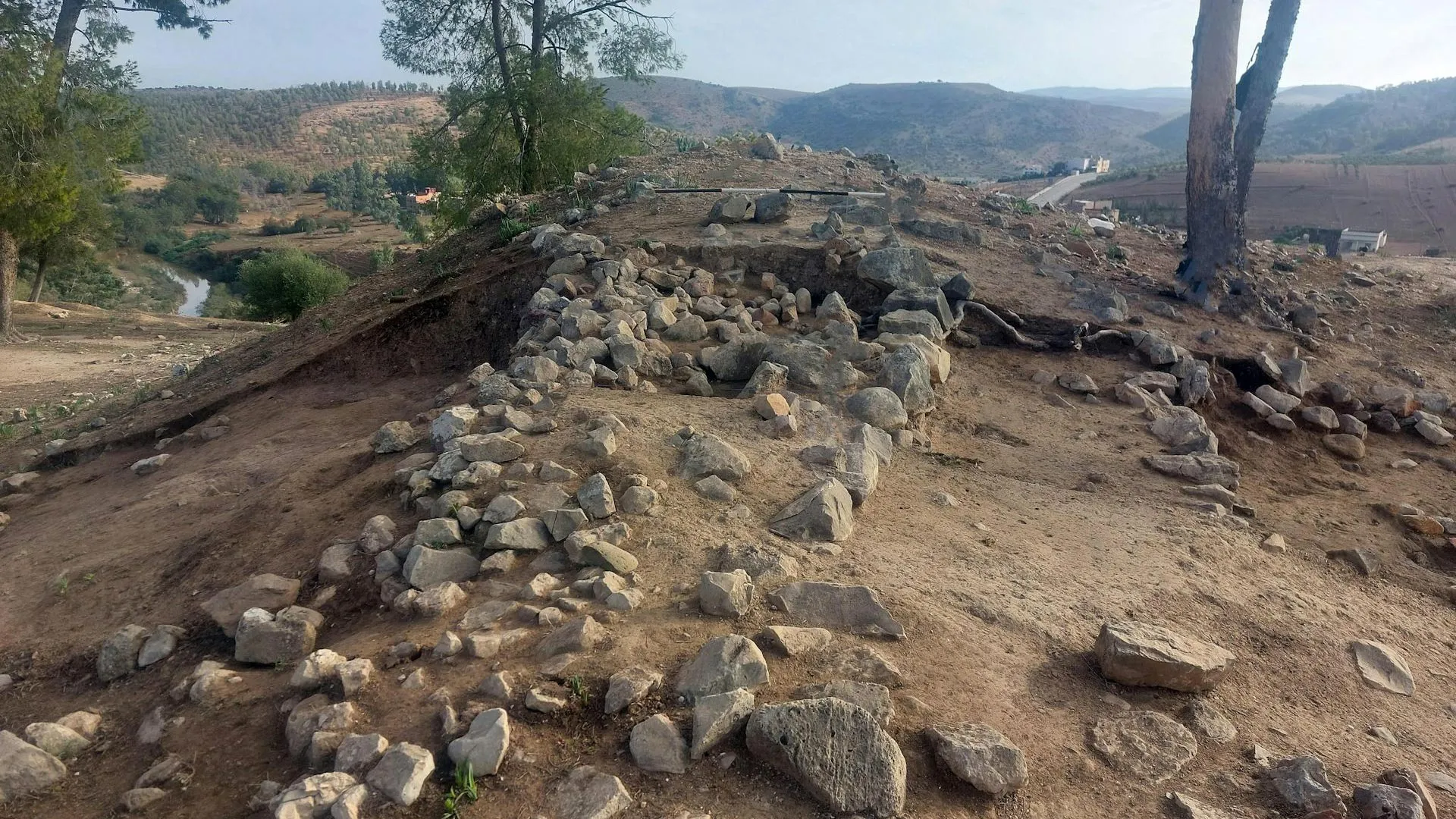
Excavations at Oued Beht in northwest Morocco have uncovered a defensive wall structure dating to 4,000 to 3,500 years ago, marking the earliest confirmed large-scale defensive construction in North Africa outside Egypt. The discovery was made during 2023 excavations by the Oued Beht Archaeological Project and reported by researchers including Giulio Lucarini, Cyprian Broodbank, and Toby C. Wilkinson.
The structure consists of a multi-phase ditch, rampart, and wall built across a narrow section of the Oued Beht ridge. Radiocarbon dating of associated deposits confirmed its age. The wall likely protected the southern tip of the ridge between the river and a ravine.
The construction required planning, coordination, and mobilization of labor, indicating a community capable of organizing complex building projects. The exact threats the wall was designed to counter remain unknown, though researchers suggest it relates to competition over land and resources rather than invasion.
The same site had revealed an earlier agricultural complex dating to 5,400 to 4,900 years ago. During that Neolithic phase, activity focused on a larger northern area. By the Bronze Age period of the wall's construction, the settlement had shifted to the narrower, more defensible southern ridge.
The medieval period saw the site reused between the 11th and 13th centuries AD, when the defensive structure was rebuilt, a hamlet or farm was established on a nearby hilltop, and a cemetery was used.
The findings suggest communities in northwest Africa during the second millennium BC were connected to broader Mediterranean networks, including regions in Spain and Portugal, and were not isolated from wider social transformations of the era.