Researchers reconstructed a lush prehistoric landscape from nearly 700,000 years ago using a single elephant tooth found in northern Israel. Hannah Farrell, a PhD candidate at Haifa University, led the study published in Quaternary Science Reviews. The team examined a large molar and tusk fragments of Palaeoloxodon antiquus, a straight-tusked elephant, recovered from Gesher Benot Ya'aqov in the Jordan Rift Valley.
The tooth preserved chemical clues about the ancient environment. Using CT scans, 3D reconstruction, microscopic examination, isotope geochemistry, and pollen analysis, the scientists determined that the region contained woodlands, grasslands, marshes, flowing rivers, and shallow bodies of water. Carbon isotope measurements indicated the elephant lived where water was dependable. Pollen from nearby sediments revealed wetland plants including reeds, sedges, willow, tamarisk, and aquatic vegetation.
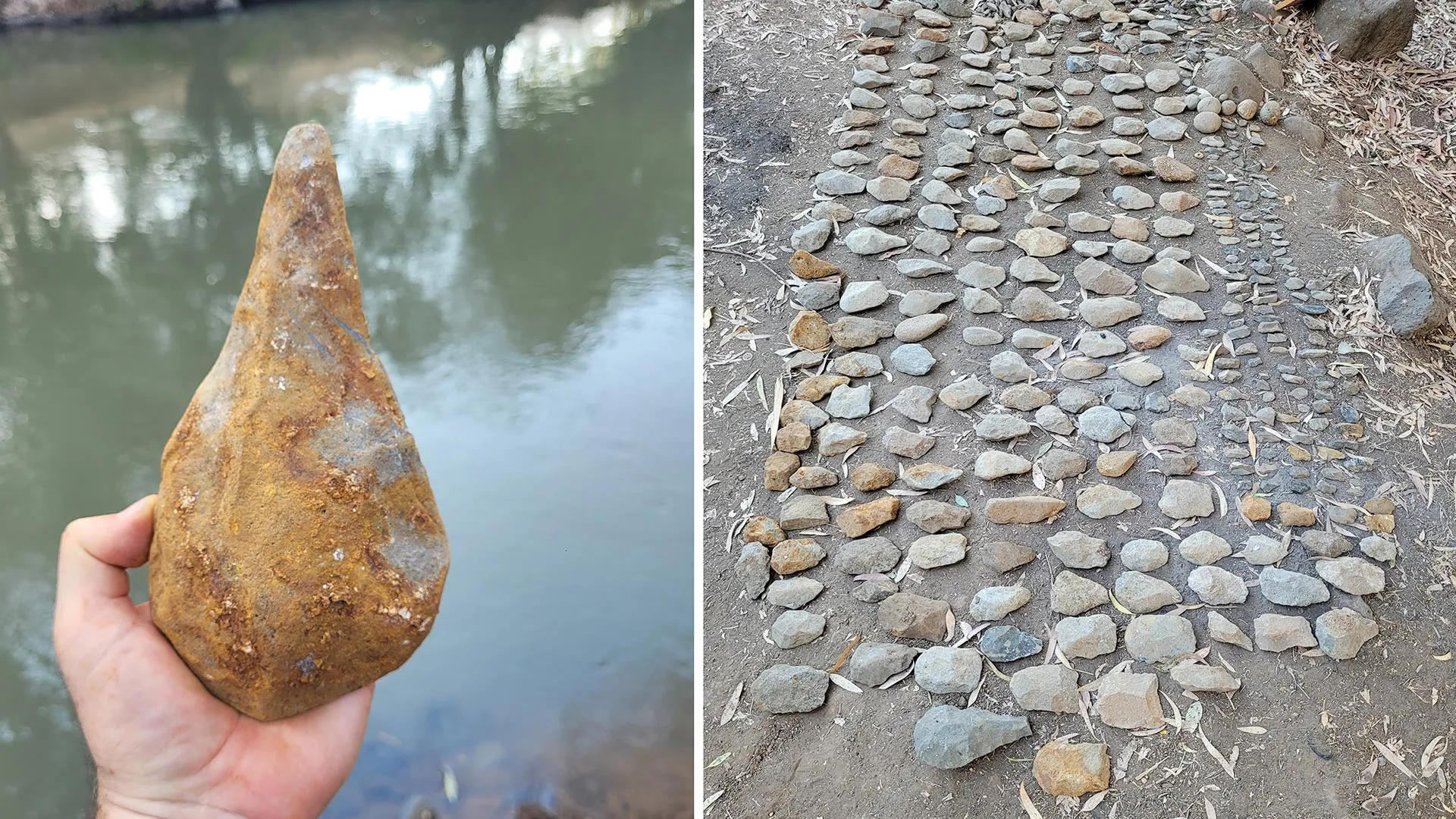
The site, excavated by Prof. Gonen Sharon of Tel-Hai University, also contained Acheulian stone tools like handaxes and cleavers made from basalt alongside the elephant remains.
The Hula Valley lies within the Levantine Corridor, a passage connecting Africa and Eurasia. Researchers believe this ancient landscape functioned as a stable ecological refuge that may have supported early human populations moving through the region. Prof. Sharon stated that "understanding how humans and animals responded to environmental change hundreds of thousands of years ago helps us better understand the forces that shaped our species." Collaborators included Cheryl A. Makarewicz and Nimrod Marom of the University of Haifa, and Minji Jin and Dafna Langgut of Tel Aviv University.