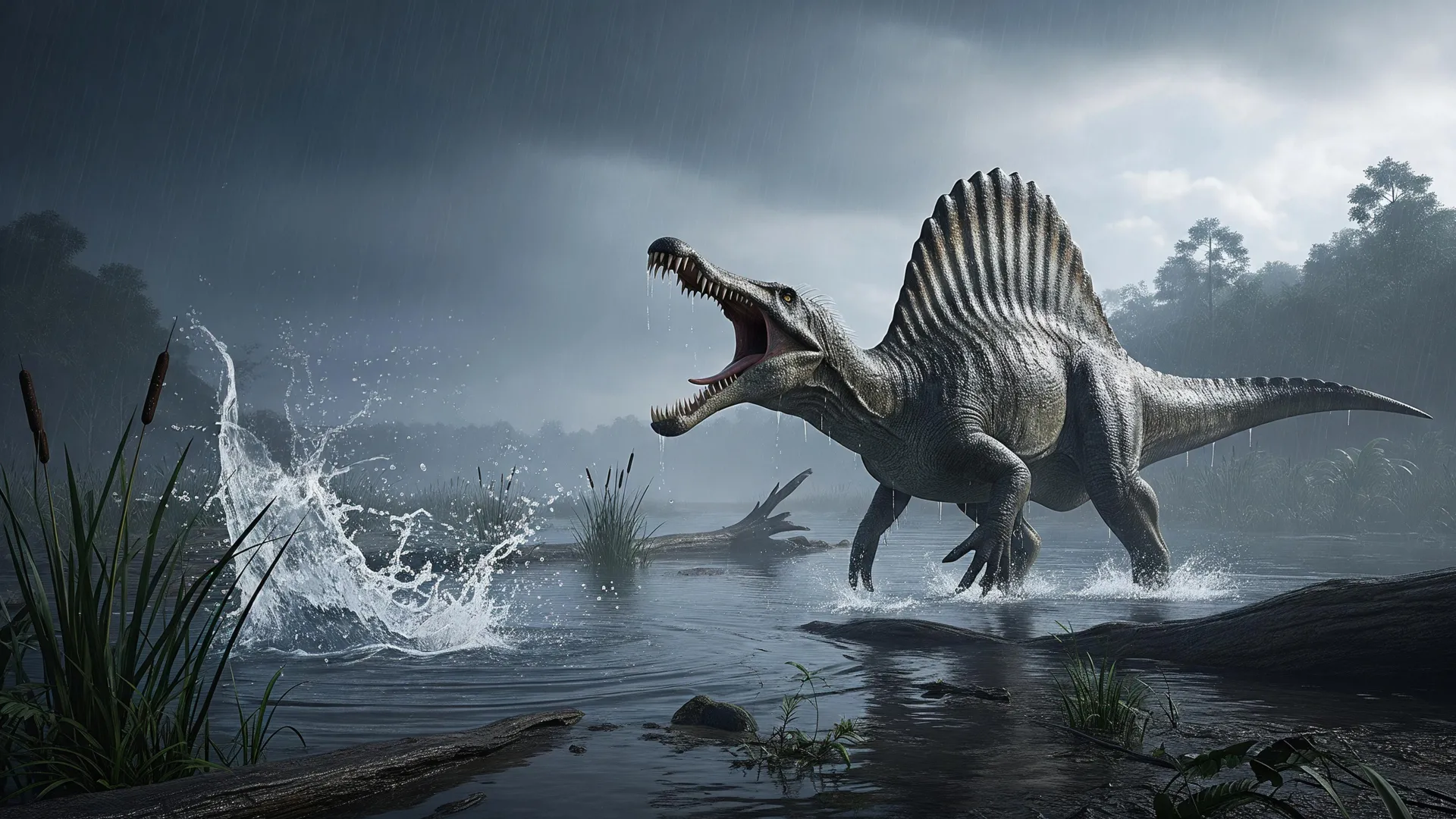
# Spinosaurus Was More Aquatic Than Scientists Thought, Yale Study Reveals
Yale researchers have fundamentally reshaped our understanding of Spinosaurus, the enormous theropod dinosaur that dominated Africa during the Cretaceous period. Using machine learning analysis of thousands of fossil bone measurements, the team determined that this creature spent most of its life in water rather than on land, contrary to earlier scientific consensus.
The study represents a shift in how paleontologists evaluate aquatic adaptation in extinct animals. Rather than relying on isolated anatomical features or skeletal arrangements, the Yale team applied computational methods to compare fossil dimensions across multiple species with known lifestyles. This approach allowed researchers to identify patterns in skeletal structure that correlate with aquatic versus terrestrial existence.
Spinosaurus, which lived roughly 95 million years ago, possessed numerous adaptations suited for water. Its paddle-like feet, dense bone structure, and elongated snout resembled modern crocodilians and river dolphins more than typical land-dwelling dinosaurs. The new analysis reinforces these observations with quantitative support, suggesting the creature operated as an apex aquatic predator in ancient African rivers and waterways.
The findings carry broader implications for understanding vertebrate evolution. The research team also examined other prehistoric marine reptiles, including ichthyosaurs and plesiosaurs, which paleontologists had previously classified as exclusively aquatic. The machine learning analysis revealed unexpected patterns suggesting these animals spent substantial time on land despite possessing many aquatic specializations. This discovery complicates the simple categorization of prehistoric creatures as either fully aquatic or fully terrestrial.
The researchers trained their algorithms by analyzing bone measurements from modern animals with well-documented lifestyles. Crocodilians, dolphins, sea turtles, and other contemporary species provided reference data. Once the model identified skeletal signatures associated with aquatic living, scientists applied these criteria to fossil specimens, producing quantitative scores reflecting the likelihood of aquatic versus terrestrial adaptation.
This computational approach offers advantages over traditional morphological analysis. Individual anatomical features can be misleading. A paddle-like limb might indicate aquatic behavior, but some terrestrial animals possess similar structures. By processing thousands of measurements simultaneously, machine learning captures complex, multidimensional patterns that human observers might overlook.
Spinosaurus presents a particularly fascinating case because its anatomy spans multiple adaptive strategies. Its teeth suited piercing slippery prey. Its nostrils positioned high on its skull facilitated breathing while mostly submerged. Yet certain skeletal elements suggested possible terrestrial capability. The quantitative analysis resolved this ambiguity by weighing all factors together, concluding that aquatic specialization dominated its anatomy.
The study underscores how vertebrates repeatedly colonized aquatic environments throughout evolutionary history. After early tetrapods established themselves on land, their descendants repeatedly returned to water, independently developing similar solutions to hydrodynamic challenges. Spinosaurus exemplified this pattern, representing an unusual theropod lineage that abandoned the terrestrial lifestyle dominant among its relatives.
Future paleontological research will likely employ similar machine learning methods to reassess other controversial species. Animals occupying intermediate ecological niches, neither fully aquatic nor entirely terrestrial, present interpretive challenges that computational analysis may resolve more objectively than traditional approaches. The Yale findings demonstrate how modern data science enriches paleontology, offering new perspectives on ancient life.