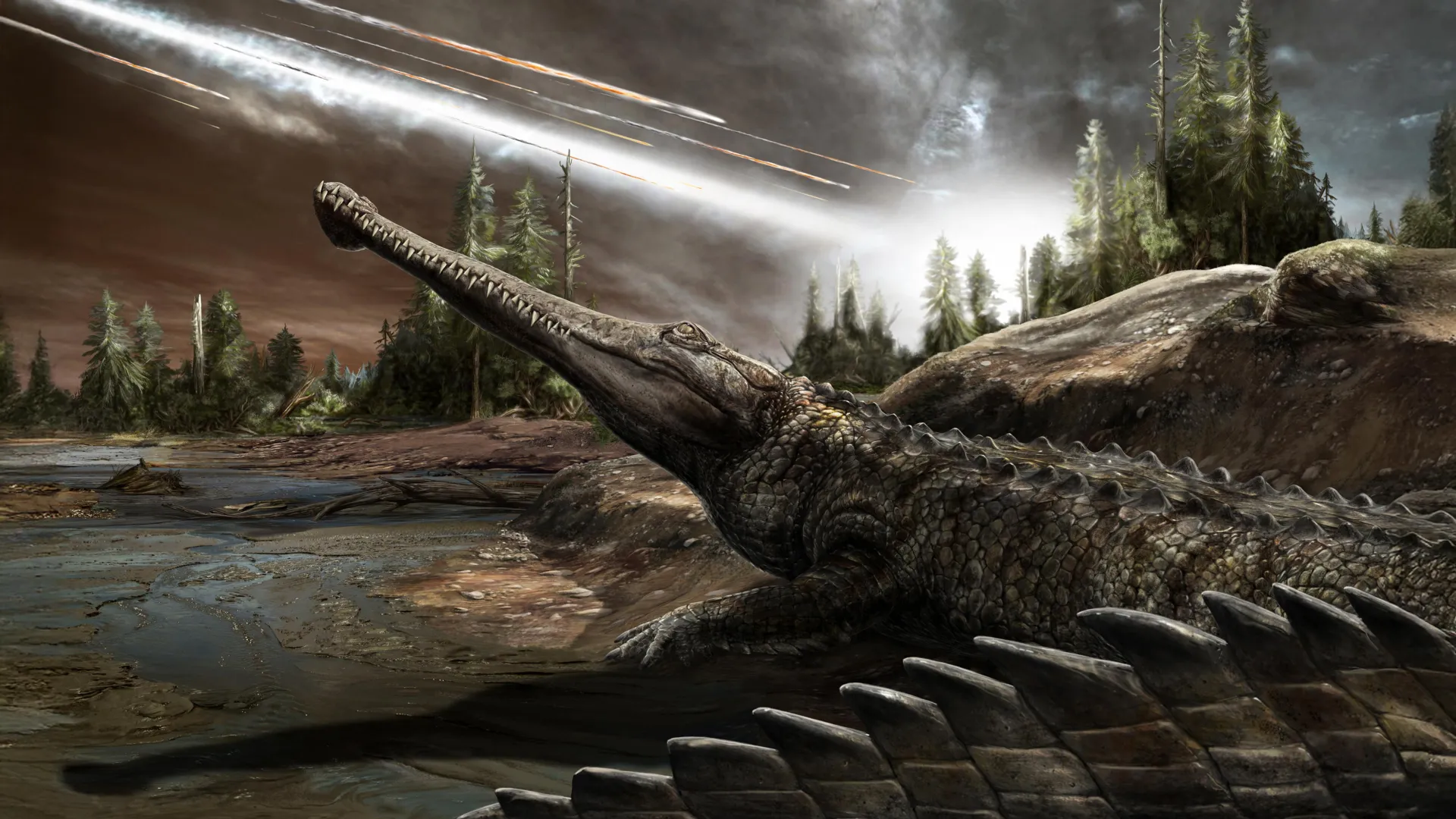
Scientists led by the University College London found that crocodiles and their ancient relatives survived the asteroid impact 66 million years ago partly because they preferred warm environments. Research published in Science Advances analyzed over 7,000 fossils and records from more than 400 living and extinct crocodile species. The team reconstructed Earth's climate and geography across 245 million years using computer models.
The study examined how conditions changed after the Chicxulub asteroid strike. Climate simulations showed that tropical and subtropical regions near the equator remained warm enough to support crocodile relatives even as environments suitable for non-avian dinosaurs deteriorated severely. Only extreme simulations involving a 15% reduction in sunlight eliminated these potential refuges, a scenario researchers now consider unlikely.
Dr. Alfio Alessandro Chiarenza, lead author at UCL Earth Sciences, said: "Crocodiles' long-standing preference for warm environments may have placed survivors exactly where suitable climates held up best, like around the equator. These refuges could have sheltered populations that later recovered and radiated out."
Throughout their 250 million year history, crocodile relatives consistently followed warm climates rather than adapting to dramatically different temperatures. When Earth grew hotter, they expanded into new regions including Antarctica. As temperatures fell, they retreated toward the tropics. The researchers identified two exceptions. Around 94 million years ago, one branch evolved to tolerate hotter conditions. Around 34 million years ago, an extinct group in Australia adapted to arid environments.
The study notes that favorable temperatures likely formed only one reason for crocodile survival. Other factors included small body size, ability to live partly in water, flexible diets, and modest energy requirements as ectothermic animals.
Professor Philip Mannion at UCL Earth Sciences noted implications for today: "If crocodiles mostly coped with past climate change by moving towards suitable habitats, today's species will need room to move as the planet warms, and the loss of suitable areas to roads, farms and cities is making that harder."