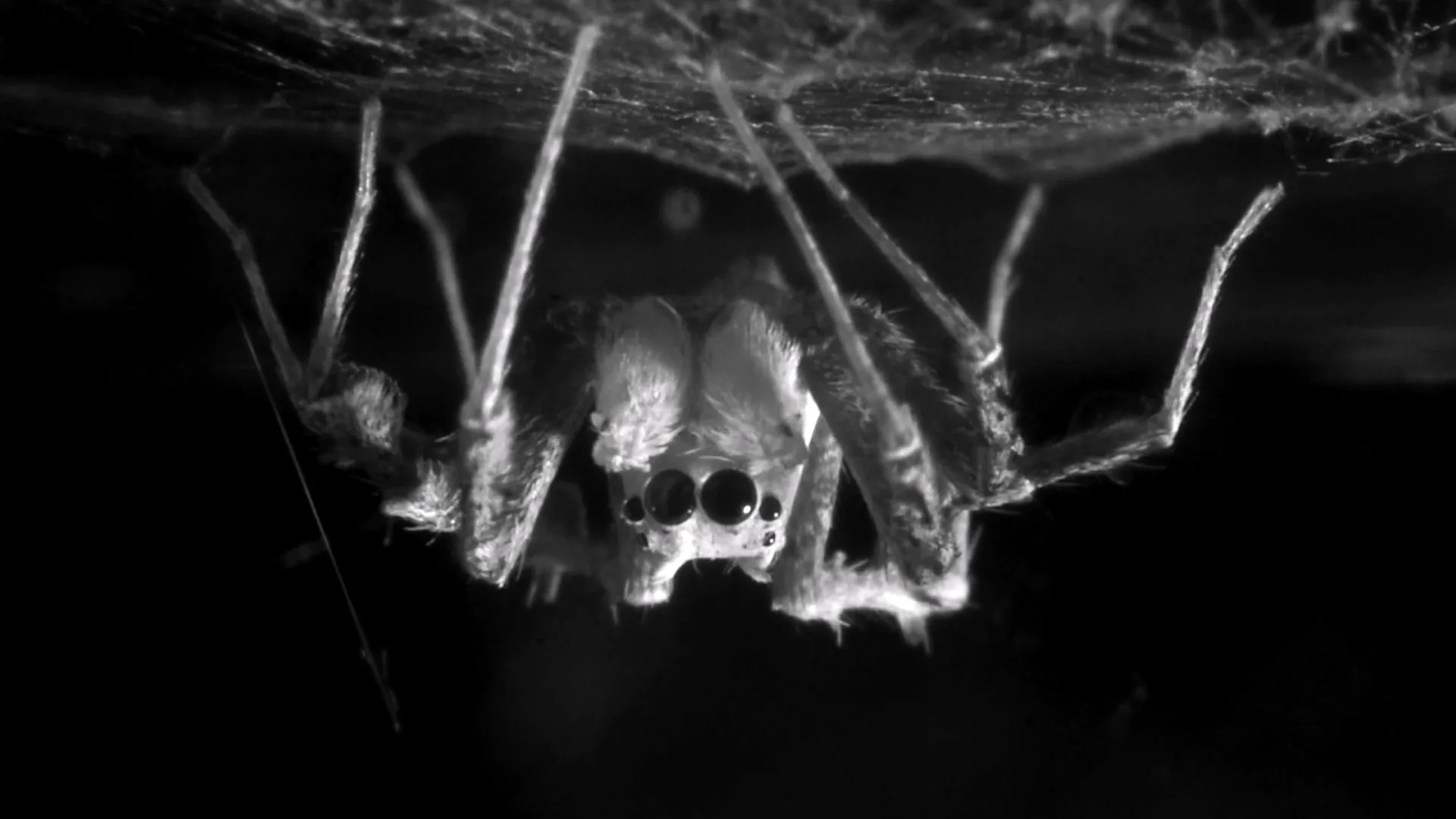
Scientists at the University of Bonn's Institute of Organismic Biology discovered that the Australian jumping spider Portia fimbriata experiences distinct sleep stages, including a REM-like state. During this stage, the spiders move their eyes and twitch their muscles, behaviors associated with REM sleep in humans.
Researchers monitored individual Portia fimbriata spiders in 12-centimeter plastic dishes under different lighting conditions using infrared cameras. They observed the spiders' sleeping positions and periods of rest, then conducted experiments using sound stimuli to measure how quickly the spiders responded to disturbances. This helped distinguish sleep from ordinary inactivity. The team also examined whether spiders displayed "sleep rebound," compensating for interrupted sleep by increasing subsequent sleep.
The findings provide the first comprehensive experimental confirmation that spiders experience genuine, regulated sleep rather than simply remaining inactive. The researchers emphasize that identifying REM-like movements does not establish whether spiders dream.
One major limitation was that the researchers could not measure the spiders' brain activity. Instead, they relied entirely on carefully documented behavior to identify different sleep states.
The discovery has implications beyond spiders. Most scientific knowledge about sleep comes from vertebrates. Finding comparable sleep features in animals with radically different nervous systems could help researchers understand when and why different types of sleep evolved. The University of Bonn team is now expanding research to investigate how sleep varies across different spider species and how environmental changes, particularly artificial light at night, may interfere with spider sleep patterns.