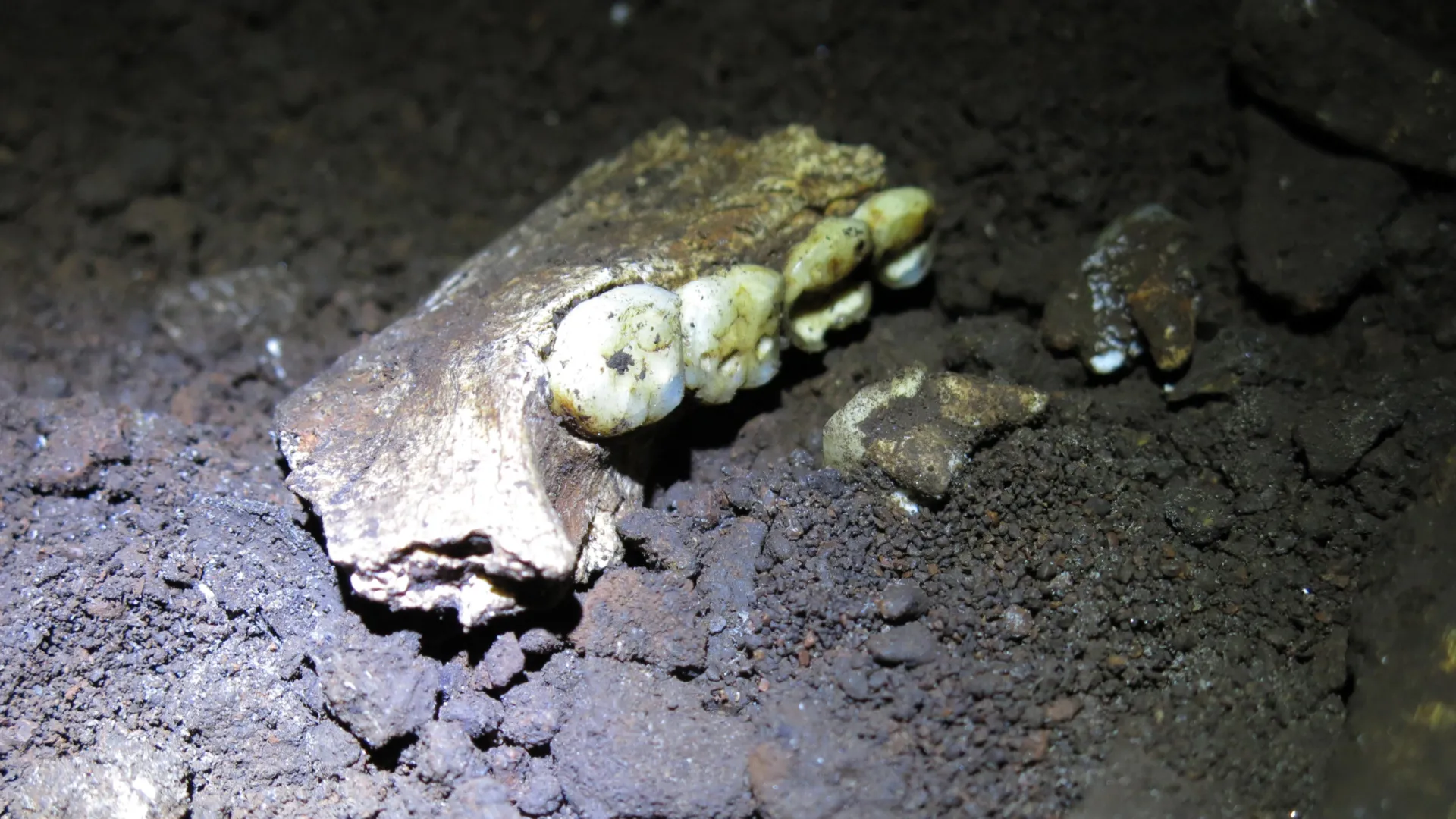
Scientists recovered ancient proteins from Homo naledi fossils in South Africa's Rising Star Cave and found no evidence of a male-specific protein marker in 23 teeth from at least 20 individuals. The findings, published in Cell, raise the possibility that the Dinaledi Chamber functioned as an exclusively female burial site, potentially the earliest known sex-specific burial location created by a human relative other than Homo sapiens.
Homo naledi lived approximately 335,000 to 241,000 years ago. Researchers from the University of York, the University of Copenhagen, and more than 10 other institutions used gentle acid etching to extract peptides from fossilized tooth enamel. They searched specifically for Amelogenin-Y, a protein produced from the male Y chromosome, and found none.
Dr. Marc Dickinson from the University of York's Department of Chemistry stated: "The lack of male markers with the group is truly fascinating. It is incredibly exciting to gain a window not only into the biology of our ancestors, but also into how they lived."
However, the researchers acknowledge alternative explanations. If Homo naledi lived in extreme isolation, a genetic mutation could have caused the loss of the gene responsible for producing Amelogenin-Y. Some individuals could then have been male despite lacking the protein marker.
Palesa Madupe, who conducted the research during postdoctoral work at the University of Copenhagen, explained that tooth enamel preserves proteins exceptionally well because dental enamel, the hardest tissue in the human body, shields proteins from environmental contamination for millions of years. This study examined the largest collection of individuals from an extinct hominin species ever analyzed using ancient protein analysis.