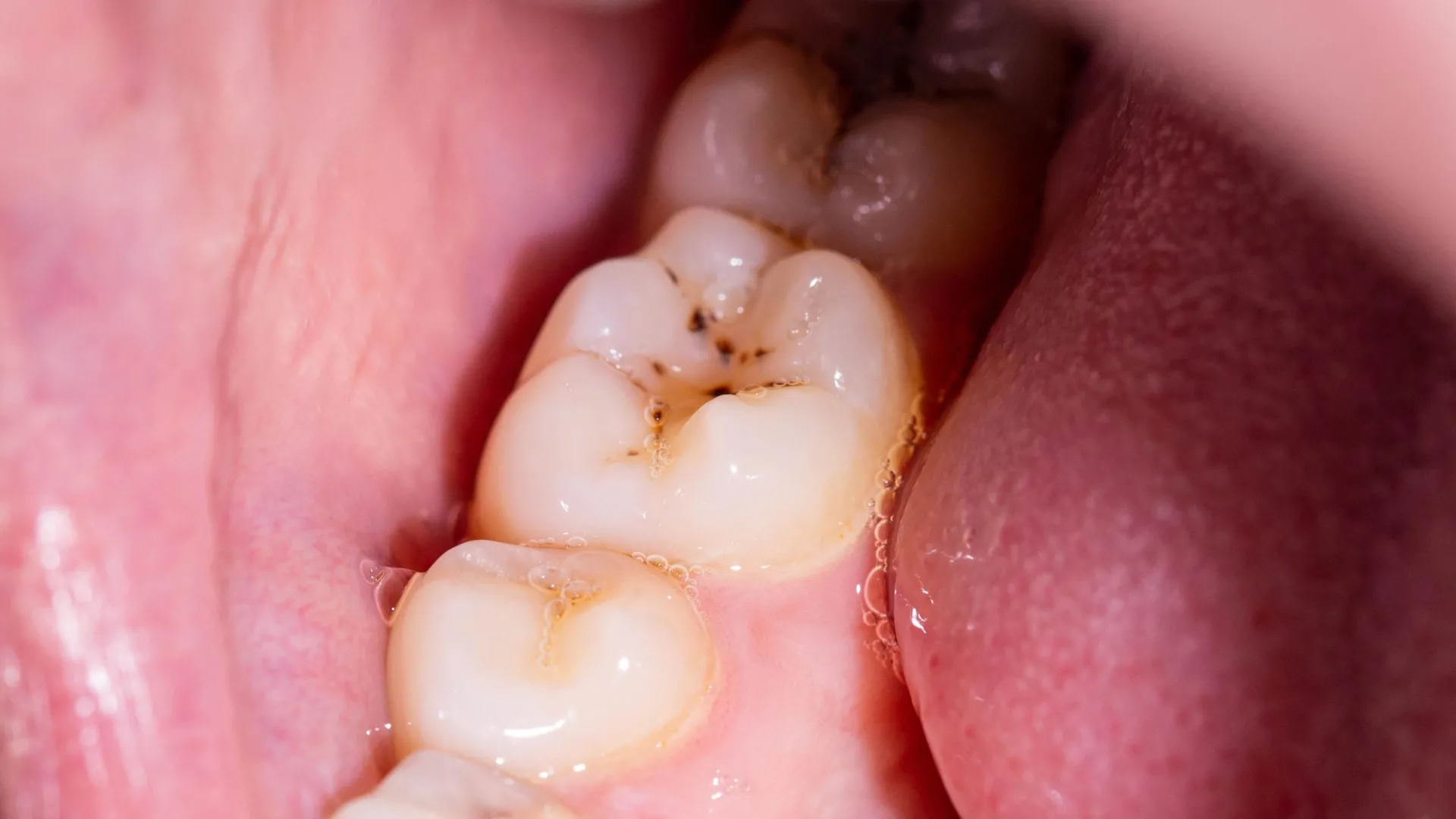
Researchers at the University of Nottingham have developed a gel that regrows damaged tooth enamel, a layer that normally cannot regenerate after childhood. The team, led by Professor Alvaro Mata, published their findings in Nature Communications.
The gel works by mimicking natural proteins that guide enamel formation during tooth development. When applied to teeth, it attracts calcium and phosphate ions from saliva and organizes them into new mineral crystals that align with existing enamel through a process called epitaxial mineralization. This alignment preserves enamel's precise crystal structure, which gives it hardness and durability.
Dentists could apply the gel using a procedure similar to existing fluoride treatments, though this material contains no fluoride. Unlike current fluoride products and remineralization treatments that only slow deterioration, the gel aims to reconstruct lost enamel.
The gel also works on exposed dentin, the softer tooth tissue beneath enamel that causes sensitivity when exposed. By forming an enamel-like mineral layer over dentin, the treatment could reduce tooth sensitivity and improve attachment for dental restorations like fillings.
In laboratory tests, the regenerated enamel displayed mechanical properties comparable to healthy natural enamel under conditions simulating brushing, chewing, and acidic food exposure. Dr. Abshar Hasan, the study's lead author, stated the regenerated material "behaves just like healthy enamel."
The researchers emphasized the technology was designed for practical dental use, with scalability and safety in mind. Professor Mata noted the team has begun commercialization through their company Mintech-Bio, with goals to introduce an initial product by the following year. However, clinical validation in patients remains necessary before the treatment becomes established practice.