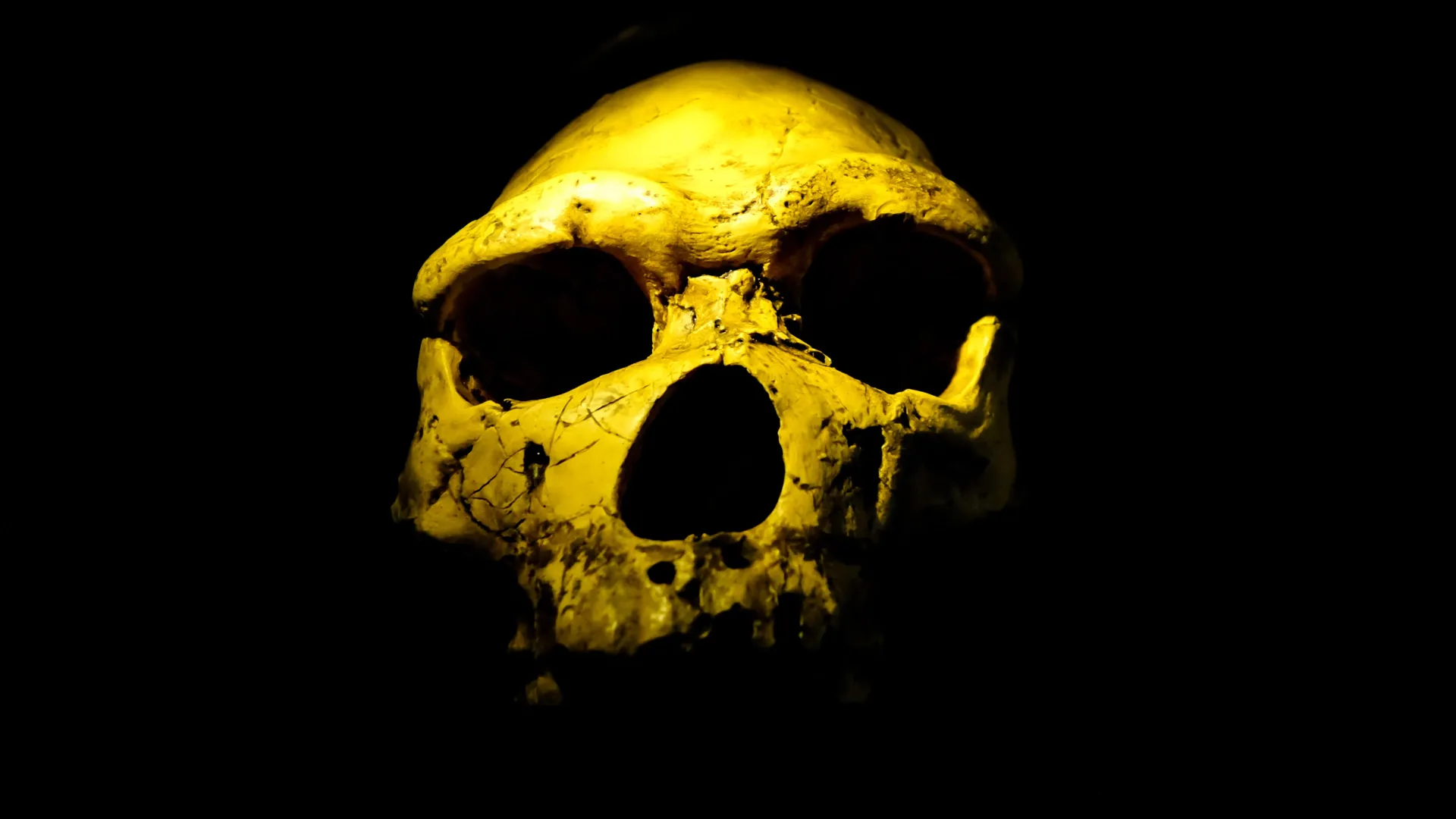
Researchers extracted ancient proteins from 400,000-year-old teeth found at three Chinese sites to reveal new details about Homo erectus and its interactions with other archaic human species. The study, published in Nature by Qiaomei Fu from the Chinese Academy of Sciences and colleagues, recovered proteins from tooth enamel at Zhoukoudian, Hexian, and Sunjiadong.
All six specimens contained a previously unknown amino acid variant, a single letter change in the protein sequence never found in any other hominin. A second variant they shared appears in Denisovans, an archaic human group known mainly from Siberia. This same variant occurs in living people at frequencies of 21% in the Philippines and about 1% in India.
The findings suggest Homo erectus populations in East Asia interbred with Denisovans around 400,000 years ago, passing genetic material through a process called introgression. Denisovans then passed this variant to modern populations in Southeast Asia and Oceania. Fu and colleagues interpret this as evidence that interbreeding between archaic human lineages was routine, not exceptional.
The study joins a growing body of evidence showing modern human genomes are mosaics assembled from multiple archaic groups. Modern humans outside Africa carry roughly 2% Neanderthal DNA. Papuans and Aboriginal Australians carry an additional 2-5% Denisovan ancestry. West African populations show genetic signatures from an unidentified archaic lineage.
The proteomic approach used to recover proteins from such ancient enamel may allow researchers to study whether other human species like Homo floresiensis and Homo luzonensis also contributed to modern human genomes.