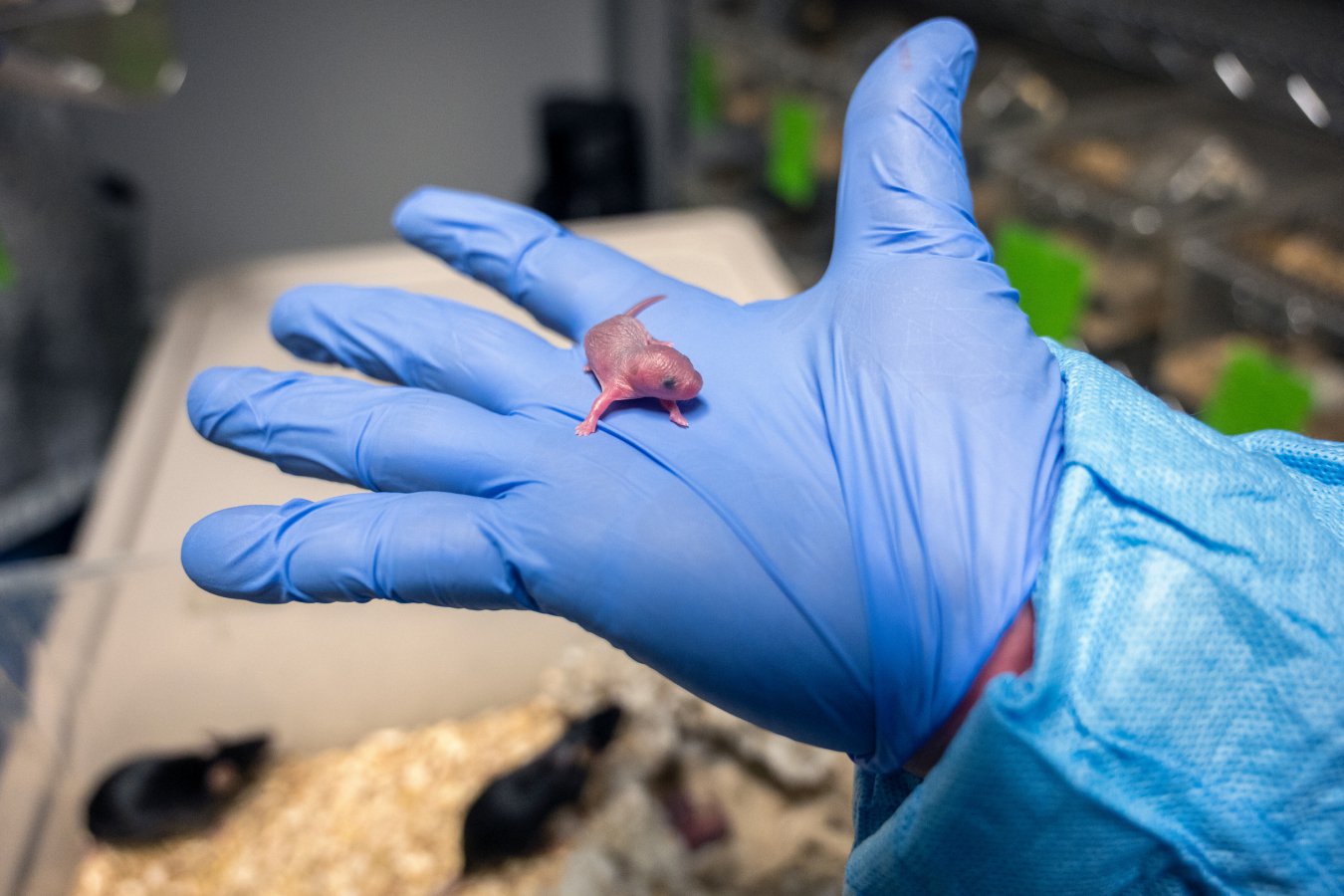
Zhigang He and colleagues at Harvard Medical School discovered that carbon dioxide exhaled at birth triggers a shutdown in cells' ability to regenerate in mice. When newborn mice breathed air after delivery, activity of a protein called mTOR dropped within minutes, even when researchers kept the umbilical cord intact and maintained stable temperature. The shutdown did not occur when CO2 levels in the air reached 10 percent.
The researchers found that falling CO2 levels cause a rise in pH inside cells, which triggers the mTOR decline. When adult mice inhaled air containing 10 percent CO2, mTOR activity restarted in brain, heart, and muscle tissues, and neurons regained their ability to regenerate after injury.
"We were very surprised and excited by the CO2 effect," He says. Nahum Sonenberg at McGill University called the results "very tantalising" and stated, "If correct, this is a groundbreaking discovery."
He notes that other physiological changes at birth may also affect regenerative capacity. He hopes the discovery could lead to therapies for spinal cord injury or traumatic brain injury based on inhaling CO2. However, he emphasized that further research is needed to establish safe CO2 levels, exposure times, and potential side effects. "We would not recommend attempting this without medical supervision," He says.
Soroush Tahmasebi at the University of Illinois noted that the finding shows CO2 drop is "the underlying mechanism driving regenerative failure, not only in neurons but potentially across multiple organs" and that it is reversible.
The discovery has evolutionary implications. Fish and amphibians that lose CO2 through their skin tend to have high regenerative capacity, while mammals and birds relying on lungs are much more limited.