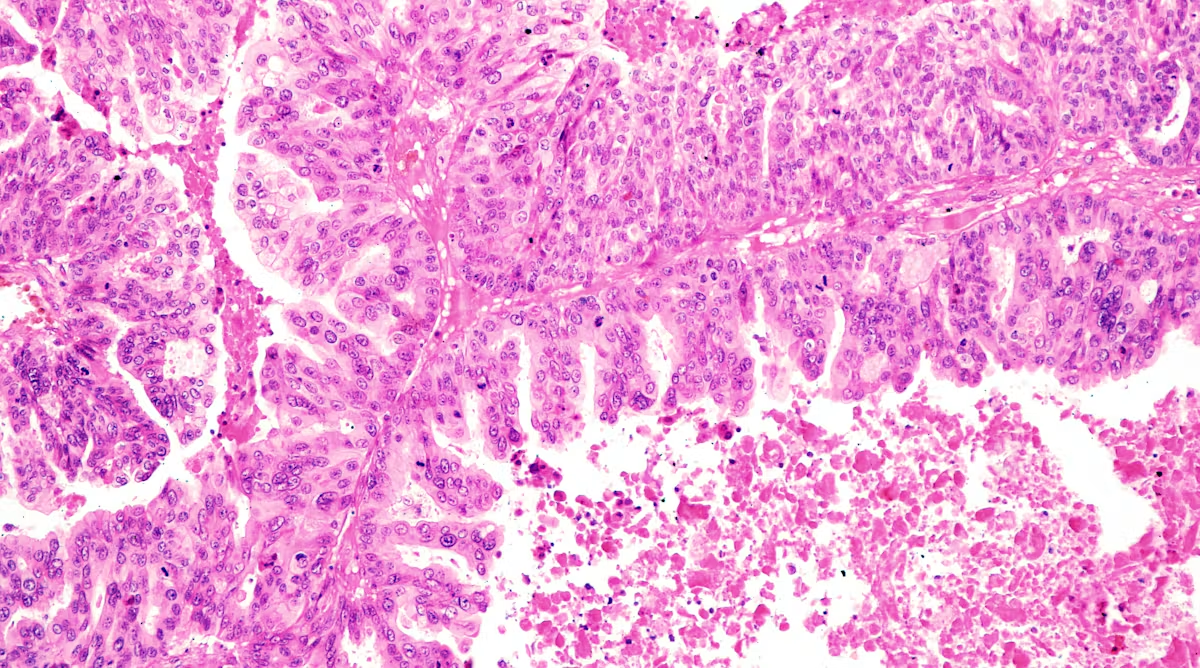
Researchers studying early ovarian cancer have identified a molecule in the blood that may signal the presence of precancerous changes in the fallopian tube. The molecule, called Tu-stroma, is a type of RNA packaged in tiny vesicles that cancer cells release into the bloodstream.
High-grade serous ovarian cancer often begins in the fallopian tube with microscopic changes that are difficult to detect. One early stage involves a patch of abnormal cells called serous tubal intraepithelial carcinoma (Stic).
In a study of 506 blood samples, researchers found higher Tu-stroma levels in people with Stic and in those with early cancer that had begun spreading into nearby tissue. In a separate validation group, the test detected Stic in about 92 percent of people who had it and showed no signs of Stic in about 98 percent of healthy people. Tu-stroma performed better than CA125, a protein currently used for ovarian cancer screening, at distinguishing people with Stic from healthy people or those with non-cancerous ovarian growths.
However, the study has limitations. Researchers worked with samples from people whose diagnoses were already known, and only a small number had Stic. If the test were offered to people without symptoms, very few would likely have these abnormal cells. Even a small proportion of false positives could lead to unnecessary tests or surgery.
Researchers must still determine how often abnormal cells in the tube lining progress to invasive cancer. They also need to clarify what action to take when the blood test flags a problem but imaging shows nothing. A screening trial would ultimately need to demonstrate whether detecting Tu-stroma saves lives.