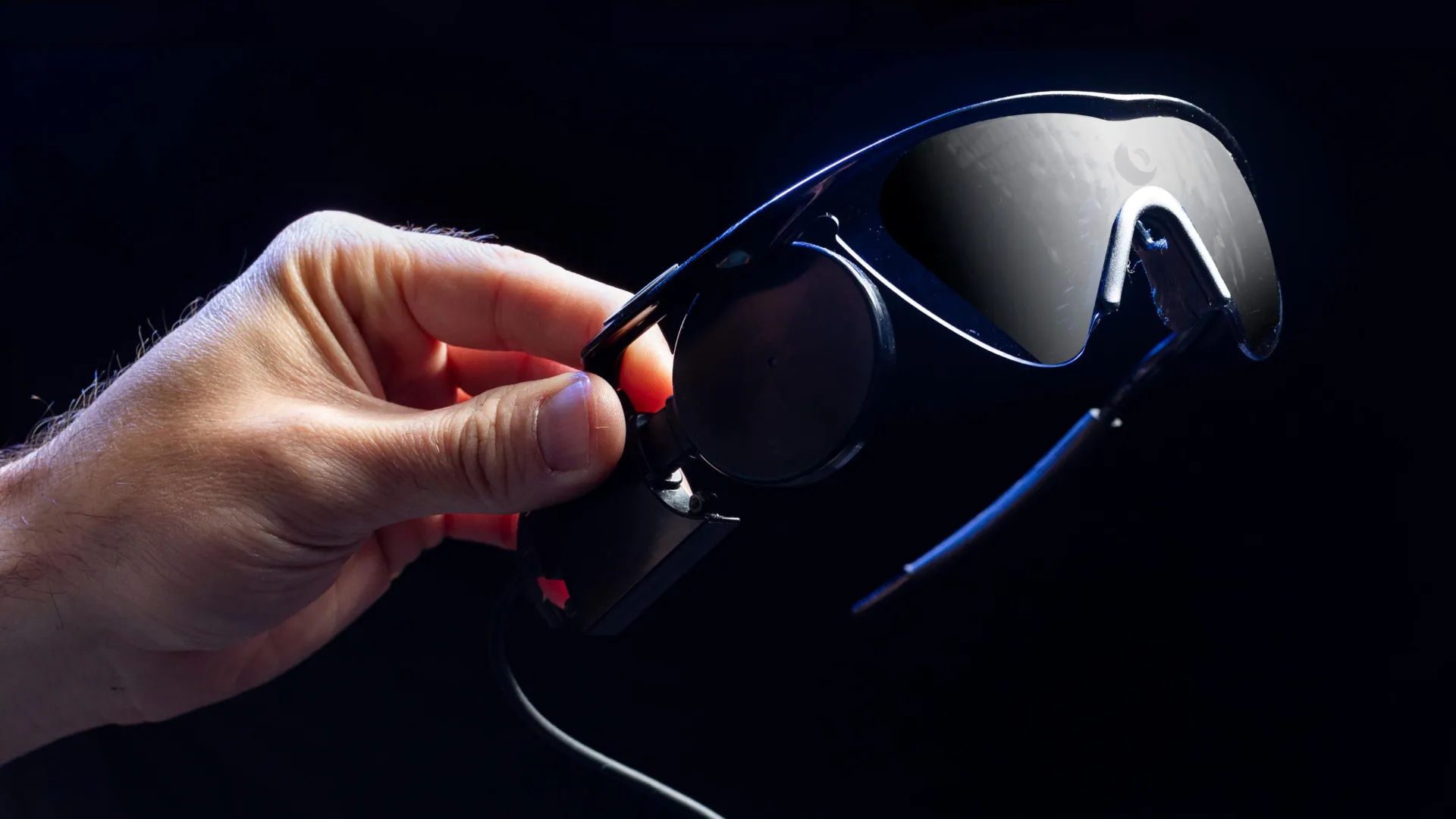
Researchers from UC Santa Barbara, ETH Zurich, and Miguel Hernández University demonstrated that artificial intelligence can improve how brain implants restore vision to people who are blind. The team used a deep learning system to develop electrical stimulation patterns for electrodes implanted in the visual cortex, the region of the brain that processes visual information.
The proof-of-concept study, published in Neuron, tested the technology in 2024 with a 27-year-old man who lost his sight from a traumatic brain injury. He received an implant containing 96 electrodes in his visual cortex that produced visual sensations called phosphenes, which appear as spots, flashes, or shapes of light.
Michael Beyeler, an associate professor of computer science and psychological and brain sciences at UC Santa Barbara, led the research. The AI system learned to predict how the man's visual cortex would respond to different electrical stimulation patterns. The implant could both deliver electrical signals and record the resulting brain activity, allowing researchers to train the model on actual neural responses rather than relying only on stimulation parameters.
When scientists tested the AI-selected stimulation patterns, the results showed the new approach generated intended patterns of neural activity more accurately than comparison methods while requiring less electrical current. Researchers also discovered that brain activity patterns were better predictors of what the participant perceived than the stimulation settings themselves.
"Engineers naturally want to treat phosphenes like pixels: stimulate more electrodes, and you should get a more complete image," Beyeler said. "But the brain does not work that way. Electrodes interact, neural responses fluctuate, and what we put into the brain is not necessarily what the person perceives."
Beyeler's work received support from a 2022 National Institutes of Health Director's New Innovator Award, a five-year, $2 million grant. Visual cortical prostheses bypass damaged eyes and optic nerves by delivering electrical signals directly to the visual cortex, potentially helping people whose vision loss came from strokes, neurodegenerative diseases, or traumatic brain injuries.
Future prostheses may need to monitor how the brain reacts and adapt stimulation continuously. "A useful visual prosthesis cannot rely on a fixed recipe," Beyeler said. "It has to learn how an individual brain responds and adapt the stimulation accordingly."