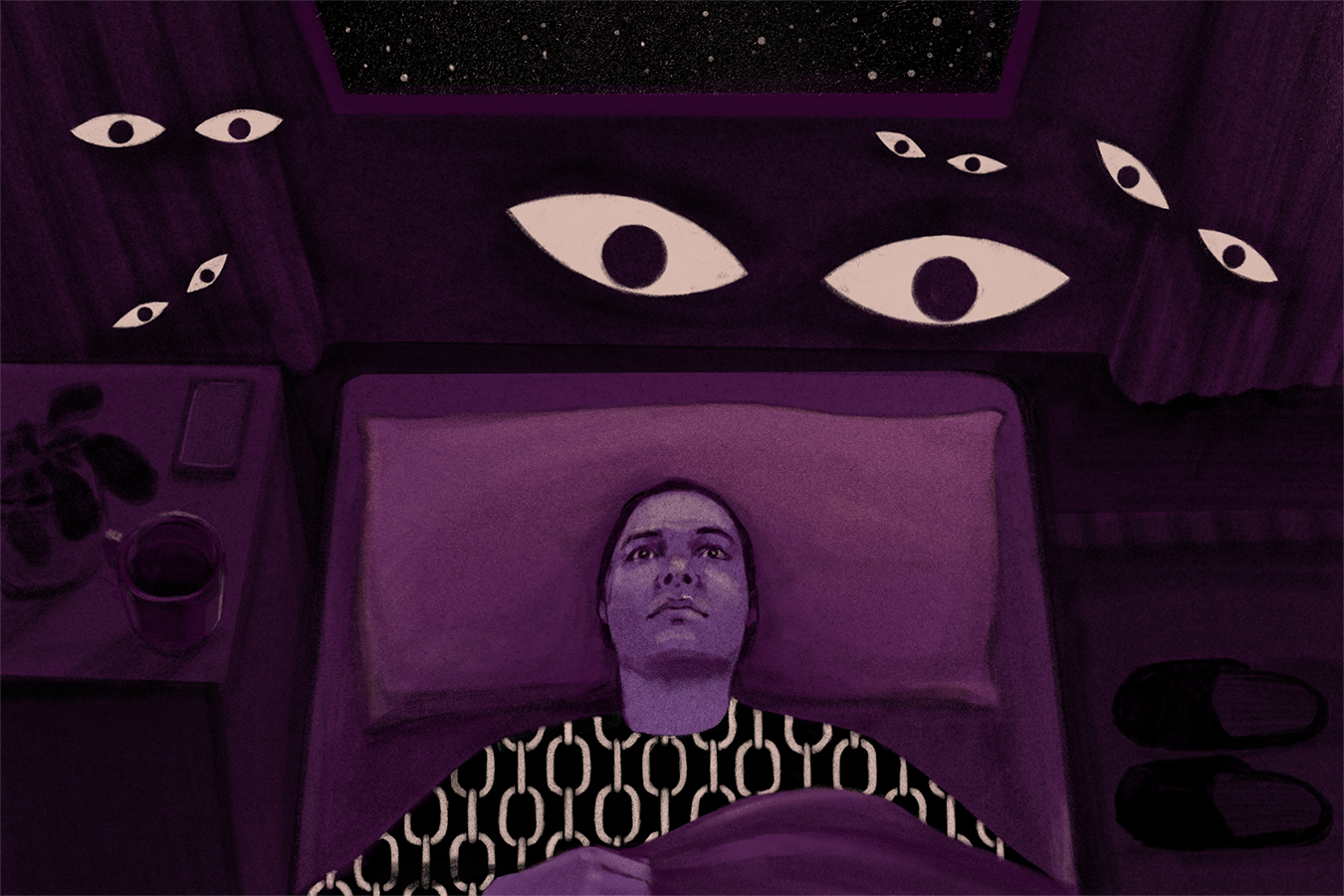
Baland Jalal, a neuroscientist at Harvard University, explains how sleep paralysis produces vivid hallucinations and what the phenomenon reveals about consciousness. Jalal discussed his research in an interview with New Scientist ahead of his book, The Phantom Mind: Insights from the borderlands of sleep.
Sleep paralysis affects approximately 30 per cent of people worldwide. It occurs when the outer layer of the brain suddenly activates and wakes a person during rapid eye movement (REM) sleep, when the body remains completely paralyzed to prevent acting out dreams. The result is conscious awareness of the environment while unable to move or speak.
Hallucinations occur because REM sleep brain activity spills into waking consciousness. During REM, the dorsolateral prefrontal cortex (the rational part) shuts down, making dreams bizarre. The cingulate cortex becomes hyperactivated, allowing people to project agency onto other beings. The temporoparietal junction, which creates body image, also shuts down, making the sense of self fluid. The limbic structures (emotional centers) become about 30 per cent more active in REM than when awake.
Jalal notes that brain-imaging studies during actual sleep paralysis episodes have not been conducted. He told New Scientist that such studies would not be technologically challenging but likely have not occurred because sleep paralysis is typically benign and hard to fund.
Cultural beliefs shape the experience. In a survey Jalal conducted with David Hinton at Harvard, about 90 per cent of people in Denmark attributed sleep paralysis to stress and physiology. In Egypt, about 50 per cent of people who experienced it thought they might die, often interpreting the phenomenon as evil genies. Episodes reportedly lasted longer and occurred twice as commonly in Egypt, possibly due to how ideas spread between people through a phenomenon called priming.
Jalal calls sleep paralysis a window into consciousness because it demonstrates mixed states where the dreaming and waking brain blend. During sleep paralysis, people retain some self-agency and can make choices, unlike in sleepwalking.