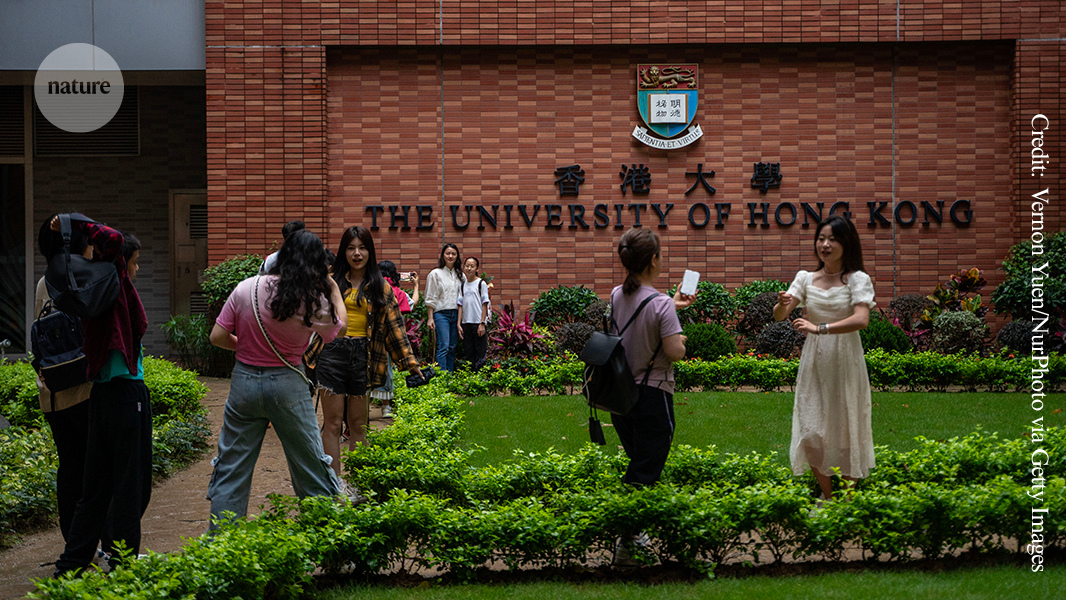
Chinese graduate students increasingly choose Asian destinations over Western universities, according to an analysis of global higher-education trends by London-based consultancy Quacquarelli Symonds (QS).
Hong Kong, Malaysia, and Macau are projected to see the fastest enrollment growth from mainland Chinese students between 2025 and 2030. Hong Kong expects around 35,000 additional mainland students by 2030 compared with 2025. Malaysia is projected to see an annual rise of 13% in Chinese enrollments during that period, the highest growth in QS's analysis. South Korea ranks fourth with an annual increase of 8%.
By contrast, enrollments in the United States, Australia, and Canada are projected to decline. Chinese students in US universities are expected to drop by an average of 4% each year between 2025 and 2030, the sharpest decline of all assessed countries. Australia is projected to overtake the United States as the leading study destination for Chinese students by 2030.
Zhao Junyi, originally from Beijing, exemplifies this shift. He completed his astronomy bachelor's degree at the University of Michigan in Ann Arbor and began a four-year PhD programme in planetary science at the University of Hong Kong in September. He cited federal cuts to scientific funding in the United States as a factor in his decision to leave. He also noted that restrictions on Chinese nationals in NASA research programmes made it "nearly impossible" for him to participate.
Additional deterrents in the West include stricter visa policies. The US federal government proposed in July limiting visa duration for foreign students to 30 days after programme completion and suggested a $100,000 fee for those intending to work after graduation. Australia and Canada have also introduced tougher immigration rules.
Zhao said studying in Hong Kong allows him to stay updated on China's space programme while working in an English-speaking environment and collaborating with international colleagues. His supervisor analyzes lunar samples from China's Chang'e-5 and Chang'e-6 space missions.
Shorter distances from home and familiar cultural environments draw students to Asia. Malaysia's sizeable Mandarin-speaking community and visa-free travel policy between Malaysia and China are attractions, according to Ngeow Chow Bing, director of the Institute of China Studies at the University of Malaya. In South Korea, high-tech manufacturing industries in semiconductors, biopharmaceuticals, and advanced materials draw Chinese students, says Xie Yuzhen, a Shanghai-based researcher studying China's higher-education industry.
Alice Wei, a consultant at QS, noted that prospective Chinese students now weigh factors including proximity to home and job prospects alongside other considerations.