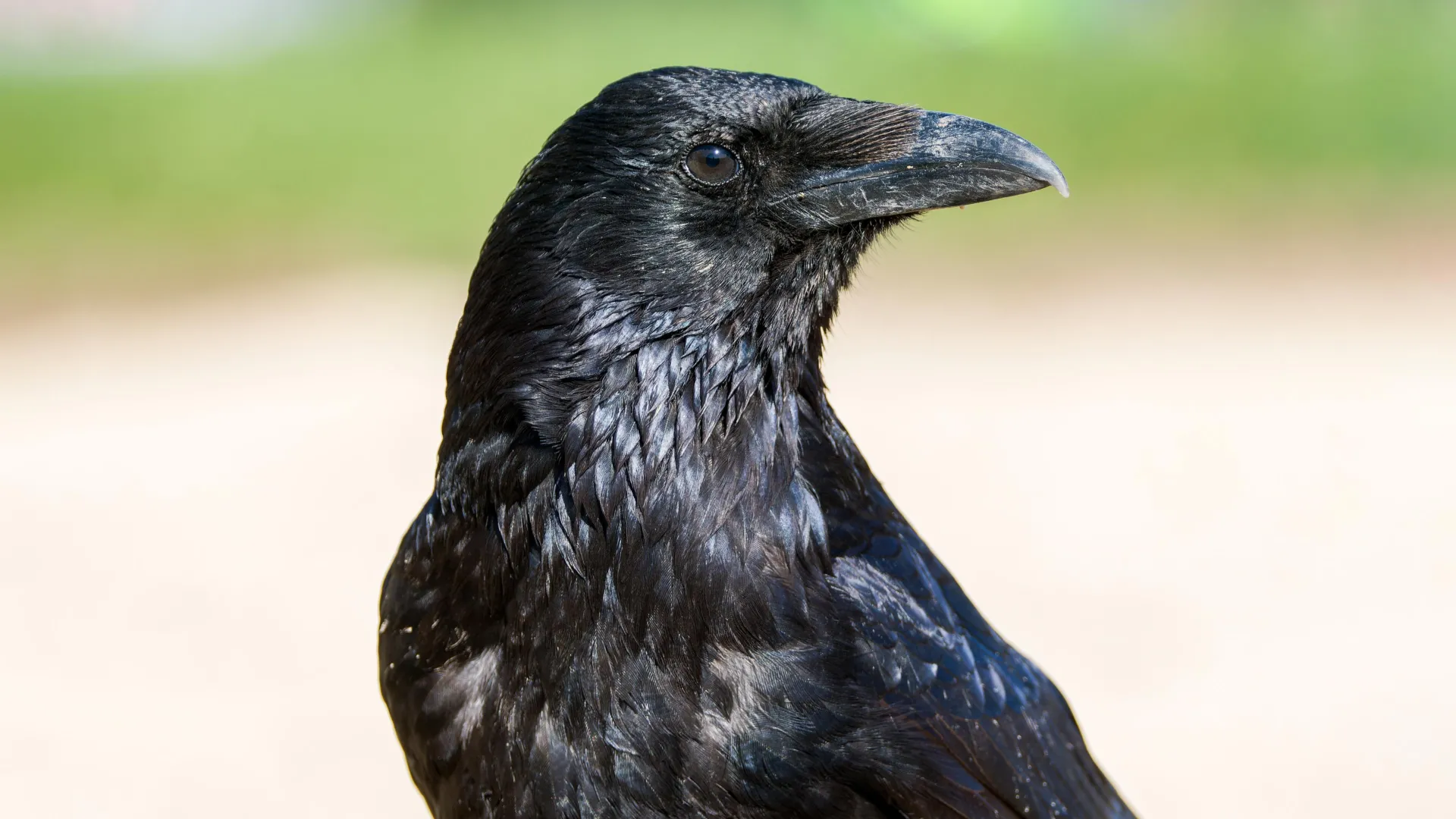
Crows can make visual decisions twice as fast as humans and monkeys, according to research from the University of Tübingen published in Science. In experiments with two carrion crows, the birds needed an average of 235 milliseconds to determine which direction a pattern of moving dots was traveling and respond with their choice, while remaining highly accurate.
Researchers Philipp Schmidbauer and Professor Andreas Nieder presented the crows with moving dots on a touchscreen. The birds had to determine whether most dots traveled left or right, then peck a target on the corresponding side. "Even when the patterns of motion were hard to recognize, the crows' decisions were still better than random choices," Schmidbauer reports, "and with clear signals, they achieved an accuracy of nearly 100 percent."
The team recorded neural activity in the nidopallium caudolaterale, a brain region involved in decision-making similar to the human prefrontal cortex. The crows' brains began distinguishing between the two directions just 70 milliseconds after the dots appeared. Neural activity steadily increased until reaching a threshold associated with making a decision, reflecting both how clearly the dots indicated a direction and which direction the bird ultimately selected.
The findings show crows make decisions using neural processes similar to those in humans and primates, despite their brains being organized differently. Birds lack a layered cerebral cortex yet follow comparable decision-making principles. Nieder suggests the speed advantage reflects evolutionary demands. "Birds rely on their vision to carry out precise, rapid maneuvers during flight and to guide their beaks towards objects when foraging," he explains.
The exact biological mechanisms behind the crows' speed advantage remain unknown. Further studies are needed to determine how their differently structured brains achieve faster visual decisions than primates.