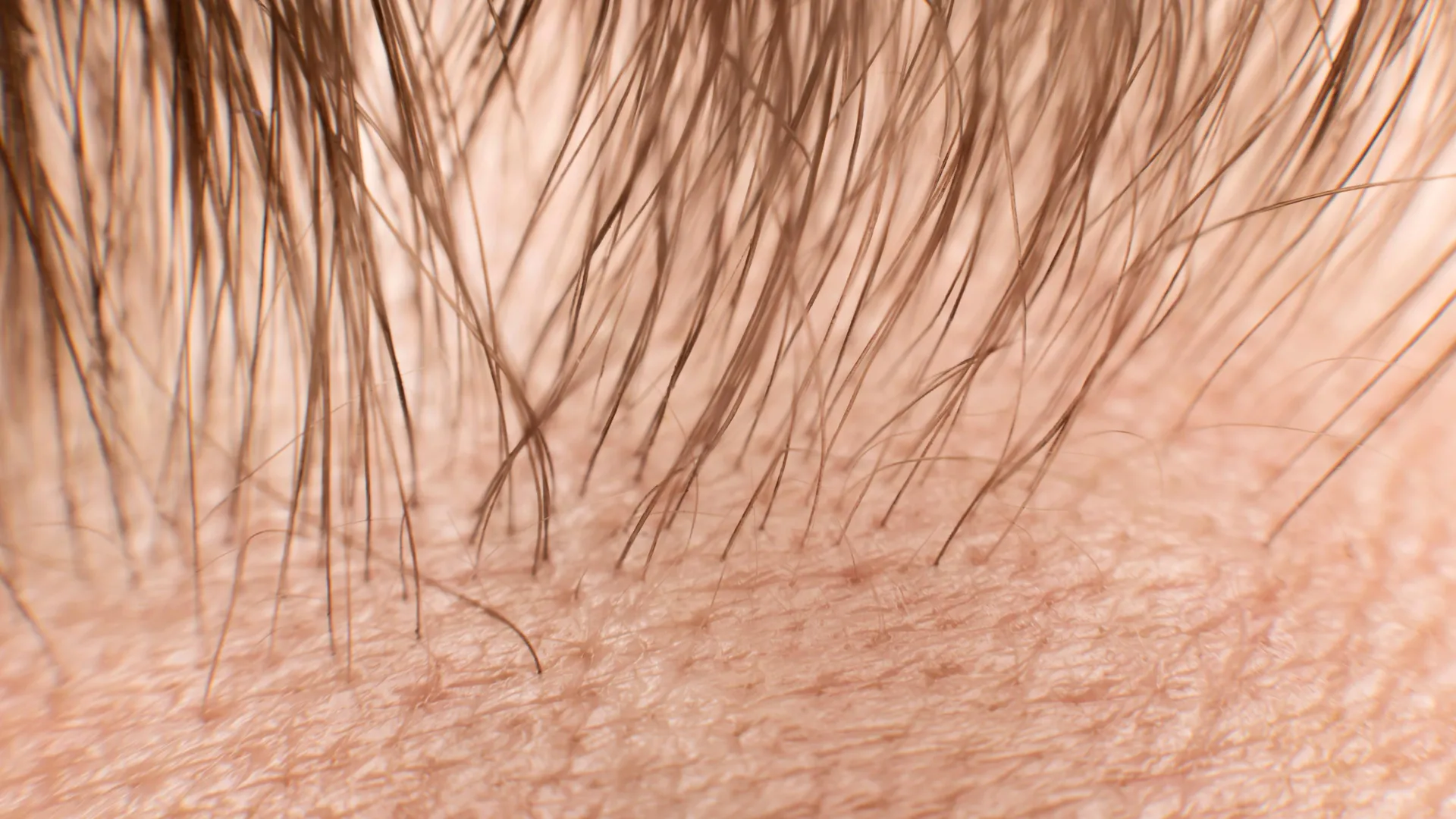
Researchers at the University of Geneva have identified a simple mechanism that may explain how hair follicles establish their precise locations during embryonic development. The team, led by Athanasia Tzika and Michel Milinkovitch from the Department of Genetics and Evolution, developed a mathematical model based on chemotaxis, the process by which cells move in response to chemical concentration differences.
The model tracks how mobile cells in the dermis interact with chemical signals released by the epidermis. When the researchers simulated embryonic skin growth using this approach, the model recreated the follicle patterns observed in laboratory mice, Mus musculus. The results appeared in PNAS.
"Our findings show that the observed patterns do not require a complex system telling each placode where to form," said Muhamet Ibrahimi and Ebrahim Jahanbakhsh, researchers in the Department of Genetics and Evolution. "Instead, placodes emerge spontaneously from local interactions between cells and chemical signals."
The team then tested whether the same mechanism could explain follicle patterns in the spiny mouse, Acomys dimidiatus, which has a highly regular and directionally aligned hair arrangement. Using experimental data from three-dimensional images of developing embryonic skin, they adapted their simulations to reflect the spiny mouse's biochemical characteristics and skin growth patterns. The model successfully reproduced the spiny mouse's distinctive follicle organization.
Tzika noted that the differences between species "result from the same self-organization process, but with variations in the interactions between cells and chemical signals." This suggests that diverse biological structures across animal species may arise from relatively simple cellular rules applied with different parameters.