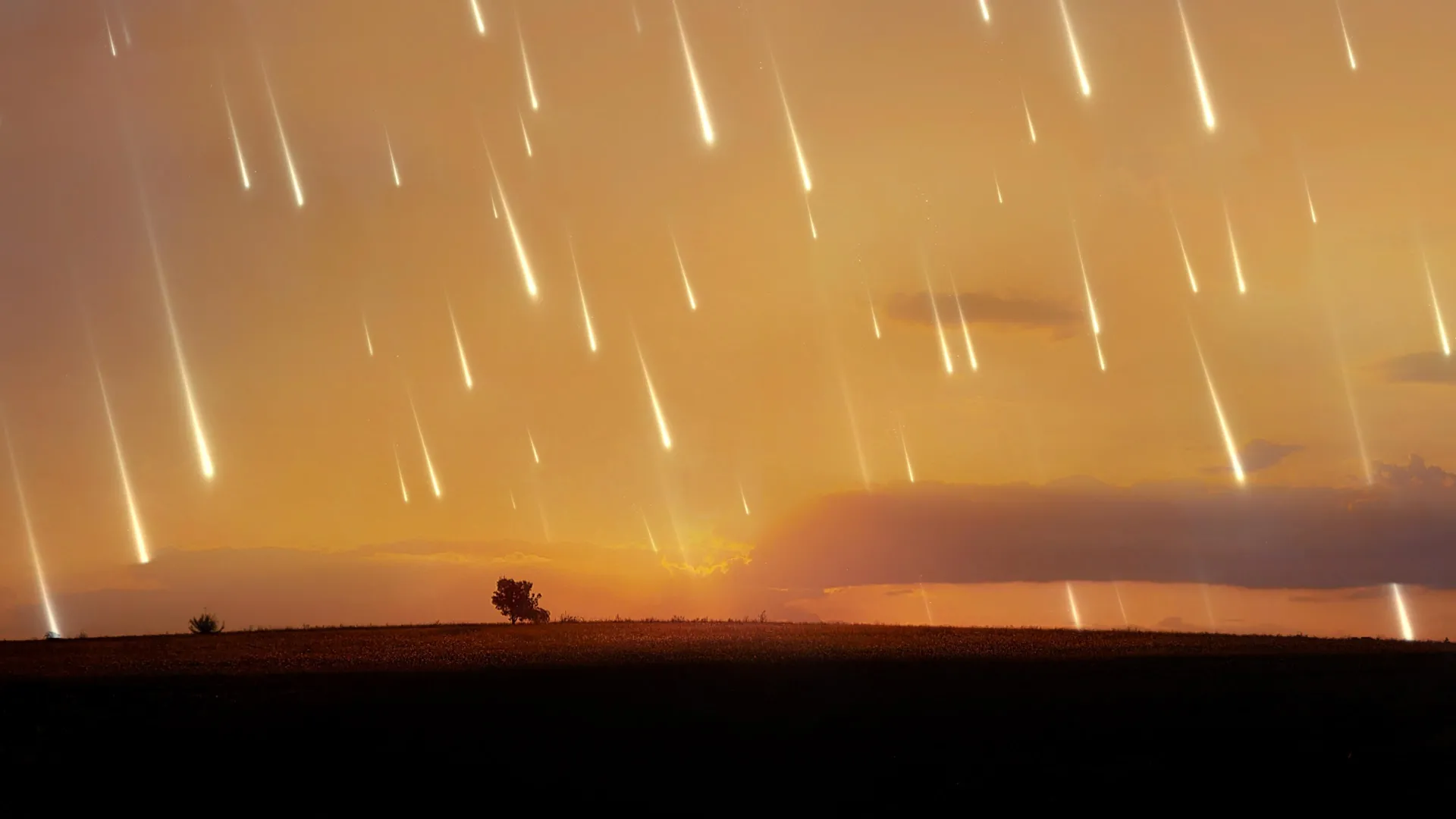
November 2026 brings multiple celestial events visible from Earth. Three meteor showers will peak throughout the month. The Southern Taurids reach peak activity around November 5, followed by the Northern Taurids around November 12. Both showers typically produce about five meteors per hour under excellent conditions, though they occasionally generate bright fireballs. The Leonids peak during the early morning hours of November 17 and 18, potentially reaching approximately 15 meteors per hour under ideal viewing conditions.
On November 15 and 16, Mars and Jupiter will appear separated by only about 1.2 degrees in the southeastern sky before dawn. Jupiter will be the brighter object, while Mars displays its characteristic reddish color. Both planets will be visible to the naked eye without telescopes or binoculars. Their apparent closeness results from their positions along Earth's line of sight, though they remain separated by enormous distances in space.
NASA's Voyager 1 spacecraft will reach a historic milestone on November 17, traveling one light-day from Earth. A light-day is the distance light travels in 24 hours. Radio signals from Earth require an entire day to reach the spacecraft at that distance, with return communication taking another 24 hours. This marks the first time a human-made object has traveled that far from our planet. NASA is marking the achievement on November 17 with its Shine Bright for Voyager's Light-Day activation.
A supermoon will rise on November 24. A supermoon occurs when a full Moon coincides with a period when the Moon is relatively close to Earth in its orbit. The Moon appears somewhat larger and brighter than an average full Moon, though the difference is often subtle. November's supermoon begins a sequence of three consecutive supermoons, with additional full supermoons occurring in December and January.