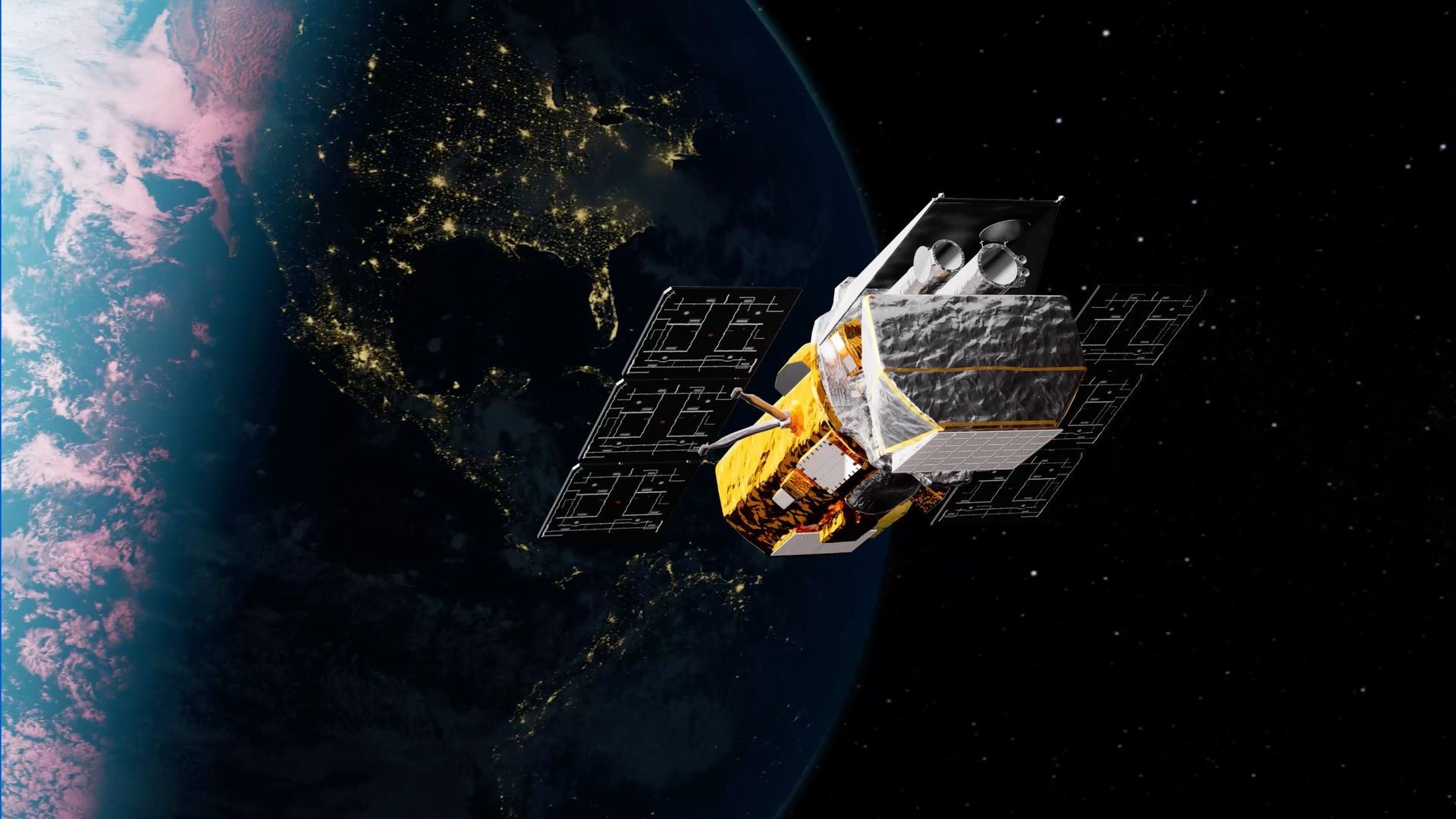
NASA's Swift space telescope burned up over Indonesia on Wednesday after nearly 22 years in orbit, concluding one of the most productive missions in astronomy history.
The spacecraft reentered Earth's atmosphere at 7:39 a.m. EST over North Sumatra at approximately 3.4 degrees north latitude and 98.6 degrees east longitude, according to NASA. The agency estimated a 1-in-2,100 chance of surviving debris hitting a populated area. No damage or injuries have been reported.
The Neil Gehrels Swift Observatory weighed approximately 3,200 pounds. Launched in November 2004, it was originally designed for a two-year mission. Swift carried three onboard telescopes that observed gamma-ray bursts, supernovas, black holes and other cosmic phenomena across ultraviolet, optical and X-ray wavelengths. The spacecraft could reorient to focus on different targets within minutes, enabling rapid follow-ups on sudden events like supernova explosions.
Over two decades, Swift's observations contributed to approximately 7,000 research papers.
Increased solar activity intensified atmospheric drag on the spacecraft, accelerating its orbital decay. NASA explored a rescue mission in which Katalyst Space Technologies was scheduled to launch a robotic spacecraft in August 2026 to boost Swift into a higher orbit, but that mission failed after launching. NASA officially ended Swift's scientific operations on Oct. 20 after its declining altitude made observations too difficult.