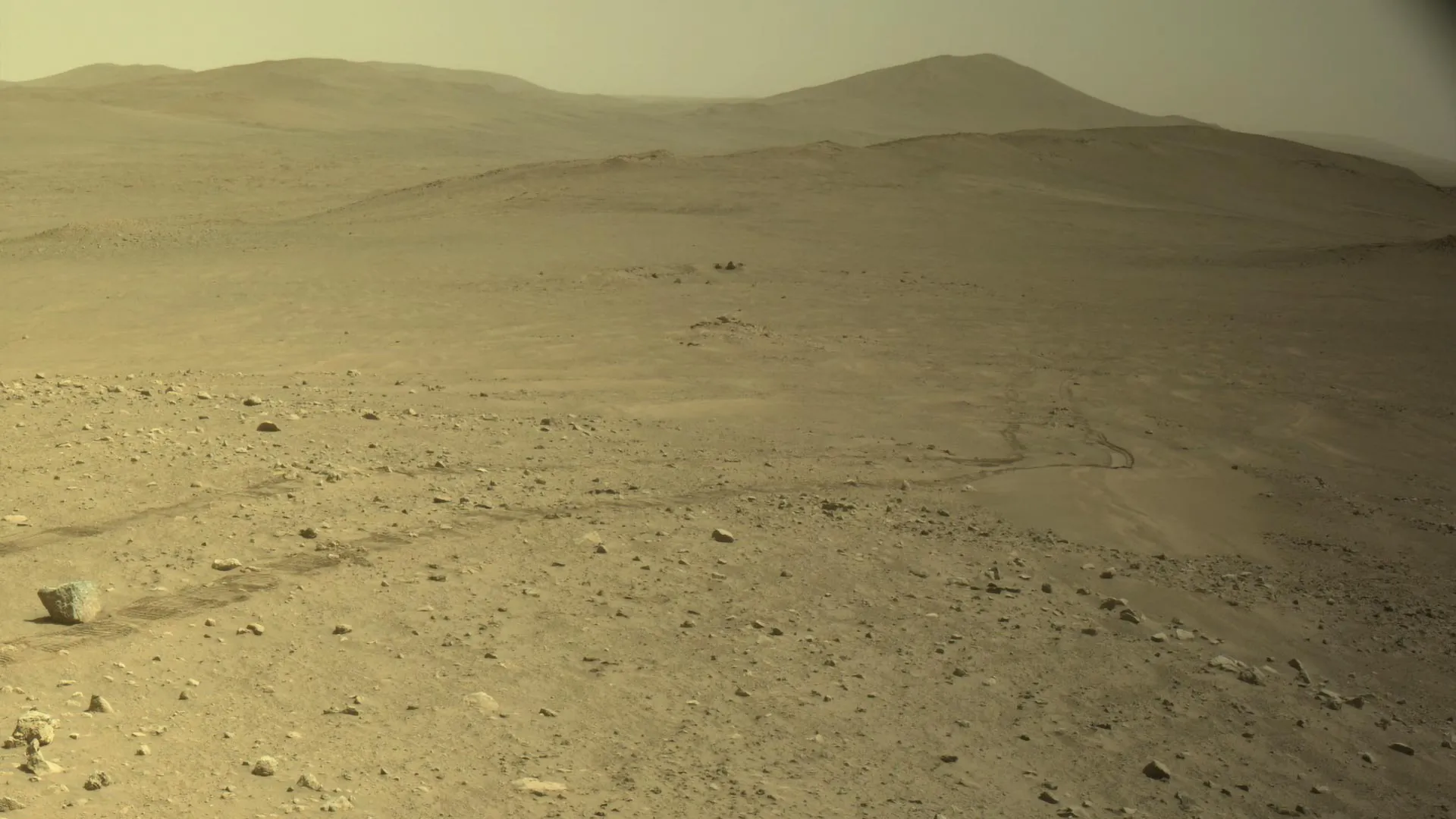
NASA's Perseverance rover traveled 45.22 kilometers (28.10 miles) across Mars by Sol 2006 (Oct. 11, 2026), breaking the record for the farthest distance any vehicle has traveled on another celestial body. Guinness World Records presented a commemorative plaque recognizing the achievement.
The rover had come within 200 meters of the record two months earlier on Sol 1947 but paused its journey to investigate scientifically valuable ancient rock formations in the area. Once that work completed, Perseverance resumed travel and surpassed the previous distance record.
To enable Perseverance to cover greater distances safely, NASA engineers made multiple improvements to the rover's driving system. They conducted thousands of computer simulations and adjusted operating limits, allowing the rover to tolerate tilts up to 24 degrees and reducing the minimum clearance beneath its belly pan to 20 centimeters. Updated braking software helps avoid rock collisions, and electrical current limits for steering motors nearly doubled. The team added "dynamic slip tables" to the flight software, allowing better prediction of wheel slip on different surfaces.
A key technological advance is the onboard Global Localization (GBLC) system. This technology determines Perseverance's position on Mars without relying on directions from Earth by comparing surface images with orbital pictures to calculate the rover's location in global coordinates. The system uses a processor originally installed in the Ingenuity Helicopter Base Station.
However, the processor was not specifically designed to withstand Mars' intense radiation. The planet's thin atmosphere and lack of a global magnetic field expose electronics to radiation that can cause "transient bit flips" changing stored information. Engineers developed software protections to help the processor operate reliably despite these conditions.
NASA is investigating how generative AI could make Perseverance even more independent by generating driving plans for journey segments, reducing time and resources needed to plan safe routes. Vandi Verma, Chief Engineer for Robotic Operations at NASA's Jet Propulsion Laboratory, noted that lessons from Perseverance's 45-kilometer journey are shaping new technologies for robotic exploration on distant worlds.