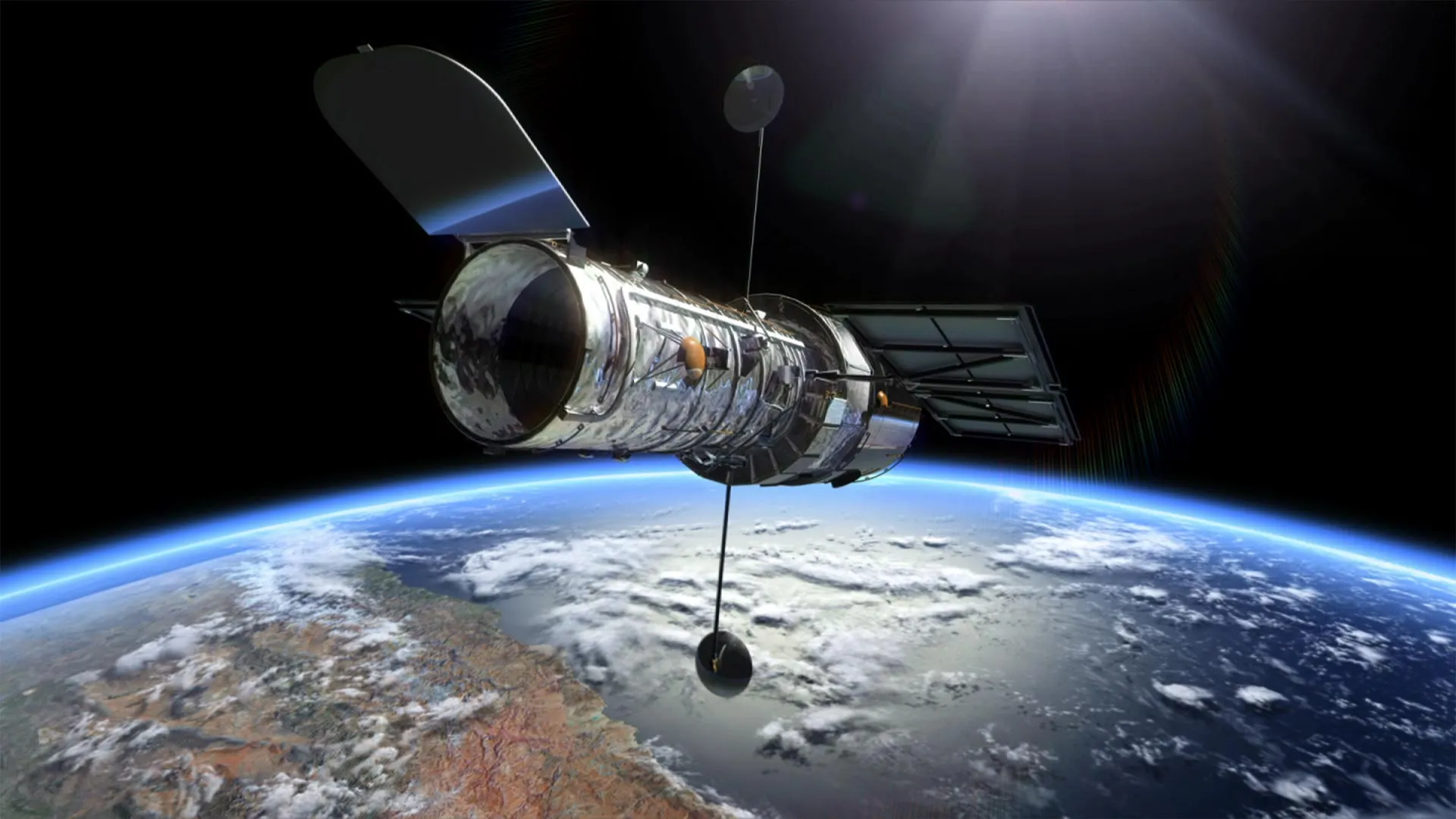
NASA issued a Request for Information on October 29 seeking details about commercial technologies that could service the Hubble Space Telescope while it remains in orbit. The agency wants to determine whether private space companies could extend Hubble's operational life, improve its performance, or help bring its mission to a safe conclusion.
One possibility under consideration is sending a spacecraft to push Hubble into a higher orbit to counteract its gradual altitude loss. NASA is also exploring missions that could service and upgrade the telescope, or safely retire it through controlled descent or orbital disposal.
Hubble's orbit is gradually shrinking due to atmospheric drag in low Earth orbit. NASA's analysis suggests the telescope will likely reenter Earth's atmosphere between 2033 and 2034. Without intervention, a mission to boost its orbit would need to occur by 2032.
"Hubble still has important science ahead of it, and we should be looking at every reasonable opportunity to keep it delivering for as long as possible," said NASA Administrator Jared Isaacman. "If there are innovative and cost-effective ways to extend the life of an asset already on orbit, we owe it to the American taxpayer and the scientific community to explore them."
Nicky Fox, associate administrator of the Science Mission Directorate at NASA Headquarters, noted that "commercial industry has rapidly evolved in recent years to offer new capabilities for in-space satellite capture and servicing."
NASA's Goddard Space Flight Center in Greenbelt, Maryland, oversees Hubble. The Space Telescope Science Institute in Baltimore handles scientific operations. Hubble is a product of partnership between NASA and the European Space Agency.
Companies can submit responses to the Request for Information until 3 p.m. EST on November 30.