Researchers at MIT have discovered that flexible molecular connectors can organize nanoparticles into never-before-seen crystal structures, reversing a 20-year principle in materials science.
For two decades, scientists believed rigid molecular connectors called ligands were necessary to control how nanoparticles assembled. Rob Macfarlane, Richard P. Simmons Professor in Metallurgy at MIT's Department of Materials Science and Engineering, explains the reversal: "We showed if you just crank it all the way to the opposite extreme, it works just as well." Instead of forcing connectors into fixed positions, the team made them highly flexible.
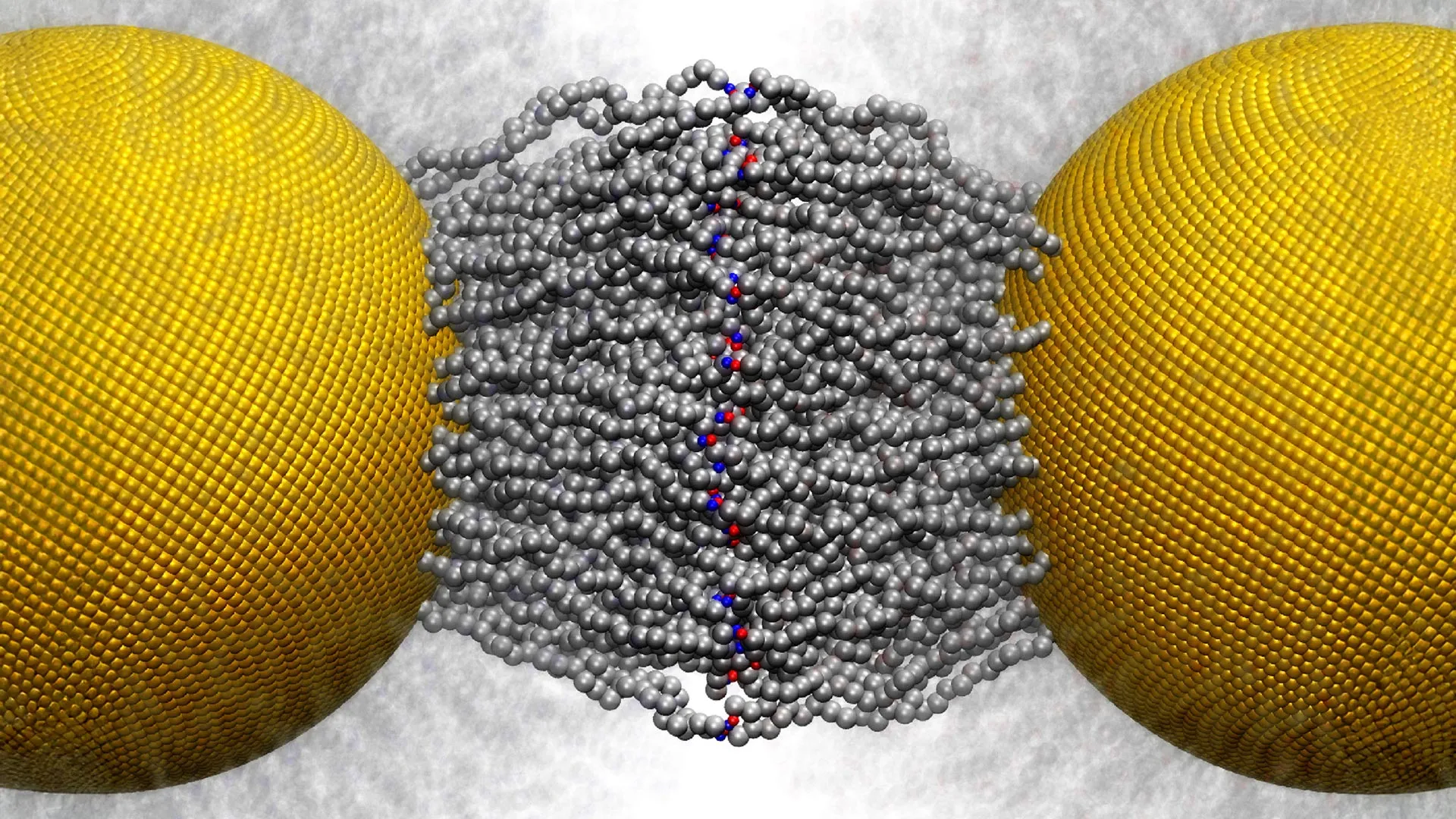
The researchers equipped nanoparticles with flexible ligands carrying electrical charges at their ends. Opposite charges attract naturally, causing the connector molecules to bend toward partners with opposite charges. This flexibility allows the nanoparticles to settle into stable arrangements without requiring every connection to be designed beforehand.
Experiments led by MIT PhD candidate Nicholas Sbalbi showed that adjusting two characteristics controlled assembly: the sizes of nanoparticles and the lengths of their flexible molecular chains. These adjustments altered how many neighboring particles each one could connect with.
The team produced crystal structures made from organized nanoparticles called superlattices that have never been observed before. The research appears in Nature Materials and involved collaborators including Stephen Kronenberger from the University of Delaware, MIT undergraduate Hana Shinzawa, Matthew Ye PhD '26, and Arthi Jayaraman, a former professor at the University of Delaware.
Potential applications include electronics, medicine, energy technologies, agriculture, and chemical manufacturing.