# Atlantic Ocean Current Shows Dramatic 30-Year Slowdown, Satellite Data Reveals
Satellite observations provide some of the strongest evidence yet that the Atlantic Meridional Overturning Circulation (AMOC) has weakened substantially over three decades. The current system, which transports warm water northward and delivers heat to Europe, has decelerated by 14 percent since the early 1990s, according to research analyzing ocean heat release patterns.
The findings rest on a novel measurement approach. Rather than tracking water movement directly, researchers used satellite data to measure how much heat the ocean releases to the atmosphere. This indirect method offers advantages over previous monitoring techniques, which relied on sparse buoy networks or computer models with significant gaps in spatial coverage.
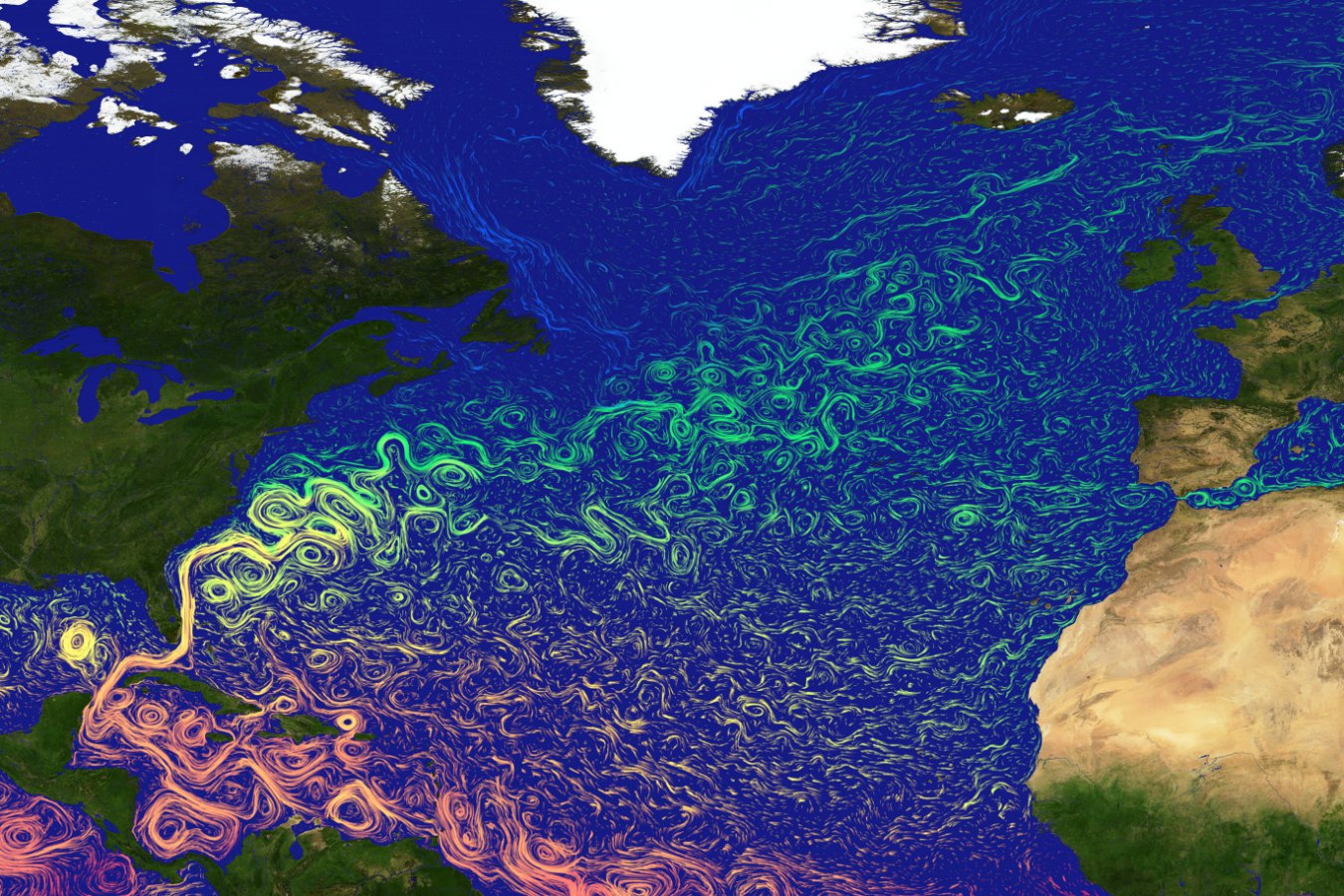
The AMOC functions as a conveyor belt in the Atlantic. Warm surface water flows north from the tropics toward the Arctic. As this water cools and becomes denser at high latitudes, it sinks and returns southward at depth. This circulation redistributes enormous amounts of heat, warming the North Atlantic and making Western Europe significantly milder than regions at similar latitudes on the North American side.
A weakening AMOC poses serious consequences. Slower circulation means less heat delivery to northern regions, potentially triggering regional cooling even as global temperatures rise. Past research has linked abrupt AMOC slowdowns to rapid climate shifts, including the Younger Dryas period roughly 12,000 years ago, when parts of the Northern Hemisphere experienced near-glacial conditions despite overall warming trends.
Multiple factors contribute to current weakening. Freshwater from melting Greenland ice sheets disrupts the density differences that drive the circulation. Warmer ocean temperatures also reduce seawater density, weakening the mechanism that pulls deep water northward. Climate models consistently predict continued AMOC decline throughout the 21st century if greenhouse gas emissions continue unabated.
Previous AMOC monitoring relied primarily on the RAPID array, a line of moorings stretching across the Atlantic at 26 degrees North latitude. This network, operating since 2004, detected variability but lacked historical depth. The satellite-based approach extends observations backward to the 1990s, revealing a longer-term trend that moored instruments alone could not capture.
The 14 percent decline over 30 years translates to concerning rates of change. If this pace continues, the AMOC could weaken substantially within decades rather than centuries. Some paleoclimate evidence and climate models suggest potential tipping points exist, though scientists debate their precise thresholds.
Limitations remain. Satellite measurements infer circulation strength indirectly, relying on assumptions about ocean heat physics. Ground-truth validation against buoy data shows general agreement, but uncertainties persist. Regional variations in heat release complicate interpretations of basin-wide circulation changes.
The research adds weight to growing concern within the climate science community about Atlantic circulation stability. Major research institutions and climate centers globally monitor AMOC changes through complementary approaches. Understanding this system ranks among the highest priorities for predicting regional climate impacts over coming decades, particularly for Europe and the eastern North American seaboard.
Further satellite observations and continued maintenance of buoy networks remain essential for tracking whether the slowdown accelerates or stabilizes.