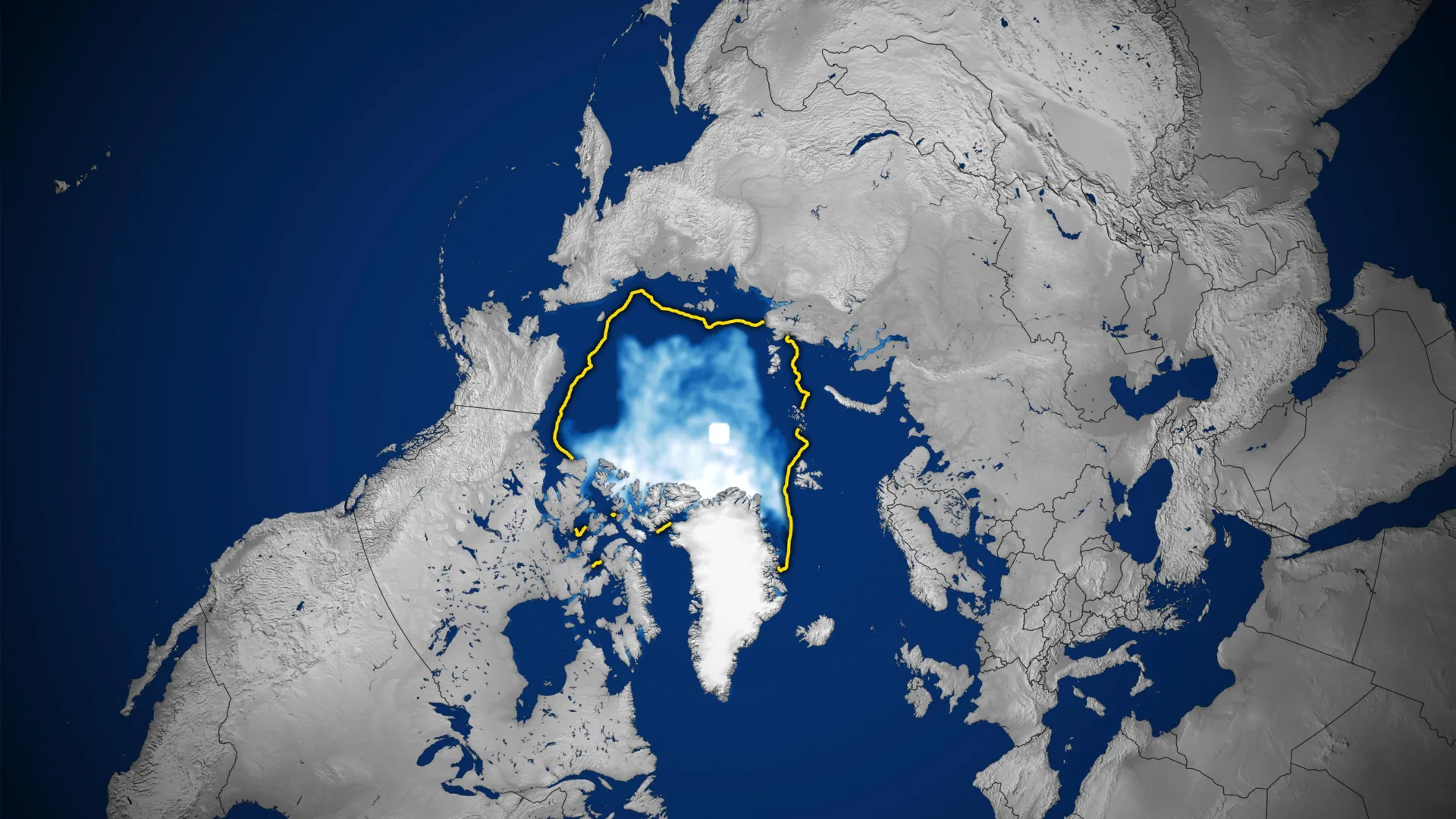
Arctic sea ice continues its decline across both seasons, with satellite data documenting a shrinking ice sheet that is becoming thinner and younger. The remaining ice shows increased vulnerability to melting.
Summer ice losses have slowed recently, yet scientists project the Arctic could experience a nearly ice-free summer before 2050. The transformation reflects fundamental changes in Arctic conditions. Satellite records reveal the ice is not simply receding but fundamentally changing in composition and structure. Younger ice replaces older, thicker multiyear ice that once dominated the region. This transition matters because younger ice melts more readily than established ice sheets.
The 2026 measurements add to a troubling pattern established over decades of satellite monitoring. Winter ice extent also shows decline alongside the more widely documented summer losses. Both seasonal endpoints reveal vulnerability across the Arctic system.
Scientists attribute the changes to warming temperatures and shifting climate patterns in the polar region. The thinning ice reduces the Arctic's reflectivity, which accelerates warming in a feedback loop that intensifies ice loss.
The projection of a nearly ice-free Arctic summer within the next 24 years represents a watershed moment for polar science. Such a condition would represent an unprecedented state for the Arctic in human history. The timeline reflects current warming trajectories and ice loss rates observed in recent decades.
These findings underscore ongoing transformations in Earth's polar regions as global temperatures continue rising.