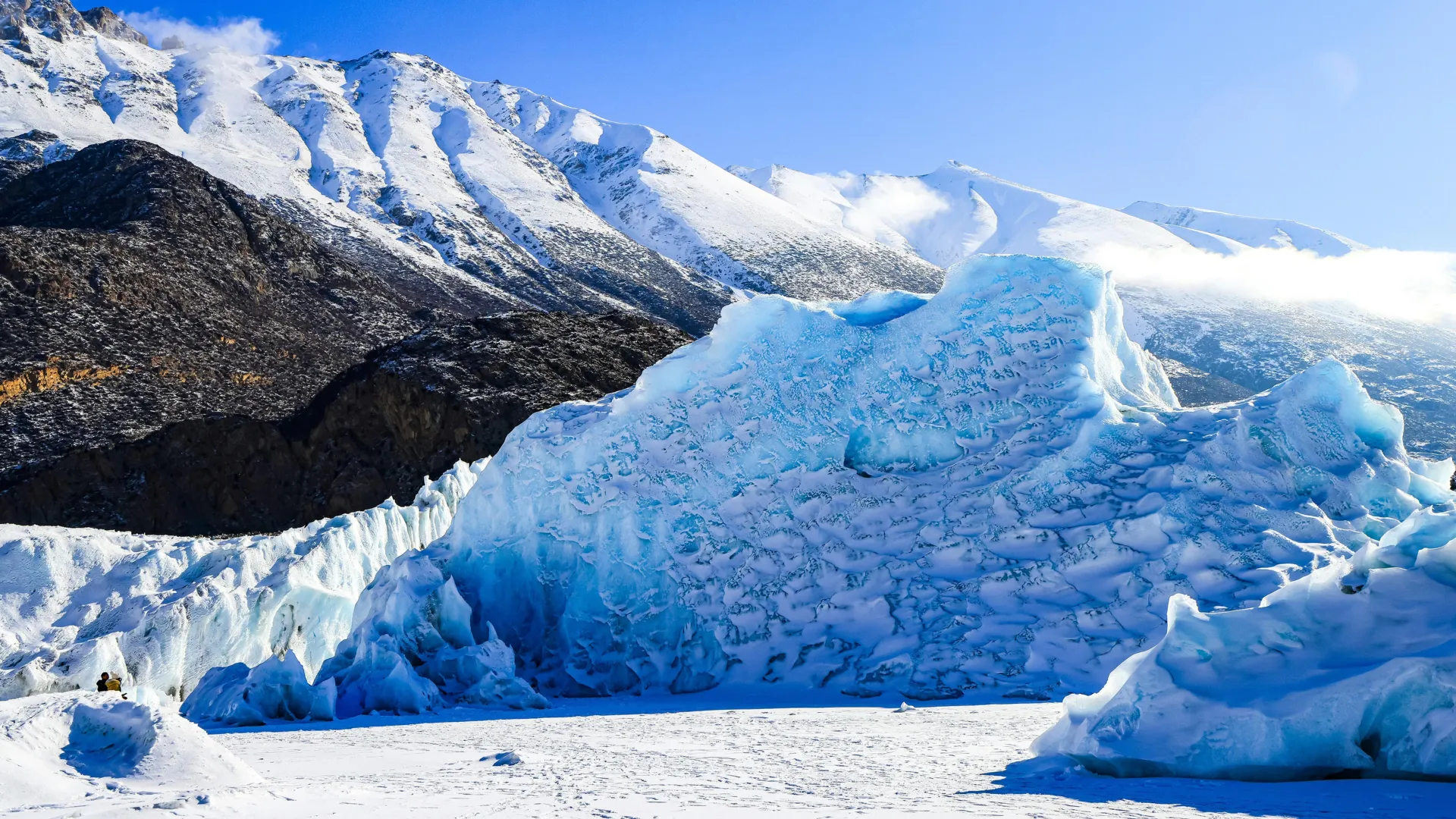
Scientists have recovered ice cores from Tibet's Guliya Plateau that may extend back more than 128,000 years, making them the oldest ever collected from this region. The discovery extends the known glacial record by more than 100,000 years.
Researchers at Ohio State University, led by Lonnie Thompson, examined ice cores drilled from the plateau in 1992 and 2015. The samples showed strikingly similar patterns of oxygen isotopes across both drilling dates, separated by 23 years. "Reproducibility of the records within a given ice cap is extremely important," Thompson said. "If you get an identical record a quarter of a century later, it can tell you a lot about the behavior of the ice over time."
To date the ancient ice, the team used radioactive isotopes of beryllium and chlorine to detect the Leschamp Geomagnetic Excursion, a disturbance in Earth's magnetic field that occurred more than 41,000 years ago. They compared these findings with oxygen isotope records from nearby Tibetan cave deposits.
Previous research suggested the Guliya ice record reached only to the middle of the Holocene, the geological epoch that began nearly 12,000 years ago. The new evidence shows the ice is considerably older. Thompson noted that other mountain ice cores like those from Huascarán extend back only about 30,000 years, making Guliya unique. "Outside of the polar regions, this is the only ice core we have from the mountaintops that go back that far," he said.
The finding has implications for understanding whether large ice masses in Tibet persisted as the planet emerged from the last ice age. Thompson stated that the evidence shows ice did persist through the early Holocene period.
The study was published in Science Advances. The research received support from the U.S. National Science Foundation. Contributors included Mary Davis and Ellen Mosley-Thompson from Ohio State, Juerg Beer from the Swiss Federal Institute of Aquatic Science and Technology, Christof Vockenhuber and Marcus Christl from ETH Zurich, Tandong Yao from the Chinese Academy of Sciences, and Ninglian Wang and Ling Fang from Northwest University in China.