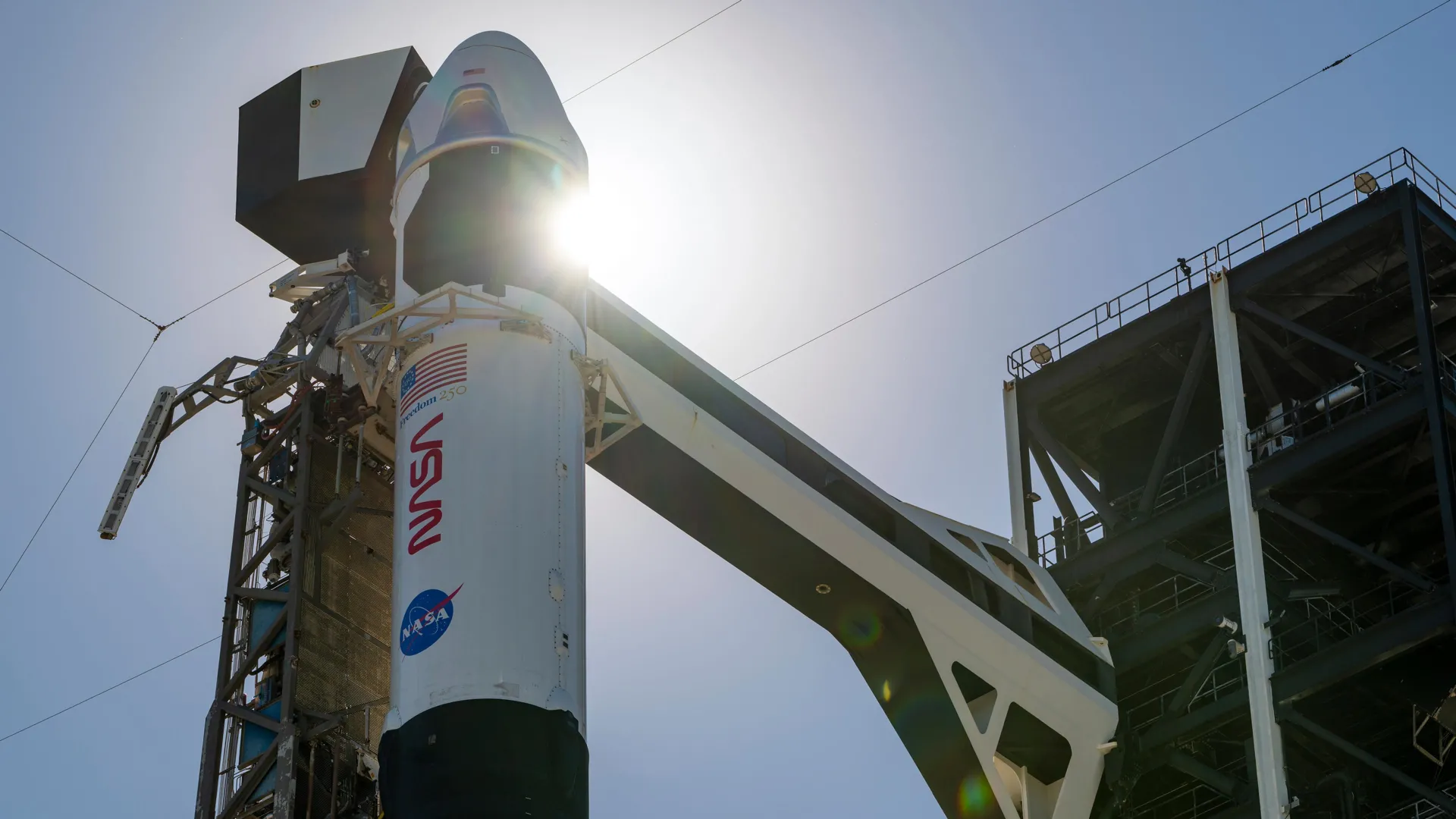
NASA and SpaceX plan to shatter the speed record for American crewed spaceflight to the International Space Station on October 1, when Crew-13 launches four astronauts aboard a Crew Dragon capsule. The mission targets a journey time of just 7 hours and 50 minutes, eclipsing the previous fastest U.S. trip to the orbiting laboratory.
The Crew Dragon spacecraft has evolved considerably since its first crewed mission in 2020. SpaceX engineers refined the vehicle's trajectory and docking procedures to eliminate unnecessary loops around Earth. Earlier Crew Dragon missions typically required 19 to 24 hours to reach the ISS, following a more conservative approach that prioritized safety verification at each stage. The new rapid-transit profile cuts that timeline by roughly two-thirds.
This acceleration stems from technical improvements made after SpaceX completed multiple successful crewed missions. The company refined its launch and rendezvous capabilities, allowing controllers to execute a faster orbital insertion and approach sequence. Rather than the previous multi-orbit climb to ISS altitude, the Dragon now follows a direct ascent profile that reaches the station's orbital path more efficiently. Each phase of the approach has been validated through repeated successful missions, giving NASA confidence in the faster timeline.
The four crew members aboard Crew-13 will conduct six-month research missions aboard the ISS. They will rotate with existing station crew members, replacing the expedition team from the previous mission. This crew rotation represents the operational baseline for NASA's commercial crew program, which contracts with SpaceX to provide regular transportation to the orbiting laboratory.
Faster crew transit times offer practical advantages for space station operations. Shorter launch-to-docking intervals reduce the physiological stress on astronauts during the ascent phase. They also allow for more flexible scheduling when unexpected medical or technical issues arise. Additionally, minimizing time in the capsule before docking improves comfort and allows mission planners to respond more rapidly to station needs.
The previous fastest American crewed journey to the ISS occurred during Space Shuttle operations, though exact timing varies depending on which mission serves as the reference point. More recently, Crew Dragon missions have been progressively faster as SpaceX optimized procedures. This October launch represents the culmination of that optimization work.
NASA continues livestreaming launches and key mission events through its official channels and the Kennedy Space Center website. Crew-13 will carry one NASA astronaut, one European Space Agency astronaut, and two other crew members selected through the commercial crew program. The specific identities and mission assignments were announced by NASA in the months preceding the October 1 launch date.
The rapid-transit capability tested during Crew-13 becomes part of the standard operational profile for future crew rotations, barring any unforeseen technical concerns identified during the mission. SpaceX and NASA plan to maintain this faster timeline for subsequent missions, assuming each launch and docking sequence validates the approach. The achievement represents maturation of American commercial human spaceflight capabilities and reduces dependency on international partnerships for crew transport to the ISS.