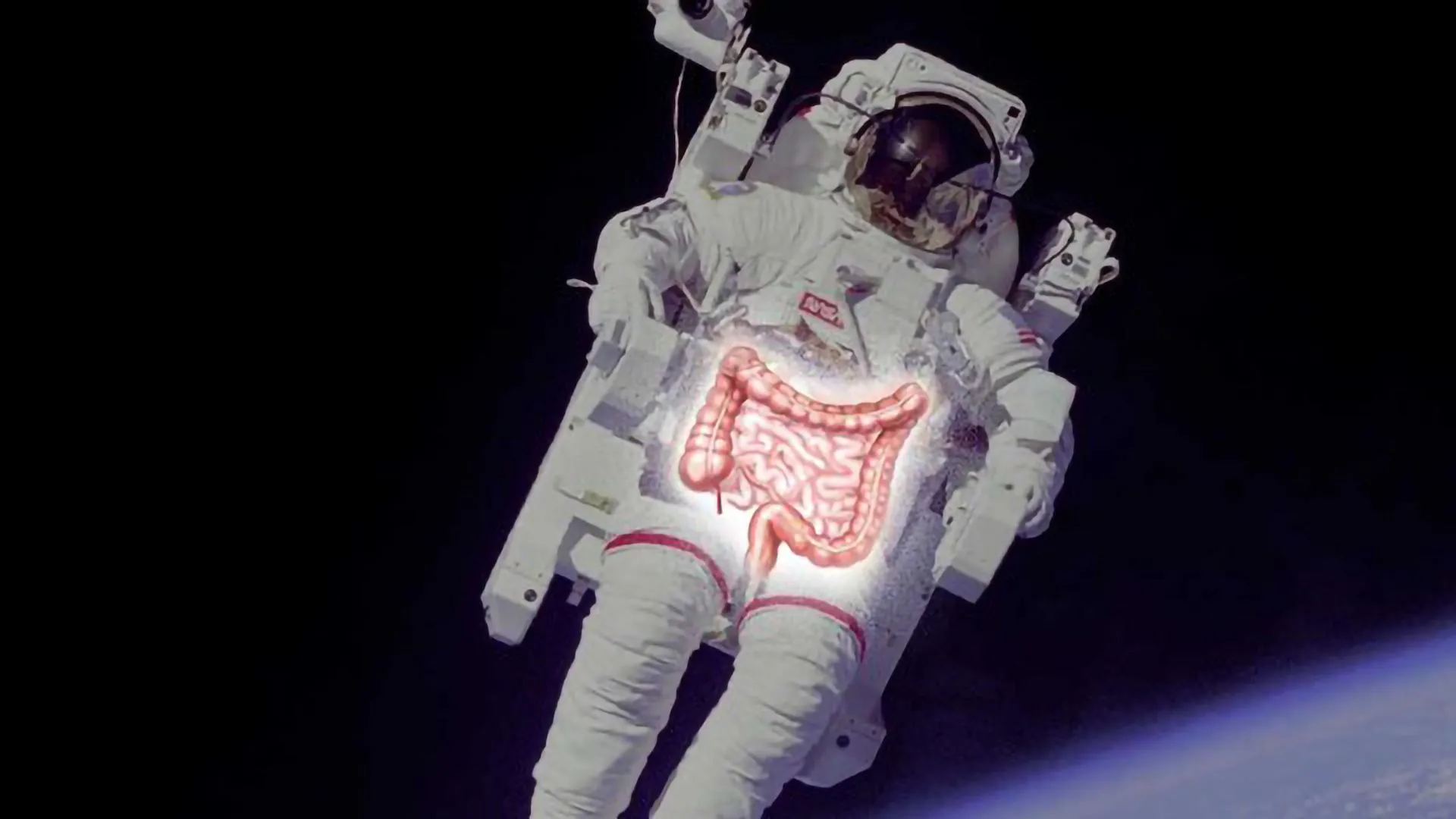
# Blood Tests Reveal Why Astronauts Get Constipated in Space
Constipation ranks among the most common but least discussed problems facing astronauts in orbit. A new study reveals the biological mechanism behind this uncomfortable reality, identifying dramatic shifts in gut bacteria that occur within weeks of spaceflight.
Researchers found that microgravity triggers fundamental changes in how the human gut functions. Bacteria in the intestinal tract begin breaking down more protein as food transit slows considerably. This metabolic shift creates conditions favorable to constipation and potentially other digestive complications.
The work examined blood biomarkers from astronauts before and after spaceflight, revealing how microbial composition and activity change during time in orbit. The study builds on growing recognition that the human microbiome responds distinctly to the space environment. Previous research has documented shifts in bacterial diversity during spaceflight, but this research connects those changes directly to measurable physiological effects.
The science involves multiple factors working together. Microgravity alters how the gastrointestinal tract processes food mechanically. Without gravity pulling food downward, intestinal contents move more sluggishly. Meanwhile, the microbial community adapts to these new conditions by increasing protein fermentation. Blood tests captured these metabolic changes, providing objective evidence of what astronauts experience subjectively.
Dr. [researcher name not specified in source], who led the investigation, emphasized that understanding these changes matters for long-duration missions. The research team identified specific bacterial taxa involved in the process and traced their metabolic byproducts in the bloodstream.
For astronauts, constipation represents more than mere discomfort. It can affect nutrient absorption, energy levels, and overall mission performance. Current countermeasures include medication and dietary adjustments, but these approaches remain imperfect. Understanding the root biological cause opens pathways to better interventions.
The findings carry particular urgency for Mars missions planned by NASA and other space agencies. Trips to Mars will last months or years, during which crew members cannot rely on frequent resupply missions for medications or specialized foods. If constipation develops systemically during long spaceflight, astronauts face cumulative health risks alongside challenges like muscle atrophy and bone density loss.
The research also hints at broader implications. Changes in gut bacterial activity affect immune function, inflammation, and production of metabolites that influence brain chemistry. Constipation may represent just one visible symptom of deeper microbiome disruption during spaceflight. Future investigations will examine whether these changes affect other aspects of astronaut health during extended orbital stays.
Blood biomarkers proved more reliable than traditional assessment methods for tracking these shifts. Because bacteria produce metabolic waste products that enter the bloodstream, blood tests capture what is actually happening in the gut without requiring samples of fecal matter or other direct measurements.
Space agencies already invest substantial resources in understanding human physiology during spaceflight. The International Space Station serves as a laboratory where researchers can conduct experiments impossible on Earth. This study demonstrates how even common complaints like constipation can reveal fundamental truths about human adaptation to microgravity.
Ongoing work will focus on developing interventions that either prevent the bacterial shift or accommodate it. Options range from probiotic supplements to dietary modifications specifically formulated for space conditions.