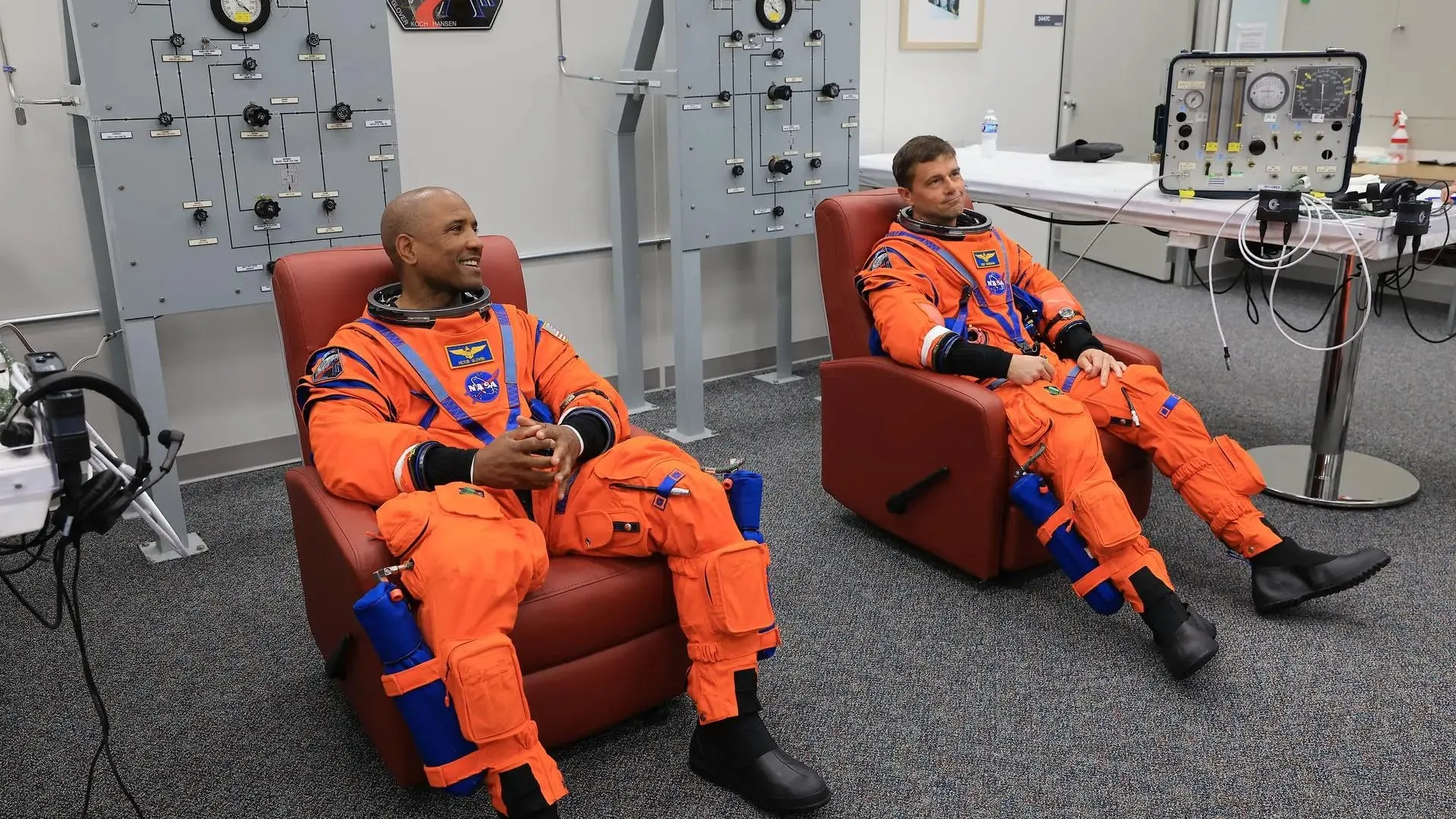
Victor Glover and Reid Wiseman, the two astronauts who traveled farther than any humans since the Apollo era, have shifted into emeritus roles at NASA following their groundbreaking Artemis II mission around the Moon. Rather than stepping away entirely, both astronauts will remain embedded within NASA's lunar exploration program as advisors and mentors.
Glover and Wiseman flew aboard NASA's Orion spacecraft during Artemis II, which launched in 2022 and circled the Moon without landing, paving the way for future crewed lunar missions. The pair logged over 10 days in deep space, experiencing the radiation environment and operational realities of the cislunar region firsthand. Their emeritus appointments preserve their expertise at a critical juncture in NASA's lunar return timeline.
The transition carries practical weight for Artemis III, NASA's planned crewed lunar landing mission. Glover and Wiseman flew the hardware and navigation systems that future crews will rely on. They understand the performance characteristics of Orion's life support systems, thermal management, and rendezvous procedures in ways that ground-based simulations cannot fully replicate. Their observations from deep space inform engineering decisions as NASA prepares the next generation of missions.
Glover, a Navy test pilot and former Space Shuttle pilot, brought extensive experience with crewed spaceflight systems to Artemis II. Wiseman, also a Navy test pilot with previous space station experience, served as Artemis II's crew commander. Both logged orbital mechanics knowledge that extends beyond low-Earth orbit, where most modern astronaut experience concentrates.
As emeritus advisors, the astronauts will work within NASA's Exploration Systems Development Branch and related directorates managing Artemis hardware development. Their roles likely include technical review of Orion modifications, assessment of crew procedures, and evaluation of gateway station concepts that will support lunar operations. They may also participate in training future Artemis crews on lessons learned during their mission.
The emeritus appointment reflects NASA's practice of retaining highly experienced astronauts in advisory capacities rather than losing their knowledge to retirement or outside employment. This approach has precedent within the astronaut corps, where senior explorers often transition from flight status to mentoring roles.
Artemis III, now targeted for the mid-to-late 2020s, will land two astronauts on the Moon's surface while a third remains in Orion orbit. The mission requires flawless execution of lunar descent, surface operations, and ascent procedures. Glover and Wiseman's proximity to this work ensures their real-world feedback reaches engineers and mission planners throughout development.
NASA accelerated Artemis III timelines in recent months, moving beyond the original post-2026 schedule. This compressed timeline makes experienced deep-space operators more valuable as the agency races to meet ambitious launch windows. Glover and Wiseman's advisory roles will help compress the learning curve for teams managing hardware that performed successfully during their flight.
The astronauts' transition also signals confidence in Artemis II's success. NASA is confident enough in the mission data and systems performance to move forward with crewed lunar landing preparations while those same astronauts guide technical decisions from advisory positions. Their institutional knowledge bridges the gap between proven flight experience and future mission architecture.