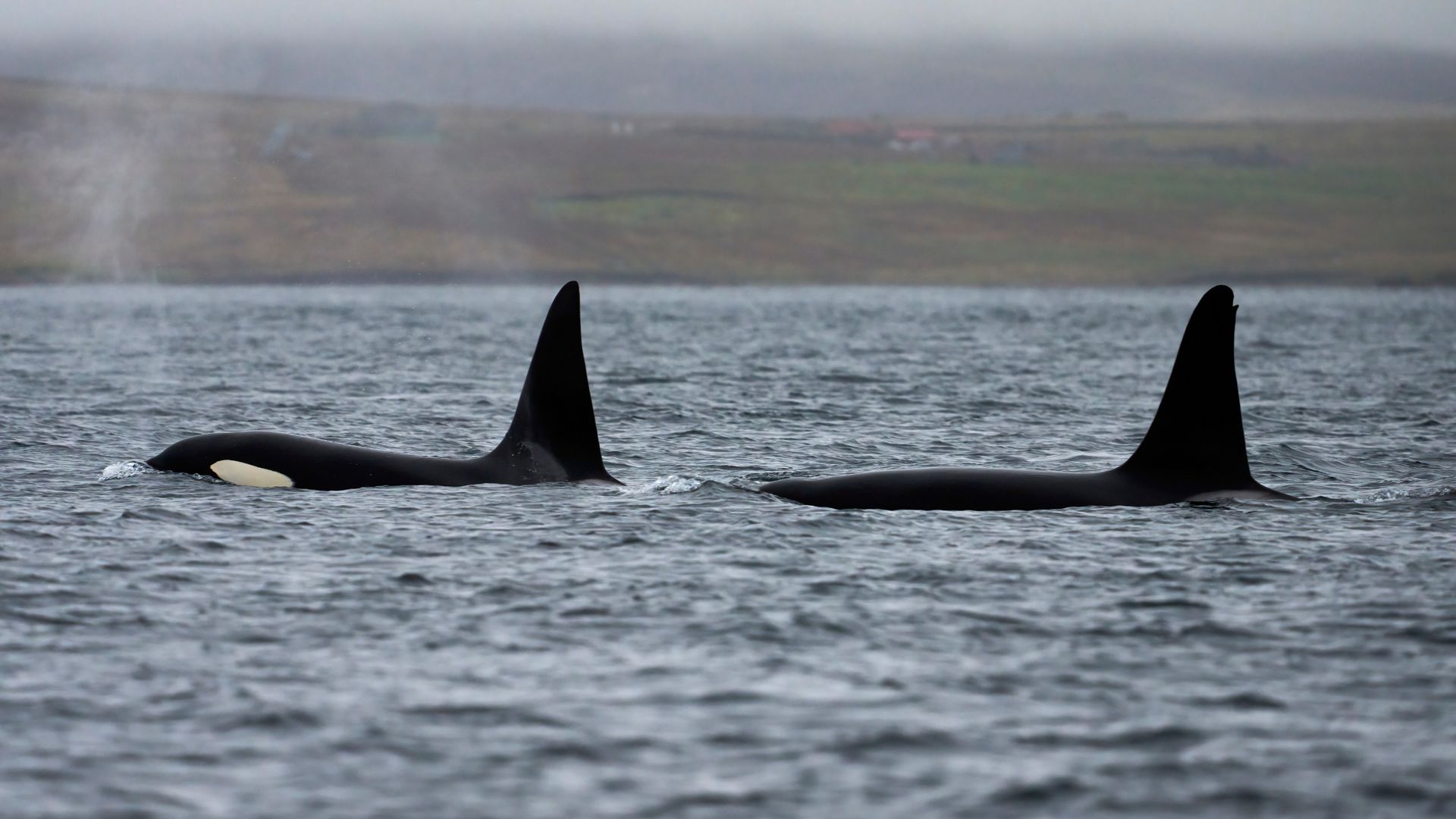
Radioactive fallout from historical nuclear bomb testing has helped scientists potentially identify the oldest male orca ever recorded. Kieran Tierney, a research scientist at the Scottish Universities Environmental Research Centre, and colleagues examined teeth from orcas and sperm whales that washed ashore in Scotland over decades. Their findings appeared October 1 in Frontiers in Marine Science.
The researchers used radiocarbon signatures preserved in tooth layers to estimate ages. Male orcas typically live 50 to 60 years, but one stranded male orca named KW2, found in Uist, Scotland in 2015, showed radiocarbon evidence suggesting he lived more than 65 years old. Tooth layer analysis suggested KW2 lived into his 50s, but the atomic data indicated he was at least 65 when he died.
Tierney proposed that either multiple tooth layers formed in a single year, or new layers stopped forming in later life. "We think that the tooth effectively ran out of space to put down any more layers," Tierney said.
Atomic weapons testing released vast quantities of radiocarbon into the environment, particularly during the mid-20th century. This radioactive isotope entered marine environments and was preserved in cetacean teeth, allowing researchers to match tooth layers with known periods of bomb fallout. The team examined teeth from three orcas stranded between 1995 and 2016, and two sperm whales from the 1990s.
Tooth layers in two sperm whales matched the atomic data, with estimated ages in their 20s and 40s, suggesting layers formed annually in early to mid-life. However, one female orca named Lulu showed mismatched data, possibly because she lacked a clear bomb pulse signal.
One of the living males from Scotland's West Coast Community is thought to be over 50 years old. If male orcas off Scotland live longer than their North American Pacific counterparts, it could indicate different behavior patterns, Tierney noted.