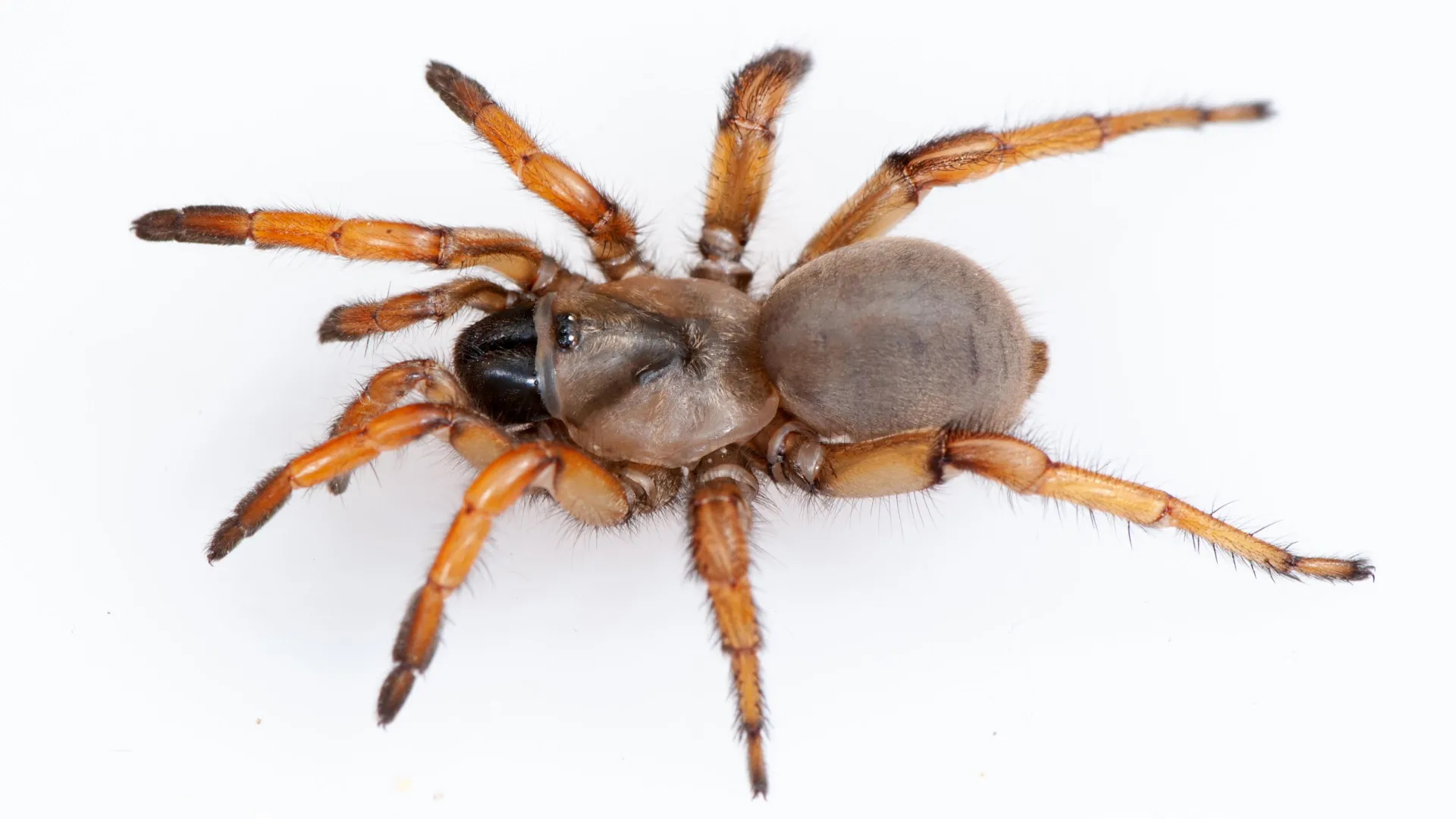
A tiny trapdoor spider from California's coastal dunes has a genome roughly 50% larger than the human genome, researchers report in the Journal of Heredity. The species, Aptostichus stephencolberti, contains 4.6 billion DNA base pairs, making it the first spider in its family to have its genome sequenced.
Jason Bond, a professor in the UC Davis Department of Entomology and Nematology, led the work. "At 4.6 gigabases, or 4.6 billion DNA base pairs, it's not the largest genome among the spiders, but it's significant," Bond said.
The spider's larger genome does not mean it has more genes. About 77% of its genome consists of repetitive DNA sequences that repeat throughout its genetic material. The spider has 52 chromosomes compared with 46 in human cells.
Spiders lack conventional repetitive DNA sequences at chromosome ends, called telomeres, which protect chromosome tips in humans. This difference may explain why spider chromosomes evolve more rapidly than those of vertebrates. "It lends itself to broadening our understanding of spider genome composition and consequently how genomes have evolved across the animal Tree of Life," Bond said.
The spider was named after comedian Stephen Colbert in 2008 after he demanded the honor on his show, following Bond's decision to name another spider after rock musician Neil Young.
The genome sequencing supports the California Conservation Genomics project, a state-funded effort to guide conservation decisions. Aptostichus stephencolberti lives only in a limited stretch of Central California from the San Francisco Bay area to Monterey. Rising sea levels and invasive species threaten the species' coastal dune habitat. "They're going to be incredibly sensitive to sea-level rise, but they're also very sensitive to invasive species," Bond said.
The research involved scientists from UC Davis, UC Santa Cruz, UCLA, and Virginia Polytechnic Institute and State University. Funding came from the California Conservation Genomics Project and the National Science Foundation.