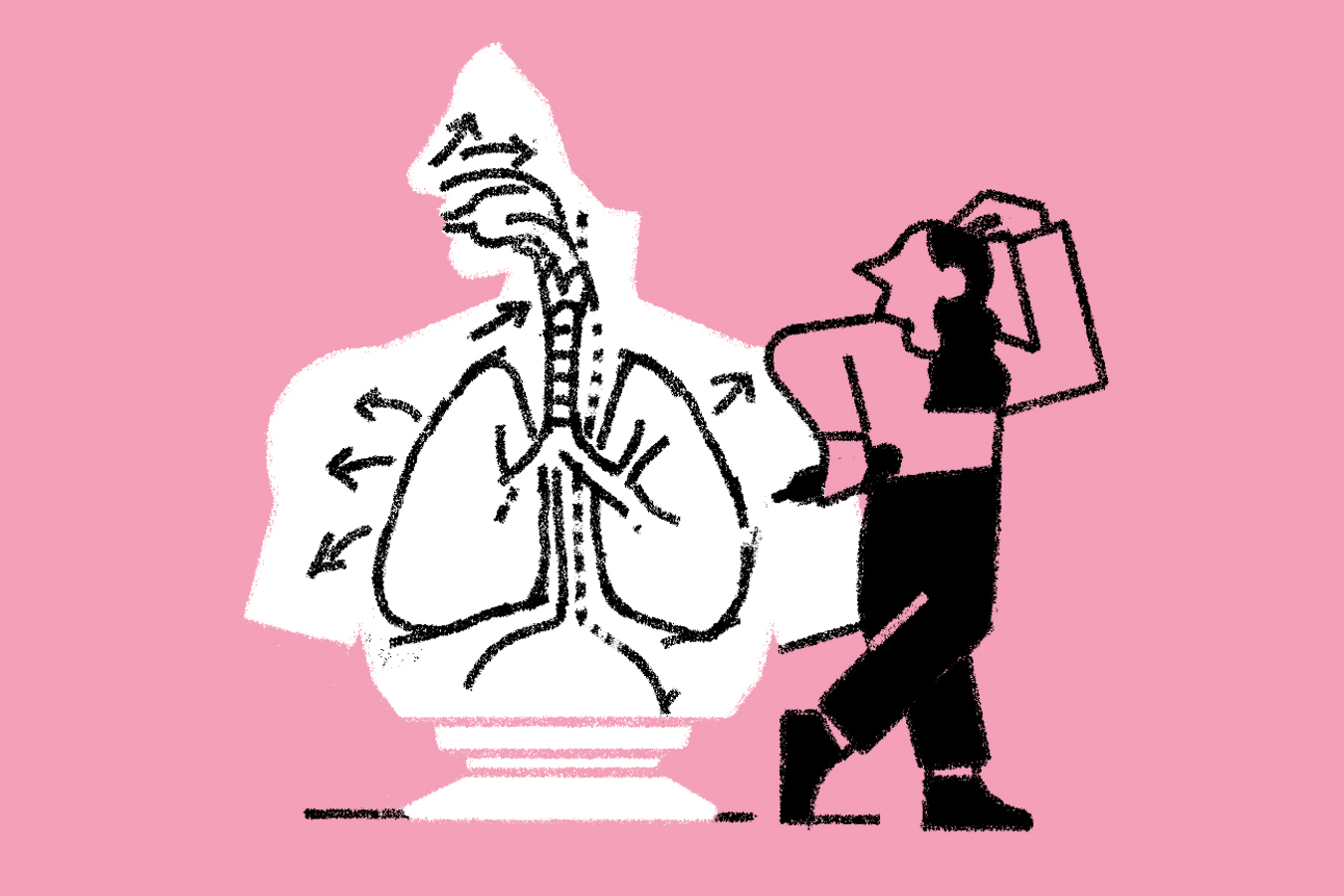
The human throat is a evolutionary accident that makes choking unusually lethal for our species, according to Professor Hannah Fry writing in New Scientist.
The problem stems from anatomy inherited from fish. More than 420 million years ago, a fish evolved a pouch on the belly side of its gut that absorbed oxygen and became a lung. That fish became the ancestor of all mammals, birds, amphibians and reptiles. Because evolution favors minimal change, the lungs remained on the belly side of the body even after our ancestors moved onto land.
This created a topological disaster. Air entering through the nose must cross the path of food traveling to the stomach, and food must cross back over the airway. Fry compares it to plumbing a gas main through a kitchen sink with just a small flap to separate them.
The nose cannot simply relocate to a better position because smell cells wire directly into the front of the brain, leaving no room to move it. One end of the airway is anchored by our sense of smell, the other fixed by an evolutionary accident 420 million years old.
In the first six months of human life, the larynx drops down the neck, unplugging the airway from the back of the nose. This leaves a shared chamber at the back of the throat that is excellent for speech but requires precise anatomical coordination during swallowing. The vocal folds must slam shut, the epiglottis must close like a trapdoor, and the airway must seal completely.
Humans rank among the few mammals most vulnerable to choking because of this design. Roughly 162,000 people die globally each year from choking, Fry reports. Other animals like snakes and toothed whales evolved workarounds to prevent this risk.