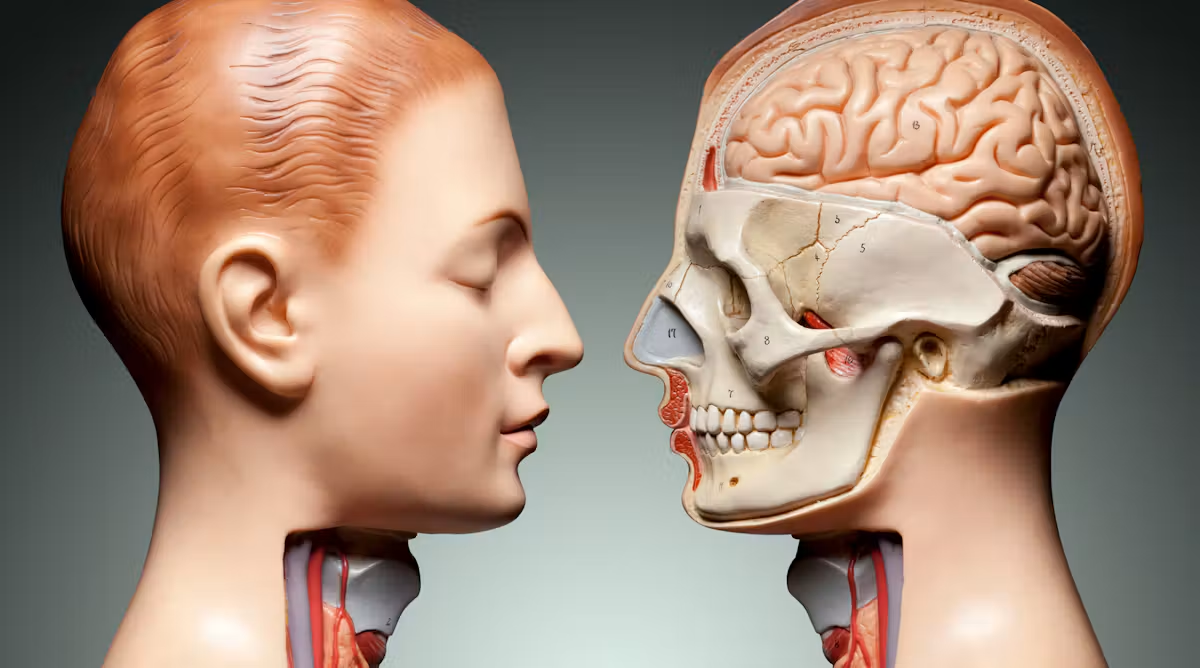
Researchers continue to discover anatomical structures in the human body despite centuries of dissection and modern imaging technology. These discoveries often spark debate among scientists about whether the structures are truly new or simply previously documented.
Three controversies highlight this disagreement. The first involves waste removal from the brain. For over a century, anatomists believed small grape-like structures called arachnoid granulations transferred waste from cerebrospinal fluid to blood. In the past two decades, researchers proposed a network called the glymphatic system handles much of this waste instead through lymphatic pathways in brain membranes. Scientists remain divided on whether the glymphatic system exists and whether lymphatic vessels are present in these membranes.
The second controversy concerns the vomeronasal organ, also called Jacobson's organ, tucked inside the nasal cavity. In many animals, this structure detects pheromones and triggers mating and territorial behaviors. In humans, however, the organ lacks sensory nerve cells and connections to the brain. Scientists regard it as an evolutionary remnant with no current function. Humans instead detect complex odors through the standard olfactory system, which may have persisted to prevent inbreeding.
The third debate centers on the tubarial glands. Researchers identified these 4-centimeter structures via imaging in 2021 and proposed them as a fourth pair of major salivary glands. Critics countered that they were already known as minor or accessory salivary glands scattered throughout mouth and throat linings. The distinction matters because major glands contribute digestive enzymes to saliva while minor glands only provide lubrication. These glands may become relevant when planning radiation therapy for head and neck cancers to avoid dry mouth and difficulty swallowing.
Amanda Meyer, Senior Lecturer in Anatomy and Pathology at James Cook University, and Jamie Chapman, Senior Lecturer in Human Anatomy at University of Tasmania, explain that anatomical variation between humans, small sample sizes, expensive tissue acquisition, and preservation artifacts all complicate identifying truly new structures.