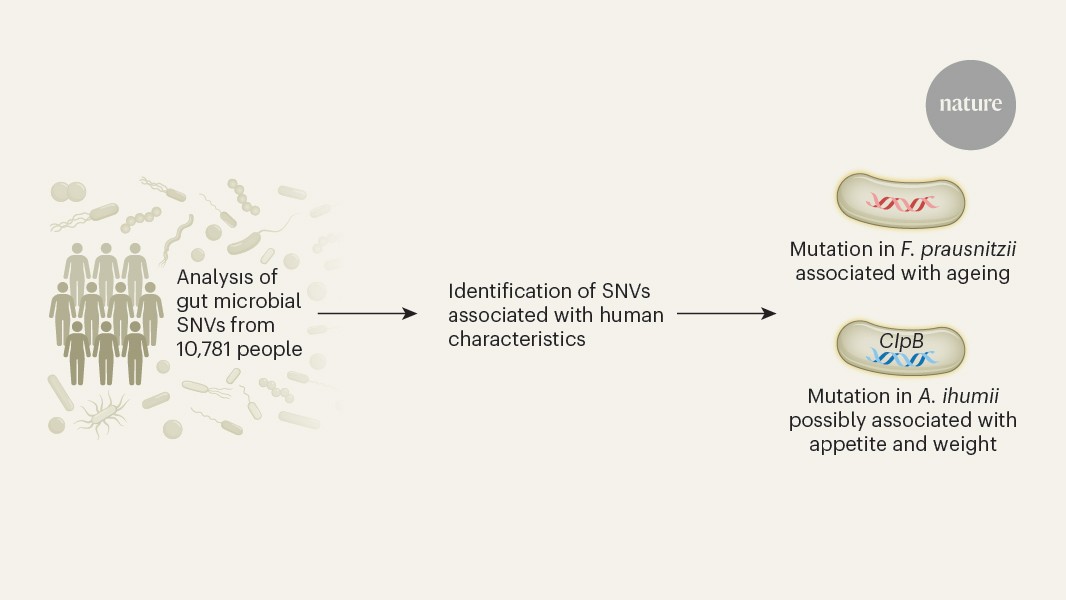
Researchers analyzed gut bacteria from roughly 10,000 people to find genetic variations linked to aging and other body characteristics. John A. Lees at EMBL's European Bioinformatics Institute and colleagues working with Wang et al. scanned for mutations in gut microbes and searched for statistically significant associations with nearly 250 traits, including age, height, and cardiovascular fitness.
The human gut contains around 40 trillion bacterial cells. While the community of bacterial species typically remains stable over time, the team identified one genetic adaptation in one of the most abundant bacterial species that appears to help resist oxidative stress, a form of cellular damage that increases as people age.
The findings appear in a 2026 paper by Wang et al. in Nature.