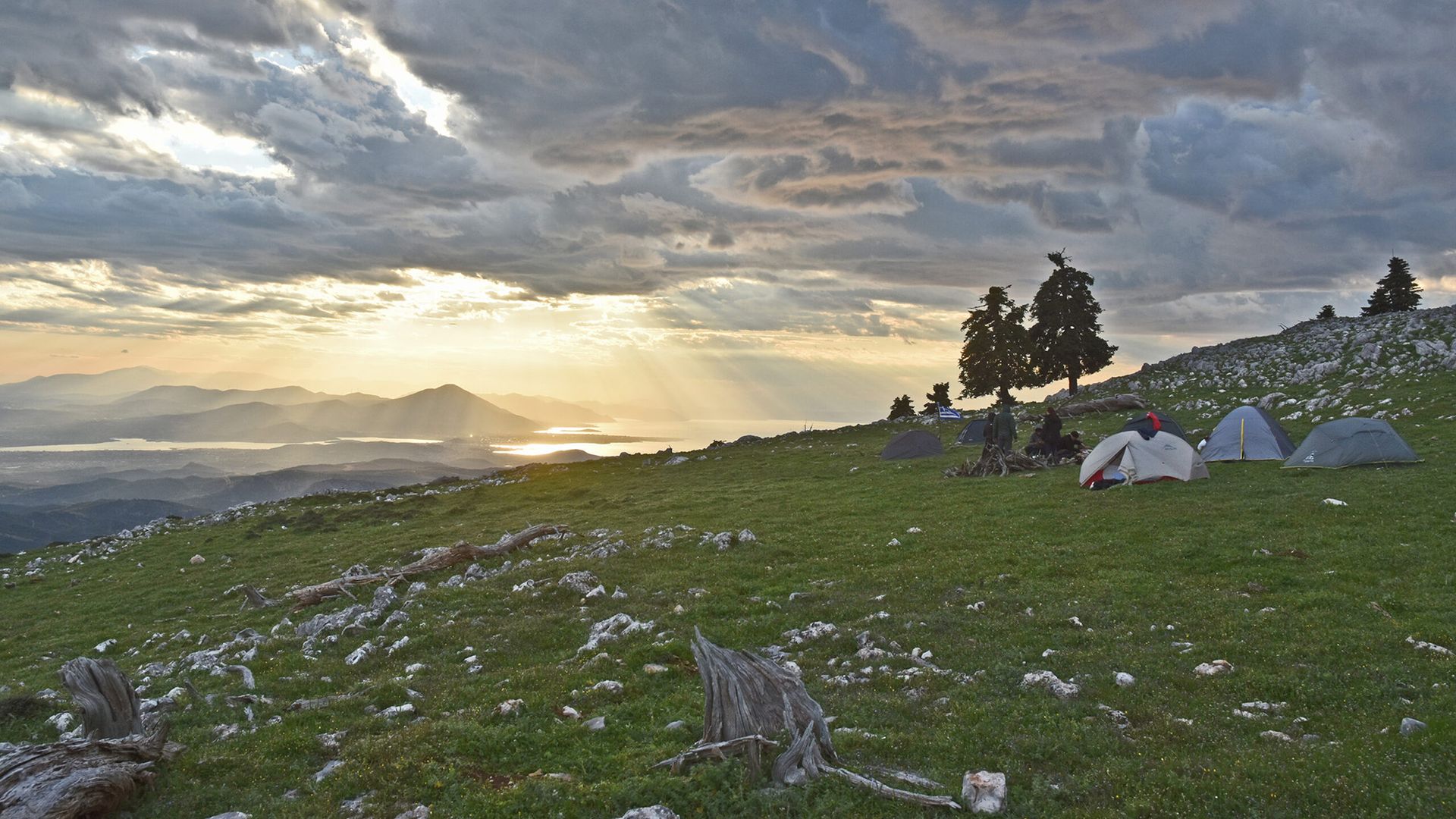
Archaeologists discovered a 2,900-year-old mountaintop sanctuary on Euboea, a Mediterranean island near Athens, during excavations led by Chloé Chezeaux of the Swiss School of Archeology in Greece. The sanctuary, located near the summit of Elatias peak on Mount Olympus in Euboea, contained no buildings but yielded pottery dating from at least the ninth century B.C. through the first or second century A.D., suggesting continuous use for over a thousand years.
The team first spotted the sanctuary during a 2025 survey and excavated it in 2026. Chezeaux noted that "an exceptional concentration of pottery" distinguishes this site from other mountaintop sanctuaries in Greece, which often leave minimal archaeological evidence. The earliest ceramics date to the early Greek Geometric period.
Worshippers primarily came from the nearby city of Eretria. Reaching the summit today requires walking about 1.8 miles with an elevation gain of 2,130 feet from the nearest mountain pass. "People were willing to devote considerable time and energy to reaching these places, and in our case they seem to have done so over many generations," Chezeaux said.
Bone remains found in crevices at the site include sheep and goat bones showing signs of burning at high temperatures, suggesting animal sacrifice and ritual meals. An ancient inscription mentioning "Artemis Olympia" at a site in Eretria suggests the wild nature goddess Artemis was worshipped at the mountaintop sanctuary, though no altar has been found yet.
The sanctuary demonstrates that ancient Greek religious life extended beyond temples and urban centers to mountain locations, with high mountains holding particular significance for worshippers.