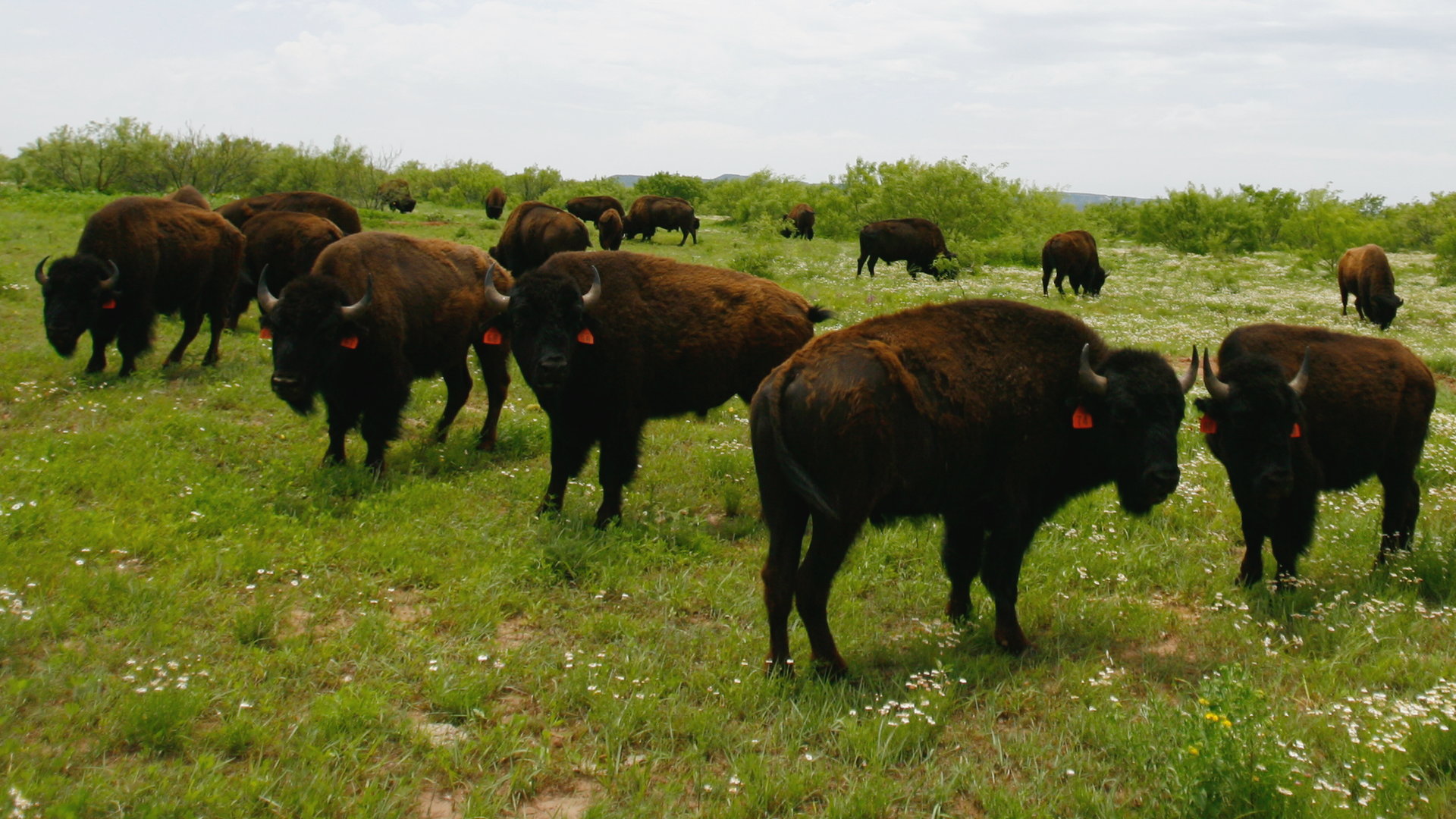
Archaeologists have identified a bison jump site in Caprock Canyons State Park in the Texas Panhandle where Indigenous people hunted bison for 3,000 years. The site, called Nighthawk, represents only the second known bison jump in the southern Plains and expands understanding of this hunting technique beyond the northern Plains where such sites are well documented.
The discovery emerged when bison bones began eroding from a bone bed beneath a roughly 65-foot-tall cliff spur. Investigators found chipped stone tools and arrowheads near the bones, along with cut marks on several bones consistent with prehistoric butchery. "The only way bison can arrive at the site is by falling from above, as the site surface is sandwiched between two cliffs," the researchers wrote in a study published Nov. 9 in American Antiquity.
Radiocarbon dating revealed at least seven mass kills over approximately 3,000 years, between roughly 1550 B.C. and A.D. 1550. One particularly successful hunt, labeled Kill 3, likely occurred around A.D. 300 to 400 and produced most of the bison bones at the site.
Gus Costa, an archaeologist at Rice University and first author of the study, explained the hunting method differed from northern Plains practices. "Instead of a stampede toward a surprise fall, Nighthawk could have operated more like 'walking the plank,'" the researchers wrote. Indigenous hunters likely used the cliff's natural spur shape to channel bison to their deaths.
The gap between hunts averaged 500 years, with at least a century separating each event. This pattern suggests the technique was passed down through generations rather than revived repeatedly. Unlike northern Plains bison hunts, which provisioned communities for winter through pemmican production, the warm Texas climate would have limited fat preservation to a few weeks. The southern Plains hunts may have served purposes of displaying power and building alliances instead.