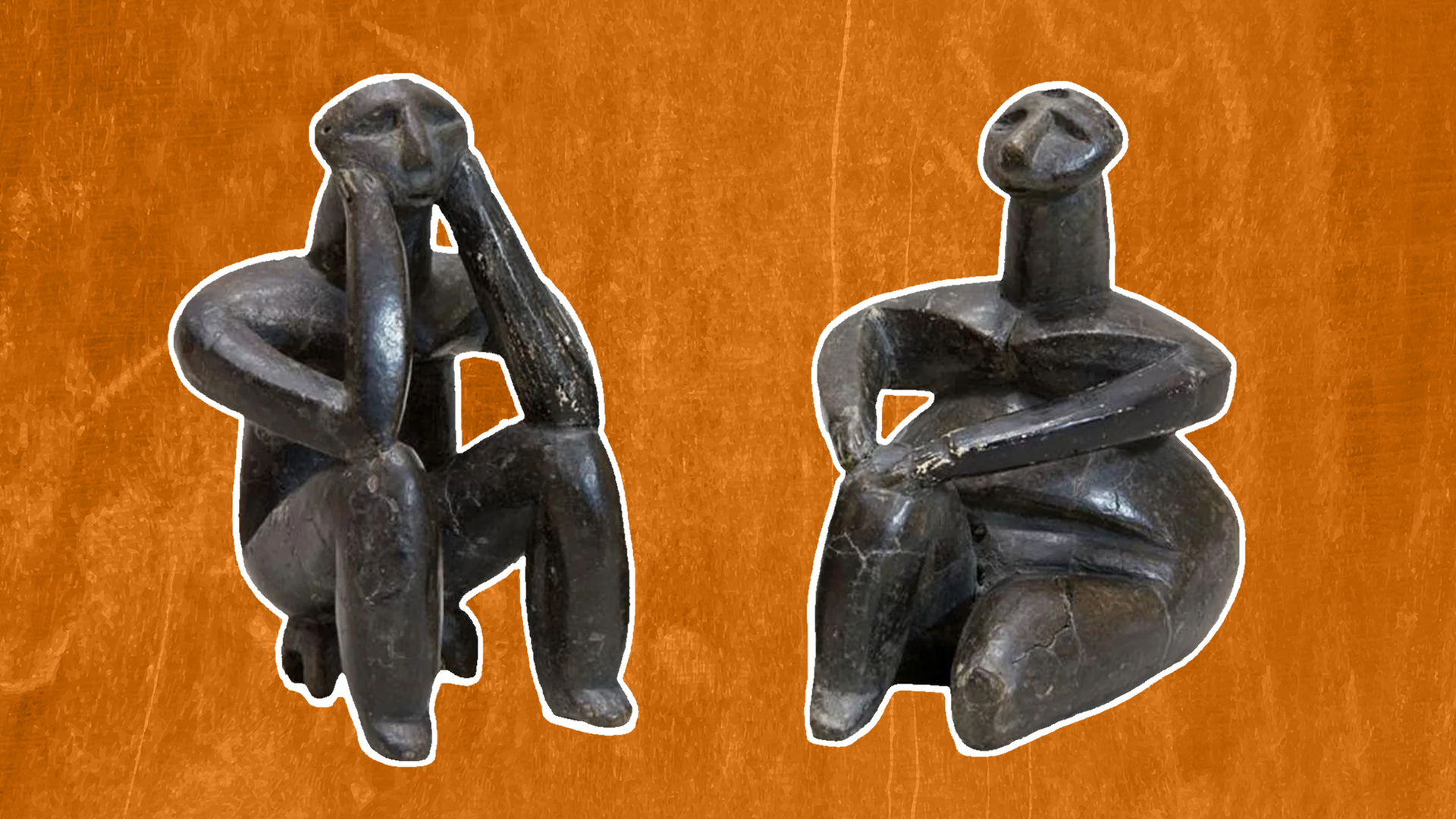
In 1956, archaeologists excavated two clay figurines from a grave at a Stone Age cemetery in Cernavodă, southeast Romania. The figurines, made by the Hamangia culture around 5000 B.C., measure about 4.5 inches tall and are now held by the National Museum of Romanian History.
The first figurine, called the Thinker, depicts a seated figure on a low four-legged stool. He bends forward with his elbows resting on his knees and his head in his hands, giving him a meditative pose. The second figurine, the Seated Woman, shows a figure with a long bent neck, prominent hips and thighs, and her hands resting on her bent knee.
Archaeologist Dumitru Berciu, who led the excavation, noted that these seated figurines were unusual among the dozens of standing male and female figurines found in the cemetery. The Hamangia culture, which lasted from about 5200 to 4500 B.C., stretched from the Danube River to the Black Sea and focused on sheep and goat herding.
Berciu suggested the figurines served a magical or religious purpose and may have been connected to sun worship, given that solar worship appeared common among later Bronze Age European cultures. The National Museum of Romanian History has proposed alternative interpretations: the pair may represent complementary masculine and feminine principles, a Neolithic family unit, or mourners buried with the deceased. The original meaning remains unclear. The male Thinker figure now appears in the logo of the National Museum of Romanian History.