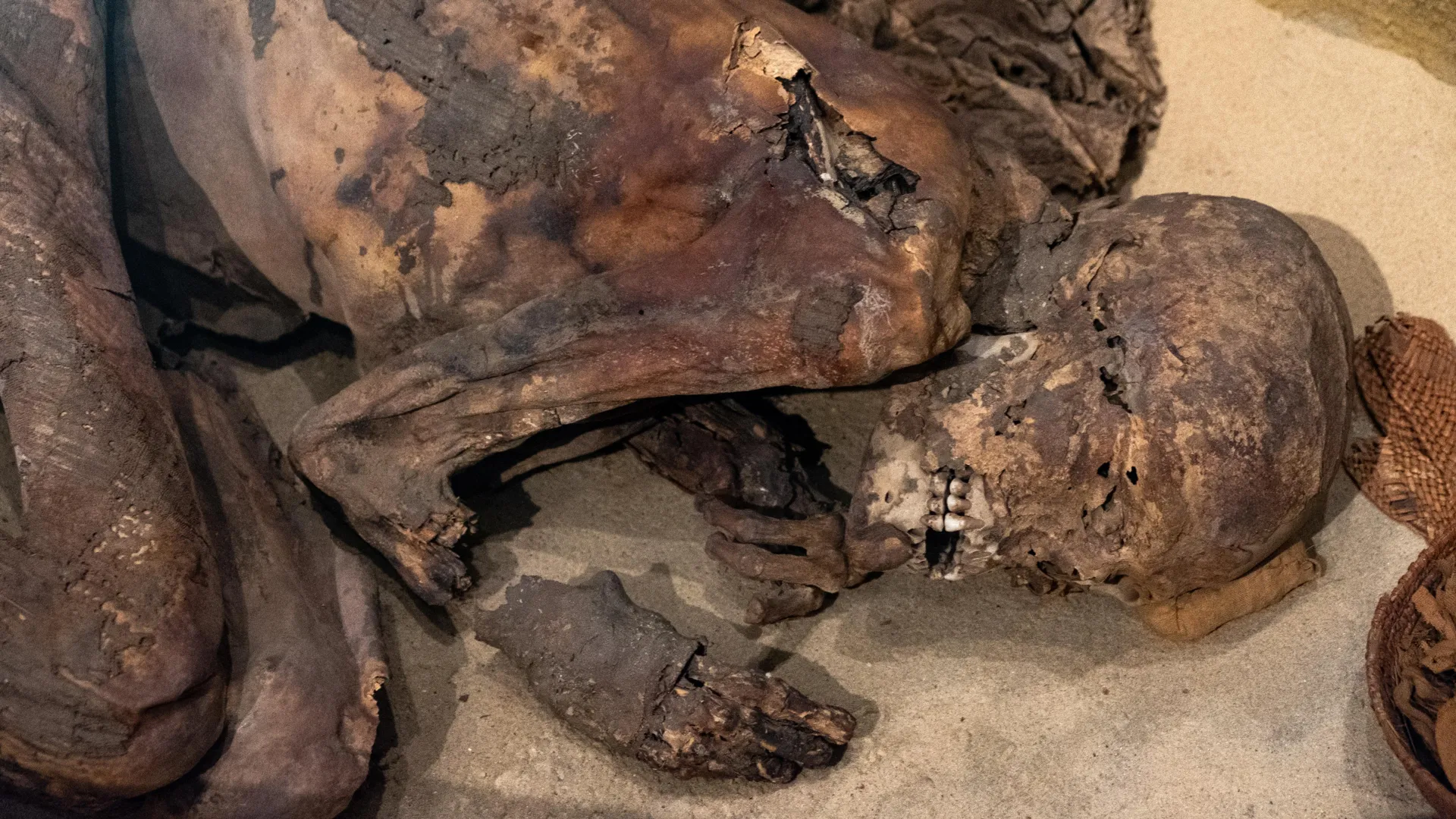
Dr. Roselyn Campbell of Purdue University examined 46 ancient skulls held at Cambridge University's Duckworth Collection. The skulls came from individuals buried around royal tombs at Abydos, Egypt, during the First Dynasty roughly 5,000 years ago. Campbell's findings appear in Frontiers in Environmental Archaeology.
Eighteen of the 46 skulls, approximately 39 percent, showed signs of head trauma consistent with potentially fatal injuries. Campbell identified linear fractures that likely occurred around the time of death, along with evidence of sharp-force trauma on some specimens, including a chopping injury to one individual's eye.
The injuries support a theory proposed more than a century ago by archaeologist Flinders Petrie, who excavated the graves in the 1920s. Petrie suspected that members of royal households were killed when rulers died, possibly to serve them in the afterlife, but could not identify physical evidence of fatal blows. Petrie had interpreted the fractures as damage from natural processes rather than injuries sustained by living people.
"Retainer sacrifice is a type of human sacrifice where those close to a ruler are killed when the ruler dies," Campbell explained. "In many cultures, retainer sacrifice is practiced because of beliefs that the sacrificed individuals will continue to serve the ruler in some kind of afterlife, but retainer sacrifice can also be a visceral display of the ruler's power."
The linear fractures do not match damage typically caused by maces, which appear frequently in ancient Egyptian artwork. Such fractures more commonly result from impacts by broad, flat objects. Accidental falls remain theoretically possible but would likely have caused injuries elsewhere in the skeleton that Petrie would have documented.
Most skeletal remains were reburied over a century ago. Campbell noted that examining additional bones could reveal more injuries and provide further clarity on how the individuals died.