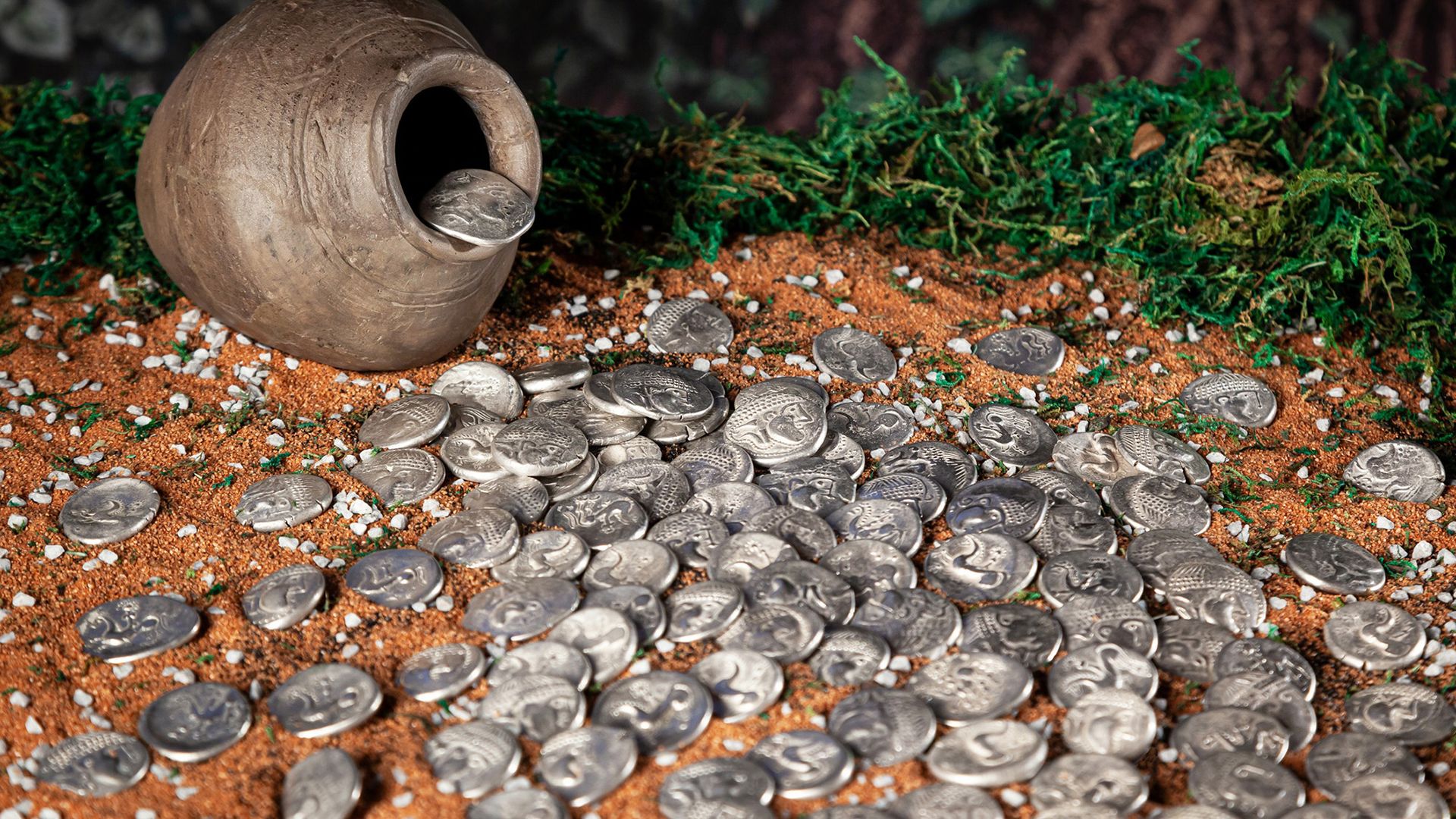
Archaeologists in Hungary discovered a hoard of more than 200 Celtic silver coins dating to between the late second century B.C. and the early first century B.C. during excavations ahead of construction for an electrical substation in western Hungary between 2023 and 2025. The coins weigh roughly 4.4 pounds (2 kilograms) and were packed inside a small ceramic vessel buried about 16 inches below ground.
This ranks as one of the largest hoards found in Hungary in decades. Eszter Kreiter, an archaeologist at Hungary's National Archaeological Institute, called it "a rarity in Europe" and noted that the last similar find was made in Hungary in the late 1960s. The site, located in the Szombathely region, is a former farm where plowing had unearthed individual coins in recent decades. Metal detector searches during the excavation led researchers to the main cache.
The coins are Celtic tetradrachm copies modeled on Greek coins of the same type. They are known as "Velem" coins, named after a fortified Celtic settlement located about 10 miles to the west where similar coins have been found. Each coin depicts a stylized head on one side, probably representing Apollo, and a helmeted rider with horse on the other.
The excavations revealed evidence of more than 7,000 years of occupation at the site, including a nearly 7,000-year-old polished stone chisel and a glass bead with a peacock's eye pattern from the sixth or seventh century B.C. A Roman-era villa was constructed at the location in later centuries without disturbing the buried hoard. Kreiter said the team was able to reconstruct the villa's floor plan, including its underfloor heating system. The artifacts will become part of a museum exhibition.
According to Christopher Howgego, a coin expert and professor emeritus of Greek and Roman numismatics at the University of Oxford, Celtic tribes in the Carpathian Basin began minting their own silver coins after Celtic mercenaries saw them while serving with Hellenistic armies in Greece and Macedonia. Howgego wrote that these copycat tetradrachms held very high value and were rarely used for everyday purchases. Instead, they were often hoarded as wealth or buried as ritual offerings.