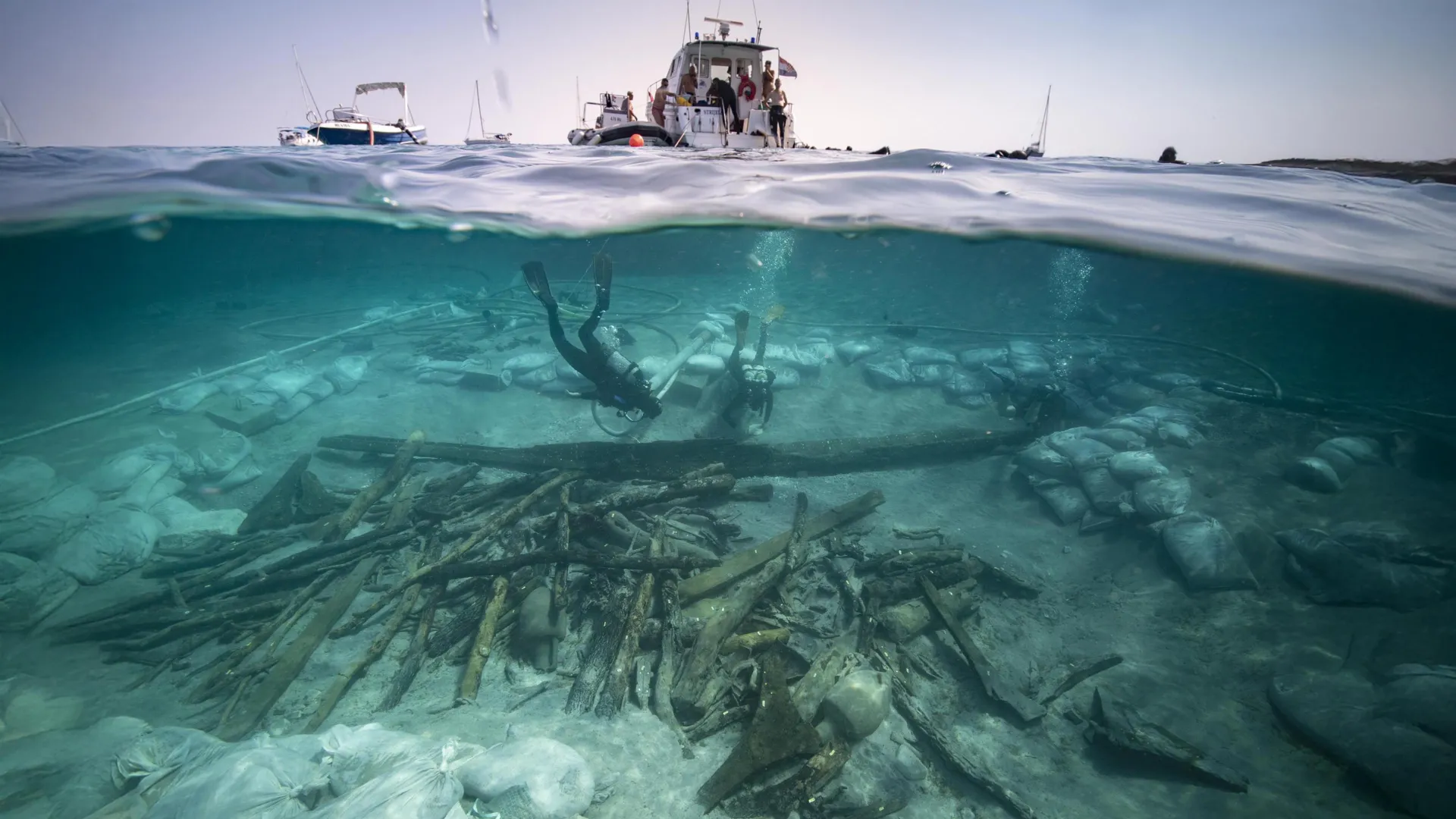
Researchers studying a 2,200-year-old Roman shipwreck off Croatia discovered two distinct waterproofing recipes used to protect the vessel from seawater and marine organisms. One coating consisted of pure pine tar, while another combined pine tar with beeswax, a mixture known to Greek shipbuilders as zopissa.
Dr. Armelle Charriée, an archaeometrist at the Laboratory of Mass Spectrometry of Interactions and Systems in Strasbourg, led the study published in Frontiers in Materials. The team combined molecular analysis using mass spectrometry with pollen examination to identify both the composition of coatings and the vegetation present when they were applied.
The addition of beeswax made the coating more flexible and easier to apply while hot. Flexibility would have been valuable aboard wooden ships whose timbers shift as they encounter waves and changing environmental conditions.
Pollen grains trapped in the sticky pitch coatings preserved a record of where materials were manufactured or applied. The researchers identified four or five distinct batches of waterproofing coatings on the Ilovik-Paržine 1 vessel, suggesting multiple repair events. The pollen evidence pointed to environments characteristic of the northeastern Adriatic coast, including Mediterranean forests, shrubland, and mountainous areas.
Earlier investigations identified the ancient port city of Brundisium (modern Brindisi) on Italy's southeastern coast as the likely construction site. The new pollen evidence suggests some coatings were applied near Brundisium while others were added along the northeastern Adriatic coast near where the ship sank.
Charriée noted that pollen proved useful in distinguishing separate repair events where molecular profiles were identical. "While it seems obvious that ships sailing long distances need repairs, it's simply not easy to demonstrate this," she said.