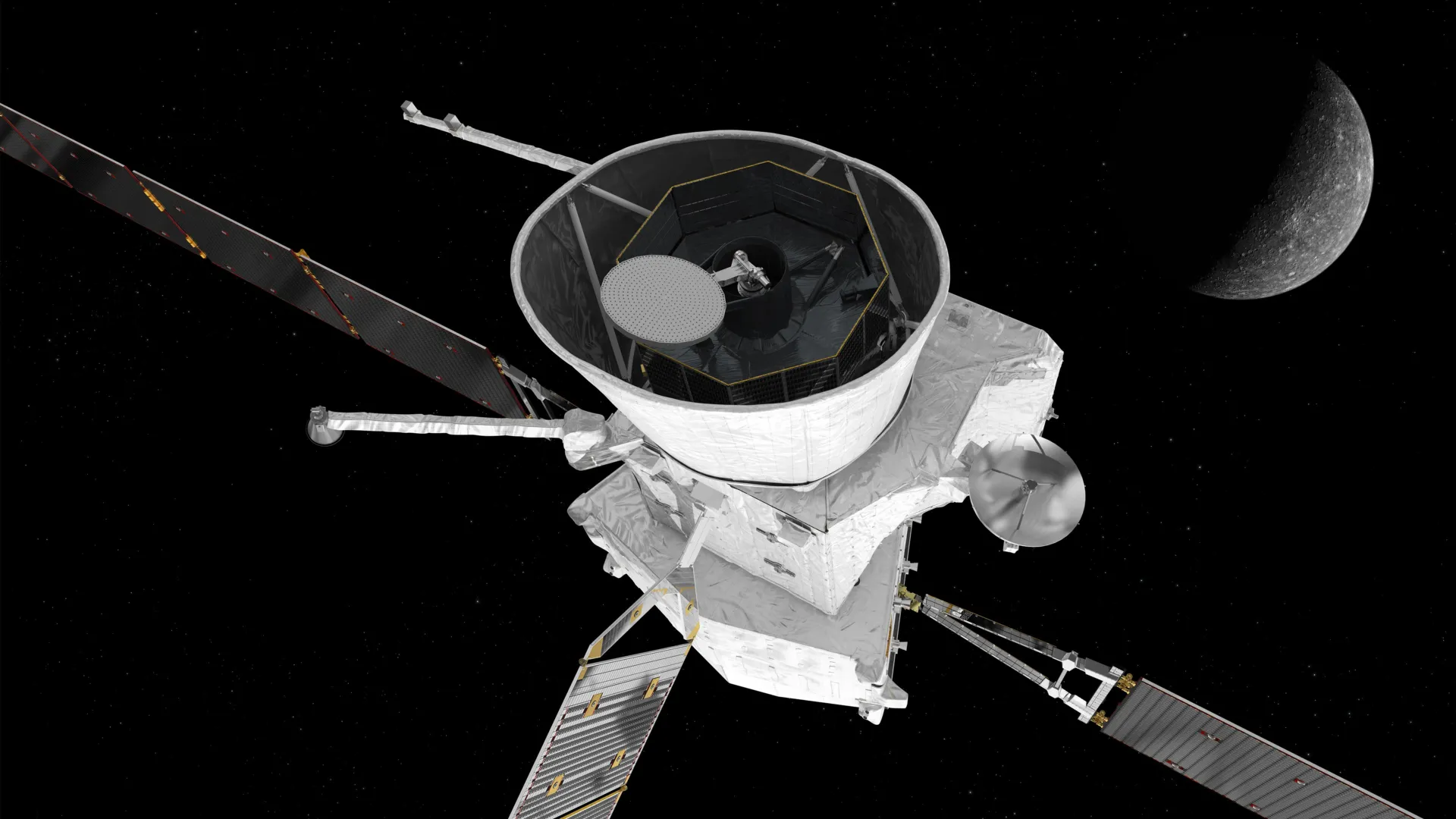
The Mercury Imaging X-ray Spectrometer (MIXS), a UK-built telescope aboard the European Space Agency and Japan Aerospace Exploration Agency's BepiColombo mission, has successfully detected X-rays from the Crab Nebula after eight years in space and a 10 billion kilometer journey.
Scientists at the University of Leicester conducted the first observations on September 11 and 12, orienting the spacecraft 55 times over 39 hours to test the instrument's performance. The team measured the telescope's angular resolution by examining how the Crab Nebula's X-ray signal spread across the detector. MIXS delivered slightly sharper resolution than it achieved during laboratory tests in 2015.
Professor Emma Bunce, Principal Investigator for MIXS at the University of Leicester, said: "We have waited a long time to make measurements with MIXS and it is fantastic to see it operating brilliantly in space. This is testament to our engineering and technical team, and our international partners who we have worked with over many years to build this incredible instrument. 80% of the technology on MIXS is new!"
The detector shows no radiation damage after eight years in space. The team detected no unwanted visible light interfering with images. Some effects from galactic cosmic rays appeared but can be filtered during data processing. The team also identified a small amount of X-ray emission from the instrument itself when sunlight strikes its optics, though this is not expected to interfere with observations of Mercury's sunlit surface.
BepiColombo will enter orbit around Mercury on November 21. MIXS will map the chemical composition of Mercury's surface by detecting fluorescent X-rays released when solar X-rays strike rocks. Dr. Adrian Martindale, MIXS Instrument Scientist at the University of Leicester, joined the project in 2003 as an undergraduate and said: "This first data is mind-blowing to me. The last time we could see through this telescope it was in the basement under the School of Physics and Astronomy in Leicester, but after a rocket launch, eight years in space and 10 billion kilometers traveled it looks just the same."