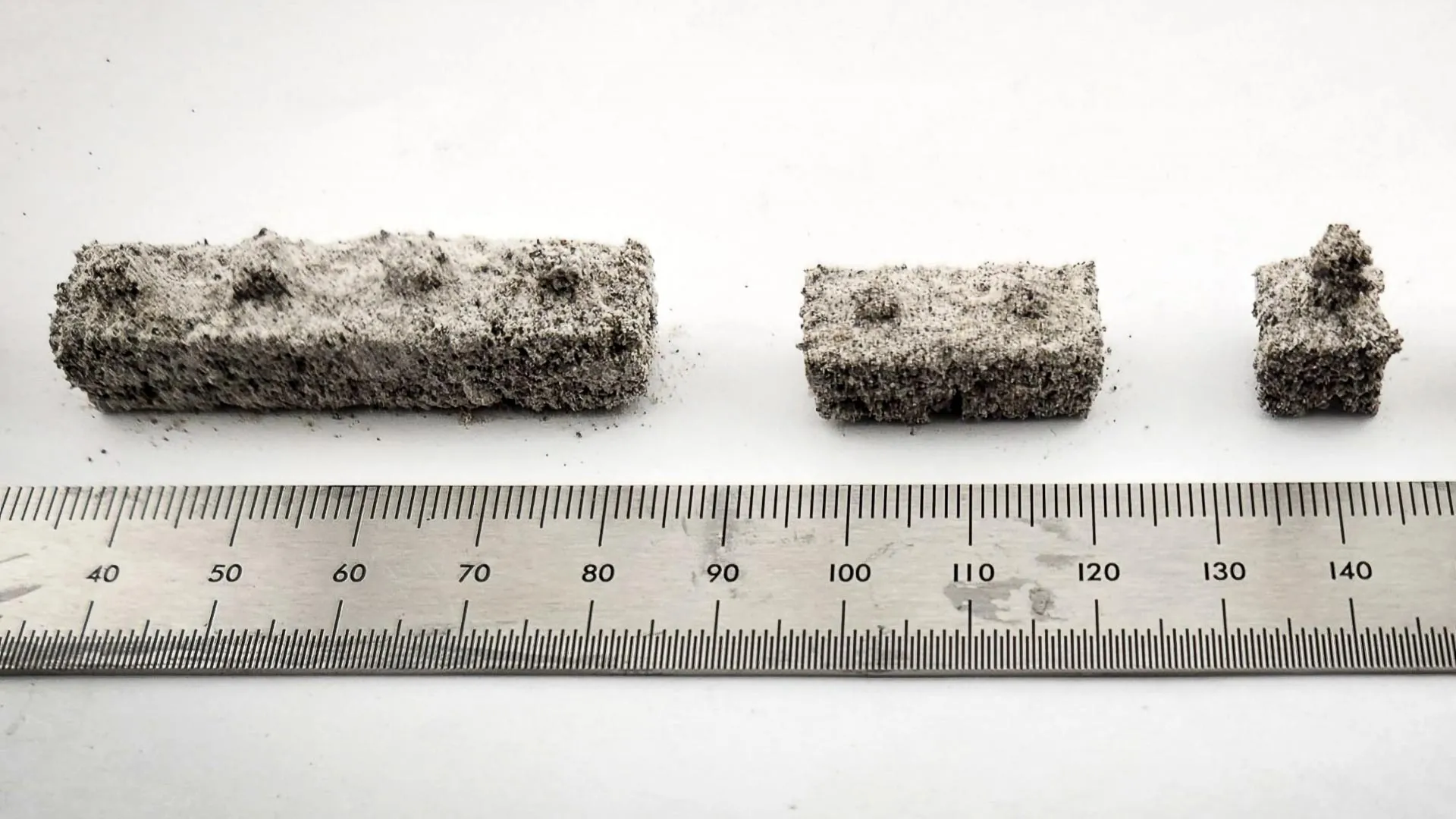
Researchers at the University of Arkansas have demonstrated a method to 3D print simulated lunar dust into interlocking bricks without using binding agents. The study, led by first author Cole McCallum and senior author Wan Shou, was published in NPJ Advanced Manufacturing.
The team used laser powder bed fusion, a 3D printing technique where a concentrated light source heats powder particles until they fuse together in a process called sintering. The printing platform then moves downward to add another layer, gradually building a solid three-dimensional object. The researchers worked with Lunar Highlands Regolith Simulant (LHS-1), a commercially available material designed to resemble samples from NASA's Apollo missions.
Previous efforts to 3D print structures from lunar regolith relied on binders delivered from Earth. The University of Arkansas team became the first to directly fuse simulated lunar regolith into interlocking, reconfigurable blocks without adding binding agents. "There's nothing else it's binding to. The regolith powder is binding to itself," McCallum said.
The team produced small bricks measuring a few centimeters across, shaped like crosses and the letter H, designed to interlock like LEGO pieces. However, the experimental bricks contain more internal pores and have lower structural strength than objects made with binders. McCallum noted that while these structures can be self-supported, he would hesitate to say the process could support other loads at this stage.
Before the technology can be used on the actual Moon, several questions must be answered. Shou explained that scientists still need to determine how the printing process would work under the Moon's low-gravity conditions and in a vacuum. The strength and durability of the bricks must also improve for practical applications.