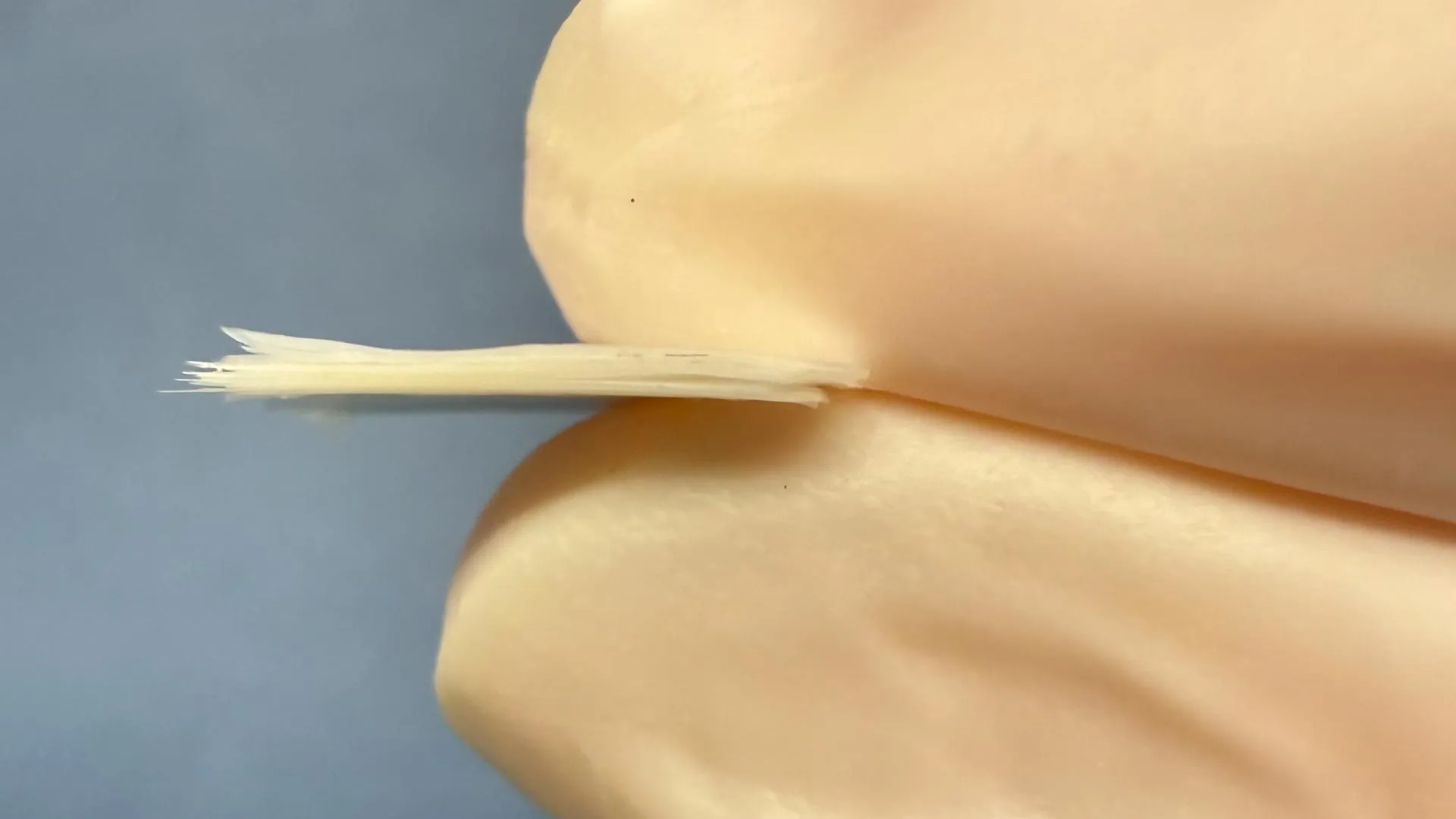
Researchers at the University of Pennsylvania have created a new insulation material using stacked sheets of Mylar, the same plastic found in emergency blankets, that could protect lunar habitats and equipment from extreme temperatures while surviving the physical stresses of Moon base operations.
The material, called hybrid layered insulating film stacks or HyLIFS, combines hundreds of extremely thin Mylar sheets coated with aluminum oxide. Igor Bargatin, Associate Professor in Mechanical Engineering and Applied Mechanics, explains that "these stacks of Mylar can bend, withstand substantial compression and maintain their insulating performance," potentially allowing them to be "packed, transported and survive rough treatment over many years of use."
The research, published in ACS Applied Materials & Interfaces, addresses a central challenge in lunar construction. Most existing insulators face a tradeoff: materials like aerogels excel at preventing heat transfer but break easily under pressure, while multilayer insulation resists radiation but tears under stress. Engineers need materials that do both.
The Penn team tested their stacks by compressing samples to approximately 20 megapascals, a force equivalent to 200 pounds on a fingertip. The material survived 10 repeated cycles of this pressure while maintaining its insulating ability. Danielle R. Levin, the study's first author and a recent Penn doctoral graduate in chemistry, notes that "this material could open a pathway to inexpensive, durable and reusable lunar insulation."
The researchers initially assembled stacks manually using tweezers and small weights, a painstaking process. The team also discovered that microscopic antiblocking particles already present in commercial Mylar films influence how heat travels through the stacked material, though the report notes this finding required less attention than heat transfer by radiation in traditional multilayer insulation.