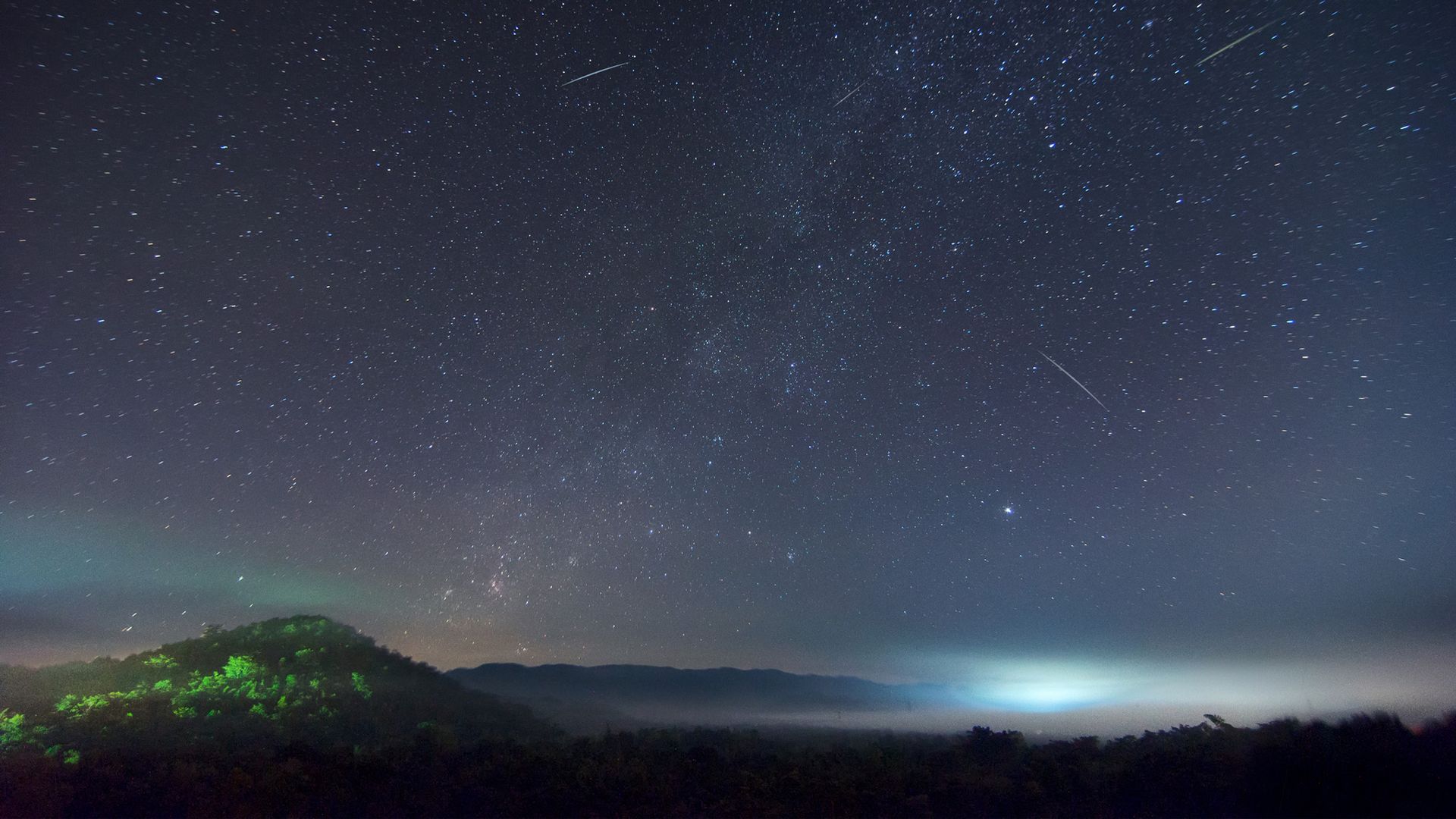
The Leonid meteor shower peaks tonight into Tuesday, Nov. 17, and is expected to produce up to 15 shooting stars per hour under ideal conditions, according to the American Meteor Society. The meteors will travel at 43 miles per second and often leave bright glowing trails.
The best viewing window runs between midnight and dawn Tuesday, when the constellation Leo rises higher in the eastern sky. Shooting stars can appear anywhere in the sky, however. A 45%-lit waxing crescent moon will set just before midnight, providing dark skies for observation.
The American Meteor Society recommends finding a spot away from artificial lights, lying back with a wide view of the sky, and allowing about 20 minutes for eyes to adjust to darkness. Binoculars and telescopes restrict views during meteor showers. Smartphones and astrophotography cameras can be used for photography.
The Leonids result from dust and debris left by Comet 55P/Tempel-Tuttle, which orbits the sun every 33 years and measures about 2.2 miles in diameter. The comet last visited the inner solar system in 1998 and will return in 2031.
The Leonids are famous for occasionally producing meteor storms of 1,000 shooting stars per hour. The American Meteor Society records such storms in 1833, 1866, 1966, 1999, 2001, and 2002. The next expected storm occurs in 2099. This year will not produce a rapid-fire storm.
The next major meteor shower, the Geminids, peaks overnight on Dec. 13-14 and can produce up to 120 meteors per hour.